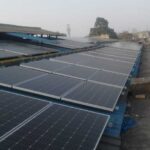
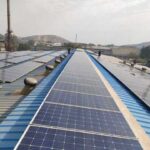
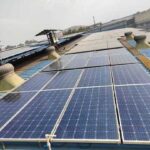
As energy costs continue to rise and businesses look for sustainable ways to operate, solar for commercial buildings in India have emerged as one of the most reliable and cost-efficient solutions. Whether it’s a corporate office, factory, warehouse, educational institution, or retail complex, solar power helps commercial establishments significantly reduce electricity bills, improve energy independence, and meet sustainability goals.
India’s growing solar ecosystem, favourable government policies, and rapid technological advancements make rooftop solar a practical choice for businesses of all sizes.
Why Commercial Buildings Are Shifting to Solar Power
Commercial buildings consume far more electricity than homes, especially for operations like air-conditioning, machinery, refrigeration, lighting, and IT equipment. Installing a rooftop solar system provides:
1. Substantial Cost Savings
Solar panels can reduce commercial electricity costs by 40–70%, depending on system size and consumption patterns. Over time, the savings often exceed the initial investment.
2. Faster Return on Investment (ROI)
Most commercial solar projects achieve ROI in 3–5 years, thanks to high consumption levels and rising grid tariffs.
3. Long-Term Energy Security
With predictable energy generation and minimal performance degradation, businesses can rely on solar power for consistent output over 25+ years.
4. Lower Carbon Footprint
Adopting solar supports environmental compliance and strengthens ESG commitments—a requirement for many modern corporations.
Types of Solar for Commercial Buildings
Commercial facilities can choose from three major system types:
1. On-Grid Solar System (Most Common)
- Connected to utility grid
- Enables net-metering
- Ideal for buildings with high daytime loads
2. Off-Grid Solar System
- Includes battery backup
- Suitable for remote areas or locations with unreliable electricity
3. Hybrid Solar System
- Combination of solar, grid, and battery
- Offers maximum flexibility and backup support
Ideal Solar Capacity for Commercial Buildings
The required system size depends on available rooftop space and daily energy consumption patterns.
Typical benchmarks:
- Small commercial offices: 20 kW – 50 kW
- Medium manufacturing units/warehouses: 100 kW – 500 kW
- Large facilities, malls, institutions: 500 kW – 1 MW+
Key Components Used in Commercial Solar Installations
While the basic components are similar to home systems, solar for commercial buildings require higher durability, efficiency, and safety. A standard system includes:
- High-efficiency solar panels (Mono PERC / TOPCon)
- String inverters or central inverters
- Module mounting structures (RCC/metal roof compatible)
- AC & DC protection devices
- Cables, connectors, and earthing systems
- Net-metering setup (for on-grid installations)
Benefits of Solar for Businesses in India
1. Reduced Operational Costs
Electricity forms a major part of operational expenditure. Switching to solar considerably brings down monthly power bills.
2. Better Brand Reputation
Customers and clients value brands that invest in clean energy.
3. Government-Backed Policies
While subsidy is not available for commercial buildings, companies can still benefit from:
- Accelerated depreciation
- Net-metering approvals (state-wise)
- State solar policies
4. Low Maintenance Requirements
Solar for Commercial buildings typically require:
- Panel cleaning
- Routine inspection
- Basic electrical maintenance
This keeps overall O&M costs low.
Energy Generation from Commercial Solar Systems
Solar generation varies by region, rooftop direction, and panel type. On average:
- 1 kW generates 4-5 units/day
- 100 kW system generates 12,000-15,000 units/month
- 1 MW system generates 1.2-1.5 lakh units/month
This considerably offsets commercial electricity consumption.
Installation Requirements for Solar for Commercial Buildings
To ensure safety and long-term performance, commercial installations require:
- Structural stability checks
- Load-bearing assessment of the roof
- Shade analysis
- Proper earthing & lightning protection
- High-quality cabling and connectors
- Certified installation teams
Safety & Compliance Standards
Solar for Commercial buildings must comply with:
- State electricity regulations
- DISCOM net-metering requirements
- Fire safety and electrical codes
- BIS-certified components
- OEM warranty conditions
These ensure optimal performance and long-term safety.
Cost of Solar for Commercial Buildings in India
The cost of commercial solar depends on system size, technology, and components used. In general:
- Larger systems have lower per-kW costs
- Choosing premium panels/inverters increases performance
- Installation complexity influences pricing
Commercial solar is a long-term investment that pays back through significant energy savings.
Why Solar is the Future for Commercial Spaces
With rapidly improving technology, competitive pricing, and increasing demand for sustainability, solar power has become one of the smartest business decisions for Indian enterprises.
Solar for Commercial buildings is expected to grow exponentially over the next decade as companies prioritise:
- Lower costs
- ESG compliance
- Green certifications
- Energy security
Conclusion
Solar for commercial buildings in India offer a powerful combination of cost savings, sustainability, and high performance. Whether a business wants to reduce operational expenses, achieve environmental targets, or modernize its infrastructure, solar power provides a reliable long-term solution.
FAQs
Q1. How much rooftop space is required for a commercial solar system?
Ans: Approximately 80-100 sq. ft. is needed per kW, depending on panel efficiency and mounting design.
Q2. Do solar for commercial buildings require special permissions?
Ans: Yes, net-metering and DISCOM approvals are required for grid-connected systems.
Q3. Can commercial buildings use solar to run heavy machinery?
Ans: Yes, solar can support heavy loads as long as the system is sized appropriately.
Q4. Is financing available for commercial solar installations in India?
Ans: Yes, banks and NBFCs offer solar loans, OPEX (RESCO) models, and leasing options. Refer to our blog to know more – Solar Loans, Subsidies and EMI Plans – Smart Roof Solar
Q5. Can solar panels withstand heavy rains and high temperatures?
Ans: Commercial-grade panels are designed to operate safely under extreme heat, rain, and storms.