
In solar photovoltaic (PV) projects, efficient execution depends not only on design and engineering but also on the availability and proper arrangement of tools and consumables. For Solar EPC (Engineering, Procurement, and Construction) professionals, ensuring that the right materials are available at the right time is crucial for smooth civil and mechanical installation.
Civil and mechanical activities include foundation work, mounting structure installation, and panel mounting, all of which require specific tools and consumables. Poor planning can lead to delays, increased solar installation charges, and inefficiencies in project execution.
Proper planning and management of tools and consumables are essential for successful solar PV installation tools.
This blog provides a complete solar EPC guide to arranging tools and consumables for civil and mechanical installation, ensuring efficiency, safety, and optimized solar panel system cost.
Importance of Solar EPC Installation Tools
Efficient arrangement ensures:
- Smooth workflow on-site
- Reduced downtime
- Improved installation quality
- Enhanced safety
- Optimized solar panel system cost
Lack of proper planning can lead to project delays and increased costs.
Civil and Mechanical Installation in Solar Projects
These activities include:
- Site preparation
- Footing and foundation work
- Mounting structure installation
- Panel mounting
Each stage requires specific tools and consumables.
Tools Required for Civil Installation
1. Excavation Tools
Used for foundation work.
- Shovels
- Pickaxes
- Excavators (for large projects)
2. Concrete Tools
Used for RCC footing.
- Concrete mixer
- Trowels
- Vibrators
3. Measuring Tools
- Measuring tape
- Leveling instruments
- Total station
4. Cutting and Drilling Tools
- Drilling machines
- Angle grinders
Tools Required for Mechanical Installation
1. Spanners and Wrenches
Used for tightening bolts and nuts.
2. Torque Wrench
Ensures proper tightening torque.
3. Screwdrivers
Used for fastening components.
4. Lifting Equipment
- Cranes
- Hoists
- Panel lifting tools
5. Alignment Tools
- Spirit level
- Laser level
Consumables Required for Solar Installation
1. Fasteners
- Nuts and bolts
- Washers
Used for assembling mounting structures.
2. Chemical Anchors
- Used for fixing structures to concrete.
3. Sealants
- Used for waterproofing and protection.
4. Cable Ties and Clips
- Used for cable management.
5. Anti-Corrosion Materials
- Used to protect metal structures.
6. Marking Materials
- Chalk
- Paint
Used for layout marking.
Planning and Arrangement of Tools & Consumables
Step 1 – Review Project Requirements
Understand:
- Project size
- Site conditions
- Installation type
Step 2 – Prepare Tool Checklist
- List all required tools for each stage.
Step 3 – Estimate Consumables
Calculate quantities based on:
- Design drawings
- Bill of Material (BOM)
Step 4 – Ensure Availability
- Arrange tools and consumables before starting work.
Step 5 – Organize Storage
- Store materials in a safe and accessible manner.
Step 6 – Monitor Usage
- Track consumption and avoid wastage.
Step 7 – Maintain Tools
- Regular maintenance ensures efficiency and safety.
Safety Considerations
1. Use PPE
Includes:
- Helmets
- Gloves
- Safety shoes
2. Follow Safety Guidelines
- Adhere to standards set by the Ministry of New and Renewable Energy.
3. Train Workers
- Ensure proper use of tools and equipment.
4. Inspect Tools Regularly
- Check for defects or damage.
Impact on Solar Panel System Cost
Proper arrangement helps:
- Reduce delays
- Minimize wastage
- Improve efficiency
- Lower cost of solar per kWh installed
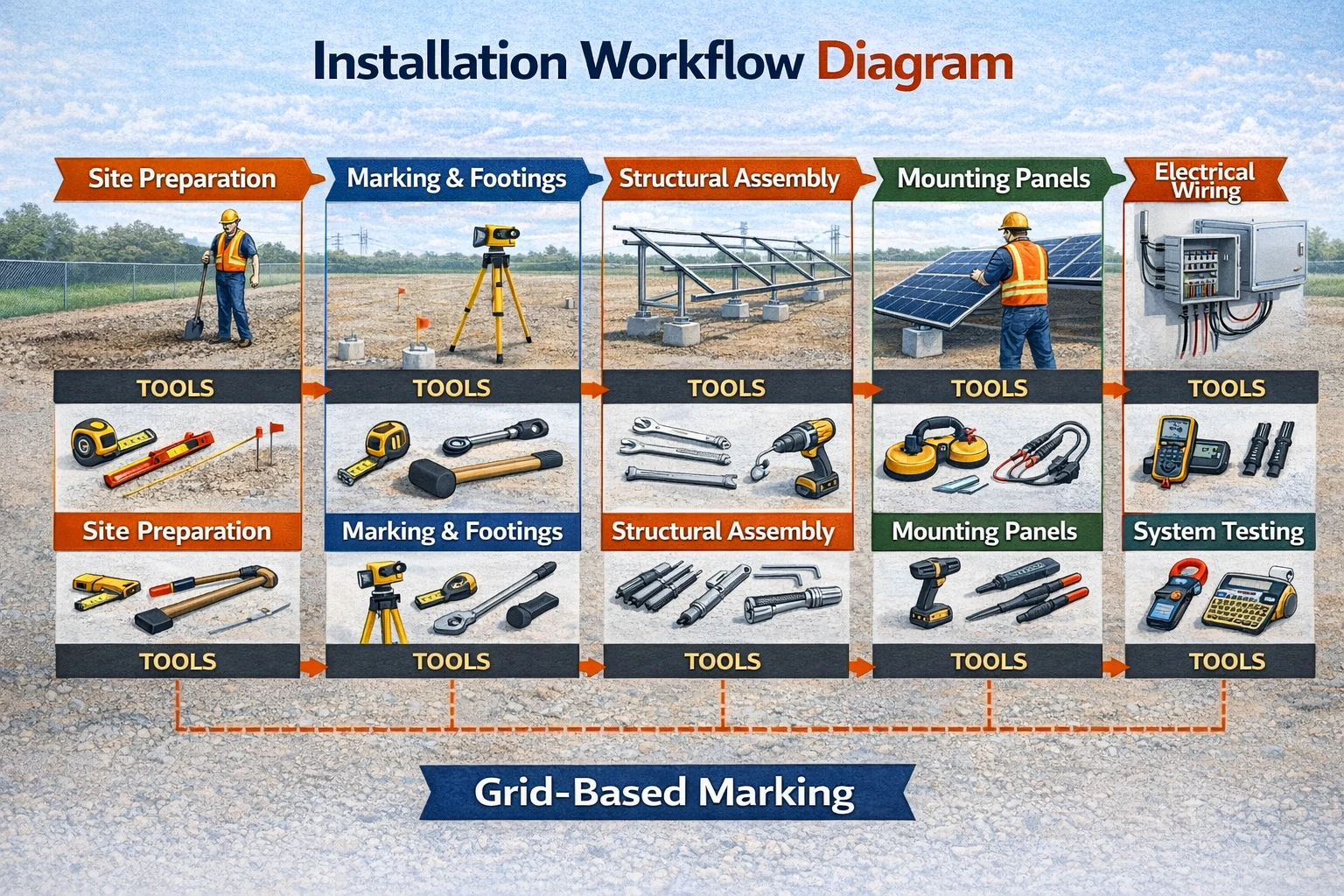
Efficient planning reduces overall solar energy installation cost.
Conclusion
Efficient arrangement of tools and consumables is essential for successful civil and mechanical installation in solar PV projects. By planning ahead, maintaining proper inventory, and ensuring safety, solar EPC professionals can achieve smooth project execution and high-quality installations. Proper management not only reduces delays but also enhances system performance and minimizes solar energy installation cost.
Organized planning and execution are key to efficient solar installations. Additionally, adherence to standards set by the Ministry of New and Renewable Energy ensures safety and reliability.
With the right approach, solar professionals can optimize solar panel system cost, improve solar electricity generation, and contribute to sustainable solar energy for home use and large-scale renewable solar solutions.
FAQs
Q1. What tools are required for civil installation in solar projects?
Ans: Excavation tools, concrete tools, measuring tools, and drilling machines.
Q2. What consumables are used in solar installation?
Ans: Fasteners, sealants, cable ties, chemical anchors, and anti-corrosion materials.
Q3. Why is tool arrangement important in solar projects?
Ans: It ensures smooth workflow and reduces delays.
Q4. How does planning affect solar panel system cost?
Ans: Proper planning reduces wastage and improves efficiency, lowering costs.
Q5. What safety measures should be followed?
Ans: Use PPE, follow guidelines, and inspect tools regularly.
Solar Inverter Stand Installation: Step-by-Step Guide
A step-by-step guide to solar inverter stand installation as per drawings and manuals, ensuring proper alignment, stability, and safety.

Sir! Solar Mein Itna Chalta Hai!” When to Reject a Site: The Truth About Shadow Analysis
Discover the importance of solar site assessment and shadow analysis to optimize rooftop solar performance, prevent shading losses, and maximize energy generation.

What Is Solar Performance Ratio (PR)? Meaning, Formula & Importance
Solar Performance Ratio (PR) is a key indicator of how efficiently a solar power system converts available sunlight into usable electricity. This guide explains what PR is, how it is calculated, why it matters, and how it directly impacts your solar system’s actual energy output.

UP Government Incentive: Stamp Duty Exemption for Solar Land
Uttar Pradesh offers stamp duty exemption on land for solar projects, encouraging investment and growth in renewable energy.

500 kW Rooftop Solar for Industries in India: Complete Guide 2026
A complete guide to 500 kW solar for industries covering installation cost, energy generation, ROI, savings, and why it is a smart business investment.

Electrical Hazards in Solar PV Systems: Identification, Prevention & Safety
A complete guide to identifying electrical hazards in solar PV systems and implementing effective prevention and safety measures for installation, testing, operation, and maintenance.
Solar Projects Challenges in India: Module Supply Shortages and Policy Delays Slow Growth
India’s utility-scale solar projects face delays due to module supply shortages and policy challenges, impacting the growth of renewable energy.

Hydrometer Testing for Solar Battery State of Charge
A complete guide to hydrometer testing for solar battery state of charge, helping assess battery health, performance, and maintenance needs.