
 Q1. We keep meeting factory owners, and every single one of them asks us, why should I install a solar power plant?
A1. A1. See, solar power can be very beneficial for industrialists and factory owners because they are large consumers of electricity continuously 24×7. Factories of all sizes, big or small consume a lot of electricity throughout the year. By installing solar power plants factories can reduce their electricity bills because solar power is much cheaper vis a vis DISCOM power. Also, through the process of net metering surplus units generated by the solar plant, not consumed in the factory can be traded with the DISCOM, such traded units are credited to factory account and neutralizes the power consumed during non-sunny hours. Thereby reducing the overall electricity bill from the DISCOM to the factory.
Q2. Ok sir, That’s great! However, some people debate the practicality of solar plants for factories due to its large space requirements?
A2. See most factories have large rooftops which are mostly Tin Shed and have no alternative usage. No future expansion of factory can be done on tin sheds. And in such cases, there is no better utilization of industrial rooftops space then putting up a solar plant on them.
Q3. OK sir, so solar is great for tin sheds, but does that mean factories with RCC roof have this problem of space requirement?
A3. No. In fact, solar can be planted on RCC rooftop as well and in case of RCC rooftop, if business owner any time wants to expand vertically, they can do so. And solar can be shifted on the upper roof with minor costs.
Q4. So, sir if a factory owner decides to make this investment in a solar plant, what kind of return on investment can they expect from it?
A4. Solar has the potential of giving you a ROI of 25% plus. The factory owner can expect a return within four years of capital employed, though the life of solar plant is 25 years plus. In fact, panel manufacturers give you a warranty of performance for 25 years, after four years when you recover your investment, you can reap the free electricity benefits for next 21 years.
Another benefit of investment in solar plant is accelerated depreciation benefit which can be booked in their books against investments of solar plant.
Q5. Sir, another question that comes to mind is about the maintenance of the solar plant after it’s been installed. What kind of expenses or efforts are required for that?
A5. Maintenance of a solar plant requires minimal efforts, minimal expenses, and very easy to maintain because there are no moving parts in the system. Regular cleaning of solar panels gives you the best efficiency possible. If you take cost of AMC, including cleaning of panels, it is almost 1.4% of the capital cost per year.
Q6. Okay sir, what about financing? Are there some easy finance schemes available to get solar plants for factories?
A6. Yes, in fact, it has become very easy to get loans for solar plant installations because of the push of the government for green energy. It has become very easy to get solar plant loans. In fact, World Bank and ADB have launched special schemes for solar energy. They are giving loans to industrialists for putting up solar plants.
Q7. Sir, sometimes we meet factory owners, and they say right now we’re expanding our factories, we’ll look at solar later. What would be your advice for somebody like that?
A7. It is for the factory owner to decide what is their priority. But my take on this is they should go for solar plant installation as soon as possible. Because Govt has also understood that industries are reaping benefits out of solar energy, therefore they are trying to make money for the govt from solar energy installations. To give you some examples, earlier accelerated depreciation was 80%, they have reduced it to 40%. Earlier, capital subsidy was 30%, they have reduced it to 0. Earlier, GST was 0, they have imposed it in one step 5% now 13.8%.
Similarly, the main benefit of solar plant is through net metering, where you can bank your surplus units with the DISCOMs. Net metering is also being phased out slowly and gradually. West Bengal, Assam have already stopped net metering. Uttarakhand is on way of eliminating net metering. Some states are still giving net metering up to 500 kW, earlier it was up to 2 MW.
So, my take on this is go for solar as soon as possible to get the best benefits available. Once you get this benefit of net metering, this is for 25 years.
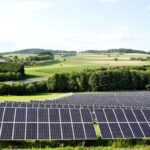
Agrivoltaics: Merging Solar Power with Farming
Discover how solar batteries store excess energy, maximize your solar system’s efficiency, and provide reliable power during outages. Learn about the types, benefits, lifespan, and maintenance tips to make the most of your solar investment.

New IREDA Loan Scheme for Solar Rooftop Projects: Benefits, Eligibility & Interest Rates
India’s renewable energy push gets a major boost with the new IREDA loan scheme for solar rooftop projects. This scheme offers low-interest financing, simplified approvals, and better support for residential, commercial, and industrial consumers. Here’s a detailed look at its benefits, eligibility, interest rates, and how to apply for funding.

Difference Between Single-Phase and Three-Phase Voltage and Its Use for Solar PV Installer – Complete Guide
Understanding the difference between single-phase and three-phase voltage is essential for solar PV installers. While single-phase supply is common in residential systems, three-phase power is widely used in commercial and industrial solar projects. This complete guide explains electrical phase differences, applications in solar installations, and how choosing the right phase connection impacts system efficiency, safety, and performance.

Solar Energy Myths vs. Facts: What You Should Know
Solar power myths often mislead homeowners. Learn the facts about cost, efficiency, and reliability of solar energy.
Solar Module Support & Racking Frame Installation
A practical guide to solar racking frame installation, covering module support structures, alignment, and best practices for reliable PV systems.
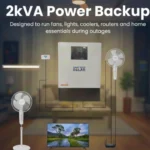
Introducing the ESS-2000-24V Hybrid Solar Inverter: Smart Power for Modern Homes & Businesses
The ESS-2000-24V Hybrid Solar Inverter delivers intelligent power management for homes and businesses. With advanced solar charging, lithium battery support, and seamless backup, it ensures uninterrupted, efficient, and clean energy for modern users.
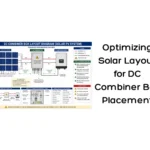
Optimizing Solar Layout for DC Combiner Box Placement
A complete guide to choosing the best location for DC combiner box placement to improve safety, cable routing, and solar system efficiency.

1MW Solar Power Plant Construction Cost & Profit in India
Choosing the right industrial solar EPC is critical for plant performance and ROI. This guide explains how Indian industries can select the best solar EPC partner.