
Safety is one of the most critical aspects of any solar power system. Solar installations are exposed to outdoor conditions, high voltages, and large metal structures, making them vulnerable to electrical faults and lightning strikes. Proper earthing (grounding) and lightning protection are essential to protect solar panels, inverters, equipment, buildings, and human life.
For every solar PV installer, understanding earthing systems and lightning protection methods is mandatory to ensure safe, compliant, and long-lasting solar installations. This guide explains the concept, types, requirements, and importance of earthing and lightning protection in solar PV systems.
What Is Earthing (Grounding)?
Definition
Earthing is the process of connecting electrical equipment to the earth using a low-resistance conductor. This allows fault current to safely flow into the ground instead of passing through equipment or people.
Earthing prevents electric shock, equipment damage, and fire hazards.
Why Earthing Is Required in Solar Systems
Solar PV systems generate DC power and convert it into AC power through inverters. Faults such as insulation failure, short circuits, or leakage current can occur.
Proper earthing helps to:
- Protect people from electric shock
- Protect the inverter and solar panels
- Prevent equipment damage
- Provide a safe fault current path
- Ensure system stability
- Reduce electrical noise
Earthing is mandatory under electrical safety standards.
Types of Earthing in Solar Installations
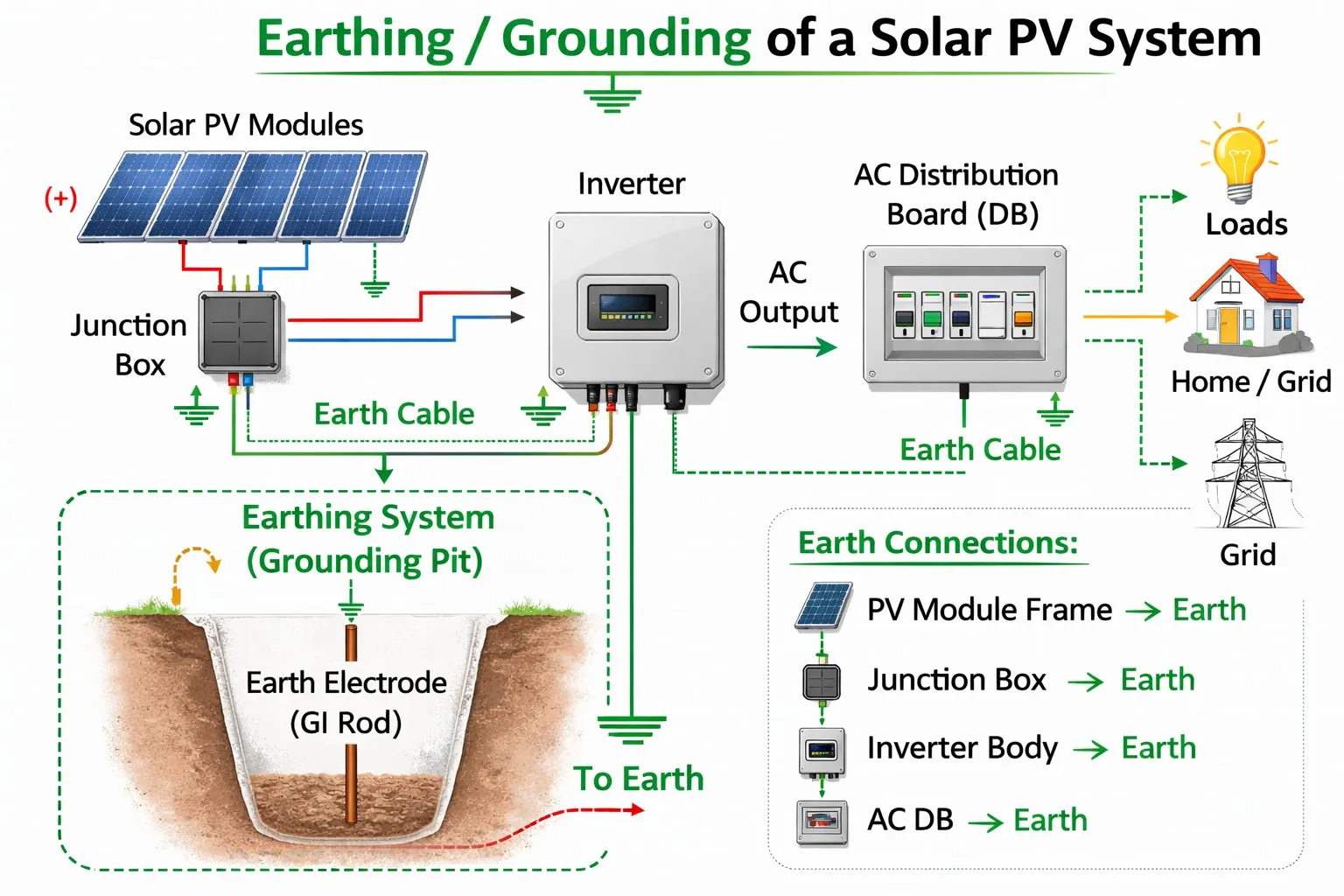
Solar systems typically require multiple earthing points.
1. Equipment Earthing
This connects the metal parts of solar equipment to the earth.
Includes:
- Solar panel frames
- Module mounting structure
- Inverter body
- Junction boxes
Purpose: Prevents electric shock if metal parts become energised.
2. DC Earthing
This protects the DC side of the solar system.
Includes:
- Solar panel strings
- DC combiner boxes
Purpose: Protects panels and wiring from fault currents.
3. AC Earthing
This protects the AC side of the system.
Includes:
- Inverter AC output
- Distribution panel
Purpose: Ensures safe operation of connected loads.
4. Lightning Earthing
This provides a safe path for lightning current.
Includes:
- Lightning arrestor
- Dedicated earth pit
Purpose: Protects the system during lightning strikes.
What Is Lightning Protection?
Solar panels are usually installed on rooftops or open land, making them highly exposed to lightning.
Lightning protection systems (LPS) safely divert lightning current into the ground, preventing damage.
Components of Lightning Protection System
1. Lightning Arrestor
A lightning arrestor is installed at the highest point of the solar installation. It captures lightning strikes and directs current safely to earth.
2. Down Conductor
This conductor connects the lightning arrestor to the earth pit. It safely carries lightning current to ground.
3. Earth Pit
Earth pits dissipate lightning current into the soil. Low resistance ensures effective protection.
Why Lightning Protection Is Critical in Solar Systems
Without lightning protection, lightning can:
- Destroy solar panels
- Damage inverter electronics
- Cause fire hazards
- Damage the electrical wiring
- Interrupt power generation
Proper lightning protection significantly reduces risk.
Earthing Resistance Requirement
Low earth resistance ensures effective fault current flow.
Typical recommended values:
- Equipment earthing: Less than 5 ohms
- Lightning earthing: Less than 2 ohms
- Industrial systems: 1 ohm preferred
Lower resistance provides better protection.
Types of Earthing Methods Used in Solar Systems
Pipe Earthing
- The most common and cost-effective method.
- Uses a GI pipe inserted into the ground.
Plate Earthing
- Uses copper or GI plate buried underground.
- Provides excellent conductivity.
Chemical Earthing
- Uses conductive chemical compounds to reduce resistance.
- Ideal for solar plants and industrial installations.
Importance of Earthing for Solar Installers
Every solar installer must ensure proper earthing because it helps in:
1. Safety of Personnel
Prevents electric shock during maintenance.
2. Protection of Expensive Equipment
Inverters and solar panels are sensitive to electrical faults.
3. Compliance with Electrical Standards
Mandatory under national and international safety codes.
4. Lightning Protection
Protects systems during thunderstorms.
5. Stable System Performance
Reduces voltage fluctuations and electrical interference.
Typical Earthing Requirement for Solar System
- Small residential solar system: 2 to 3 earth pits
- Industrial solar plant: 4 to 8 earth pits or more
Includes:
- Structure earthing
- DC earthing
- AC earthing
- Lightning earthing
Lightning Protection for Rooftop vs Ground-Mounted Solar
Rooftop solar:
- Lightning arrestor installed above panel level
- Connected to a dedicated earth pit
Ground-mounted solar:
- Multiple lightning arrestors
- Grid-based lightning protection
Large solar farms require advanced protection systems.
Common Mistakes Solar Installers Must Avoid
- Using a shared earth pit for all equipment
- High earth resistance
- Poor conductor connections
- Improper lightning arrestor placement
- Ignoring earthing maintenance
Proper design ensures safety and compliance.
Maintenance of Earthing System
Regular inspection ensures reliability.
Maintenance includes:
- Checking earth resistance
- Inspecting connections
- Preventing corrosion
- Watering earth pits if required
Proper maintenance ensures long-term protection.
Conclusion
Proper earthing and lightning protection are essential components of every solar installation. They ensure safety, protect equipment, and maintain reliable system performance. Earthing provides a safe path for fault current, while lightning protection prevents damage from lightning strikes.
For solar installers, correct earthing design is not just a technical requirement but a critical safety responsibility. It protects solar panels, inverters, buildings, and human life from electrical hazards.
As solar installations continue to expand across residential, commercial, and industrial sectors, implementing proper grounding and lightning protection ensures long-term system reliability, regulatory compliance, and safe renewable energy generation.
FAQs
Q1. Why is earthing required in solar systems?
Ans: It protects people and equipment from electrical faults.
Q2. What is the ideal earthing resistance for solar systems?
Ans: Generally less than 5 ohms.
Q3. Is lightning protection mandatory for solar installations?
Ans: Yes, especially for rooftop and ground-mounted systems.
Q4. How many earth pits are required for solar installation?
Ans: Typically, 2 to 6 ,depending on system size.
Q5. What is a lightning arrestor?
Ans: It safely diverts lightning current to earth.
1 MW Solar Plant Cost in Uttar Pradesh | A Complete Guide
Planning to install a 1 MW solar power plant in Uttar Pradesh? This guide covers 2025 pricing, subsidy details, ROI, and savings for industries and businesses.
Solar Financing for Businesses: Complete Guide to Funding Commercial & Industrial Solar Projects in India
Discover solar financing options for businesses in India, including CAPEX, OPEX, PPA models, solar loans, ROI, and funding strategies for commercial and industrial solar projects.
1 MW Solar Plant for Industry: Cost, Generation & Payback
A detailed guide on 1 MW solar plant for industry covering installation cost, area requirement, power generation, ROI, and long-term savings in India.
UP Electricity Tariff Increase 2015-16: Rates Rise by Rs 0.40–1.00 per Unit – What Consumers need to know
Uttar Pradesh has increased electricity tariffs for 2015-16, ranging from Rs 0.40 to 1.00 per unit. This update explains the revised rates, the sectors affected, and what consumers need to know about the tariff hike.
Data Acquisition System Calibration in Solar PV Plants
A complete guide to solar PV data acquisition system calibration, ensuring accurate monitoring, reliable data collection, and effective performance analysis.
Steps Required for Conducting a Site Assessment Prior to Solar Installation
A solar site assessment helps installers evaluate location, shading, structure, and energy requirements before installation. This guide explains the essential steps for accurate solar system planning.
Rajasthan Rooftop Solar Subsidy: What Homeowners Need to Know
Rajasthan homeowners can save big with the 2025 rooftop solar subsidy. Learn about the updated rates, eligibility criteria, and benefits to make your switch to solar more affordable.
Unintentional Islanding Test for Solar PV Systems
A complete guide to performing the solar PV anti-islanding test, ensuring safe grid-connected operation, regulatory compliance, and reliable inverter performance.