
Battery storage systems have become an essential component of modern solar photovoltaic (PV) projects. They help store excess solar electricity generated during the day and provide backup power during nighttime or grid outages. Whether for residential, commercial, or industrial solar plant applications, proper battery bank installation is critical for ensuring safety, efficiency, and long-term reliability.
An incorrectly installed battery bank can lead to overheating, reduced battery life, electrical hazards, acid leakage, and increased solar installation charges. Therefore, selecting the right installation site and following best practices are crucial for optimizing solar panel system cost and ensuring smooth system operation.
Proper installation and maintenance of battery systems are essential aspects of renewable solar projects.
This blog provides a complete guide to battery bank installation in solar projects, including site selection criteria, installation procedures, safety precautions, and industry best practices.
Importance of Battery Banks in Solar PV Systems
Battery banks are used to:
- Store excess solar energy
- Provide backup power
- Improve energy reliability
- Support off-grid and hybrid solar systems
They are widely used in:
- Solar energy for home use
- Commercial renewable solar systems
- Utility-scale energy storage projects
Types of Batteries Used in Solar Projects
1. Lead-Acid Batteries
- Economical
- Widely used
- Require ventilation and maintenance
2. Lithium-Ion Batteries
- Higher efficiency
- Longer lifespan
- Compact and lightweight
3. Gel Batteries
- Sealed and maintenance-free
- Suitable for sensitive environments
4. Tubular Batteries
- Common in residential backup systems
- Good cycle life
Importance of Proper Site Selection
Choosing the correct installation site helps:
- Improve battery performance
- Prevent overheating
- Reduce maintenance costs
- Increase system safety
- Optimize the cost of solar per kWh installed
Key Factors for Battery Bank Site Selection
1. Ventilation
Proper airflow is essential to:
- Prevent heat buildup
- Avoid gas accumulation in lead-acid batteries
Poor ventilation reduces battery lifespan.
2. Temperature Control
Battery rooms should maintain stable temperatures.
Recommended Conditions:
- Cool and dry environment
- Avoid direct sunlight
Excessive heat increases solar energy installation costs due to reduced battery efficiency.
3. Structural Strength
The installation surface must support the battery’s weight safely.
4. Accessibility
The battery bank should allow:
- Easy maintenance
- Safe inspection
- Quick replacement
5. Moisture Protection
Avoid locations prone to:
- Water leakage
- Flooding
- High humidity
6. Electrical Safety
Install away from:
- Flammable materials
- High-traffic areas
- Heat sources
7. Adequate Space
Provide sufficient clearance for:
- Air circulation
- Cable routing
- Maintenance access
Step-by-Step Battery Bank Installation Process
Step 1 – Review Design Drawings
Understand:
- Battery arrangement
- Cable routing
- Ventilation layout
Step 2 – Prepare Installation Area
Ensure:
- Clean surface
- Proper ventilation
- Structural stability
Step 3 – Install Battery Stand
- Assemble the stand as per the design
- Ensure proper leveling
Step 4 – Install Spill Containment System
For lead-acid batteries:
- Use acid-resistant trays
- Prevent leakage damage
Step 5 – Position Batteries Carefully
- Follow the battery layout sequence
- Maintain proper spacing
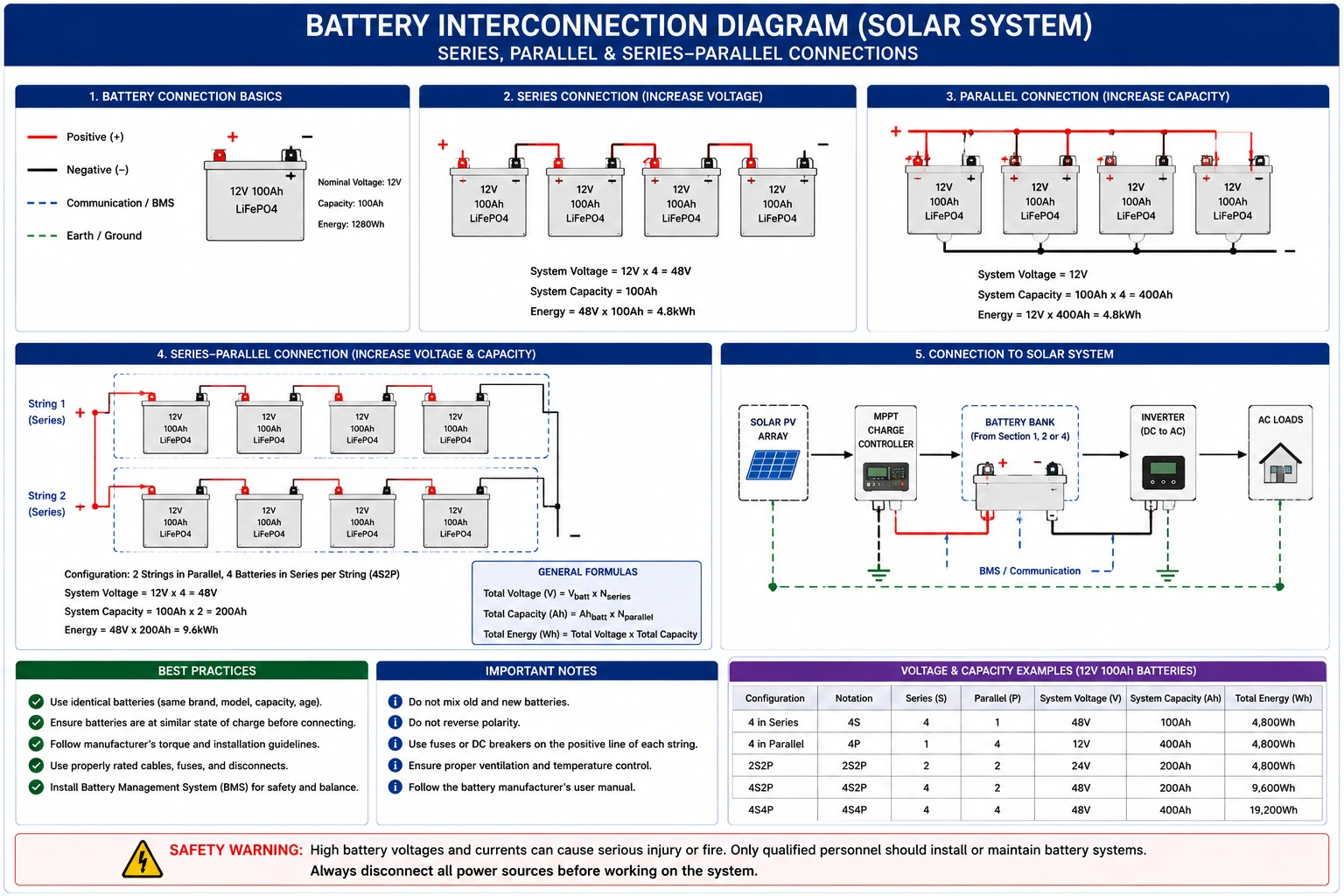
Step 6 – Connect Battery Interconnections
- Use proper cable sizing
- Maintain correct polarity
Step 7 – Install Protective Devices
Include:
- Fuses
- Circuit breakers
- Disconnect switches
Step 8 – Verify Grounding
- Ensure proper earthing and safety.
Step 9 – Perform Electrical Testing
Check:
- Voltage levels
- Connection tightness
- Insulation resistance
Step 10 – Label and Document Installation
Clearly identify:
- Battery strings
- Safety signs
- Disconnect switches
Best Practices for Battery Bank Installation
1. Maintain Proper Ventilation
- Ensure continuous airflow.
2. Follow Manufacturer Instructions
- Use recommended installation procedures.
3. Use Proper Cable Management
- Prevent loose or exposed cables.
4. Conduct Routine Inspection
- Check battery condition regularly.
5. Maintain Cleanliness
- Keep the battery area free from dust and debris.
Conclusion
Proper battery bank installation is essential for ensuring the safety, efficiency, and long-term reliability of solar PV systems. By selecting an appropriate site, maintaining ventilation, following correct installation practices, and implementing safety measures, installers can improve system performance and reduce operational risks.
Battery installation and maintenance are critical aspects of renewable solar projects. Additionally, compliance with guidelines from the Ministry of New and Renewable Energy ensures safe and standardized installations.
With proper installation practices, solar professionals can optimize solar panel system cost, enhance solar electricity storage reliability, and support sustainable solar energy for home use and advanced renewable energy technology solutions.
FAQs
Q1. Why is battery bank site selection important?
Ans: It affects safety, ventilation, and battery lifespan.
Q2. What is the best environment for battery installation?
Ans: A cool, dry, and well-ventilated area.
Q3. Why is ventilation necessary for lead-acid batteries?
Ans: To prevent gas accumulation and overheating.
Q4. Does proper battery installation affect solar panel system cost?
Ans: Yes, it reduces maintenance and replacement costs.
Q5. What safety precautions are required during installation?
Ans: Use PPE, insulated tools, and proper grounding.

How to Improve Energy Efficiency and Save Electricity Costs
Learn how energy conservation and efficiency can help you save electricity, cut costs, and make your home or business more sustainable

How Solar Energy Is Converted into Electricity Using Solar Panels – Complete Guide
Solar panels convert sunlight into usable electricity through the photovoltaic effect. From photon absorption to inverter conversion and grid connection, each component plays a critical role in solar power generation. This complete guide explains the step-by-step process of how solar energy becomes electricity for homes, businesses, and industries, helping you understand the technology behind India’s growing renewable energy movement.

What Is Solar Performance Ratio (PR)? Meaning, Formula & Importance
Solar Performance Ratio (PR) is a key indicator of how efficiently a solar power system converts available sunlight into usable electricity. This guide explains what PR is, how it is calculated, why it matters, and how it directly impacts your solar system’s actual energy output.
Understanding Solar Battery Specifications: Capacity, Voltage & Efficiency Explained
Solar batteries are essential for energy storage and backup in PV systems. This guide explains key specifications like capacity, voltage, efficiency, and depth of discharge to help you choose the right battery.

How Roof Area Determines Solar Capacity
Discover how available roof area affects solar plant capacity, with insights into usable space, panel dimensions, shading, access pathways, and factors that influence rooftop solar installation potential.

How MPPT Works in an Inverter: A Simple Guide for Solar Users
This simple guide explains how MPPT works in a solar inverter, helping users understand how it maximizes power output and improves system efficiency.

Solar Net Metering in Industrial Units: Opportunities and Risks
Solar net metering can help factories save on energy costs, but there are key pitfalls to consider. Learn the challenges and best practices for industrial adoption

Latest 100 kW Solar Plant Price in Delhi | Subsidy, ROI & Payback
Thinking about installing a 100 kW solar system in Delhi? This 2025 guide breaks down the 100 kW Solar Plant Cost in Delhi, explaining price per watt, total investment, energy generation, and key benefits for industries and businesses.