
Sloped roof solar installations are one of the most common methods for deploying solar energy for home use, especially in residential and small commercial buildings. A critical aspect of these installations is the secure fixing of roof attachments and anchors, which ensures that the mounting structure remains stable, leak-proof, and durable over time.
Improper anchoring can lead to structural instability, water seepage, reduced solar electricity generation, and increased solar installation charges. Correct installation of roof attachments is essential for safe and efficient solar PV systems.
This blog provides a complete step-by-step guide to installing roof attachments and anchors for sloped roof solar structures, ensuring safety, performance, and optimized solar panel system cost.
What are Sloped Roof Solar Attachments and Anchors?
Roof attachments and anchors are components used to secure solar mounting structures to the roof surface.
They include:
- Roof hooks
- Anchor bolts
- L-feet brackets
- Clamps
These components transfer loads from the solar panels to the building structure.
Importance of Proper Installation
Correct installation ensures:
- Structural stability
- Resistance to wind uplift
- Leak-proof roofing
- Long-term durability
- Efficient solar electricity generation
Improper installation can increase solar energy installation cost due to repairs and maintenance.
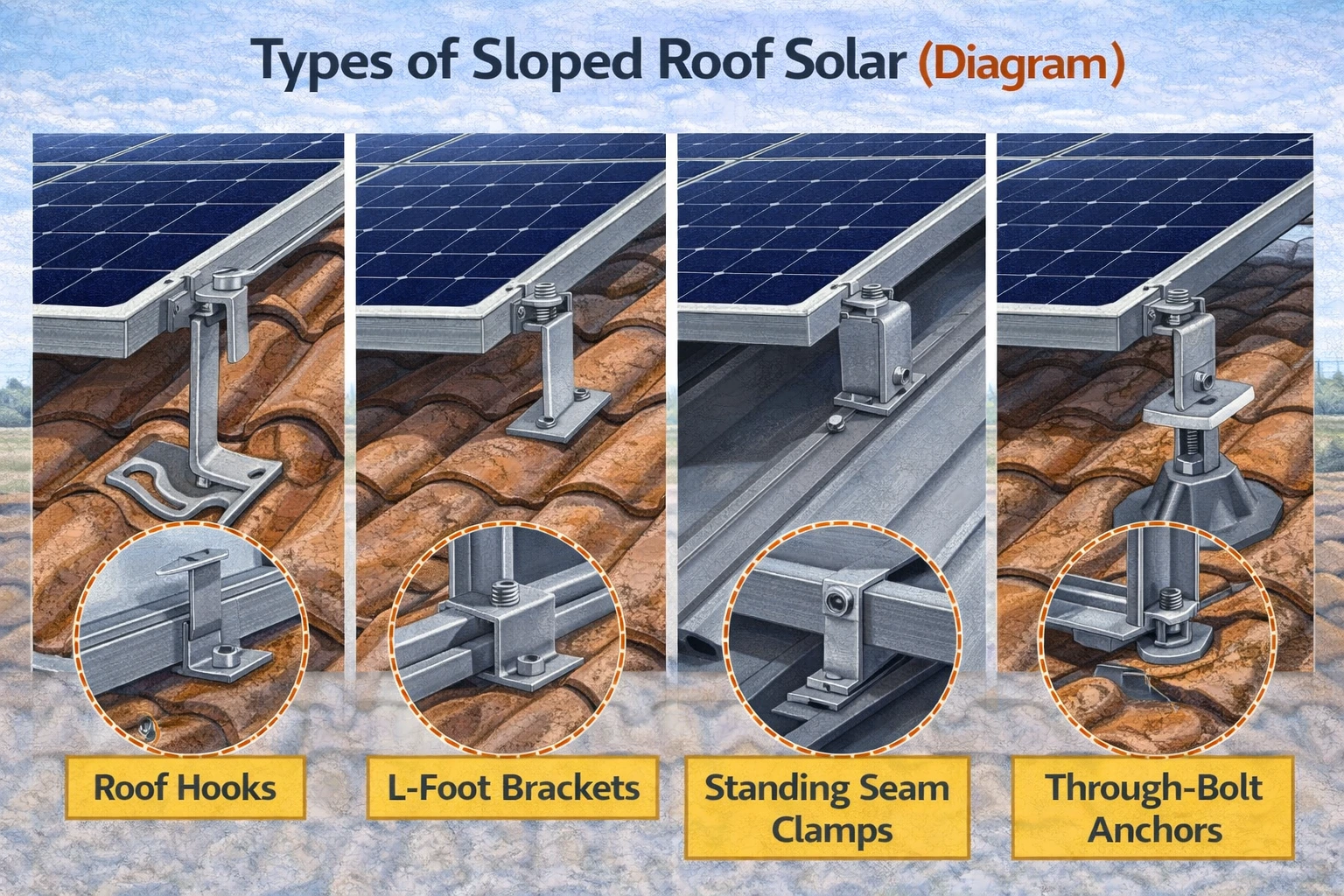
Types of Sloped Roof Solar
1. Roof Hooks
- Used for tile roofs
- Attached to rafters
2. L-Foot Brackets
- Used for metal and RCC roofs
- Fixed using bolts
3. Standing Seam Clamps
- Used for metal roofs
- No drilling required
4. Through-Bolt Anchors
- Fixed directly through roof structure
- Provides strong support
Tools and Materials Required
Tools
- Drilling machine
- Torque wrench
- Spanners
- Measuring tape
- Spirit level
Materials
- Roof attachments (hooks, brackets)
- Anchor bolts
- Fasteners
- Sealants
- Flashing materials
Step-by-Step Installation Process
Step 1 – Site Assessment
Evaluate:
- Roof type (tile, metal, RCC)
- Roof condition
- Structural strength
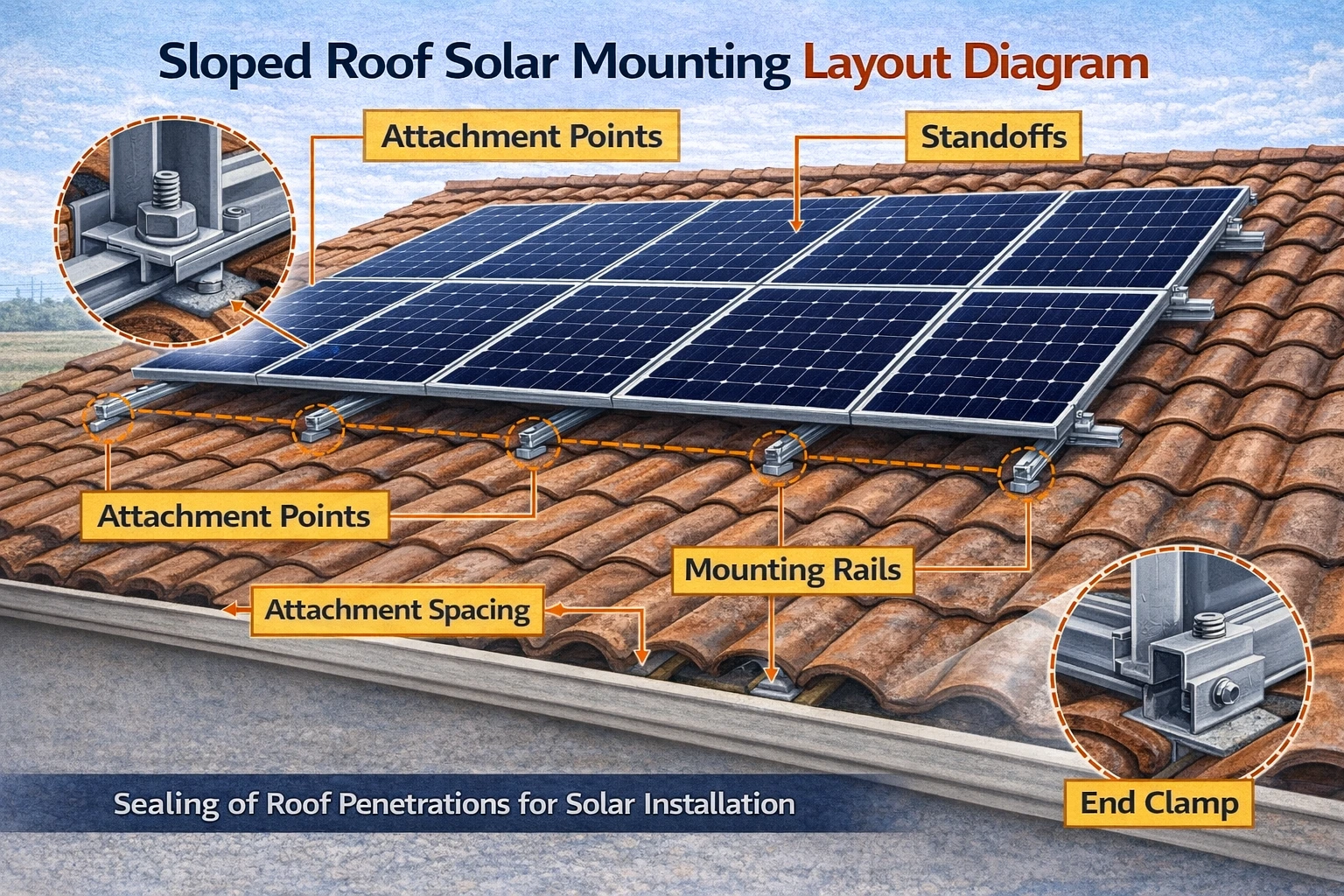
Step 2 – Mark Attachment Points
- Identify rafters or structural supports
- Mark positions as per design
Step 3 – Drill Holes
- Drill at marked locations
- Ensure correct depth and alignment
Step 4 – Install Anchors
- Insert anchor bolts or fasteners
- Fix securely to roof structure
Step 5 – Attach Sloped Roof Solar Mounting Components
- Fix hooks or brackets
- Ensure proper alignment
Step 6 – Apply Waterproofing
- Use sealants and flashing
- Prevent water leakage
Step 7 – Install Mounting Rails
- Attach rails to roof attachments
- Ensure correct spacing and alignment
Step 8 – Tighten and Secure
- Use torque wrench
- Ensure proper fastening
Step 9 – Final Inspection
- Check alignment
- Verify waterproofing
- Ensure stability
Waterproofing Techniques
1. Use of Flashing
Prevents water entry around attachments.
2. Sealants
Seal drilled holes and joints.
3. Proper Installation Technique
Avoid damaging roof materials.
Quality Checks
1. Alignment Check
Ensure all attachments are aligned.
2. Tightness of Fasteners
Verify proper torque application.
3. Leak Testing
Check for water seepage.
4. Structural Stability
Ensure attachments are secure.
Conclusion
The installation of roof attachments and anchors is a crucial step in sloped roof solar PV systems that directly impacts system safety, durability, and performance. By following proper installation procedures, ensuring effective waterproofing, and conducting quality checks, installers can achieve reliable and efficient solar installations.
Correct mounting and anchoring practices are essential for successful solar projects. Additionally, compliance with standards set by the Ministry of New and Renewable Energy ensures safety and quality.
With the right approach, solar professionals can optimize solar panel system cost, enhance solar electricity generation, and contribute to sustainable solar energy for home use and large-scale renewable solar solutions.
FAQs
Q1. What are roof attachments in solar PV systems?
Ans: They are components used to secure mounting structures to the roof.
Q2. Why is waterproofing important in roof attachment installation?
Ans: It prevents water leakage and structural damage.
Q3. Which attachment is used for tile roofs?
Ans: Roof hooks are commonly used for tile roofs.
Q4. How does anchoring affect solar panel system cost?
Ans: Proper anchoring reduces maintenance and long-term costs.
Q5. Are safety measures necessary during installation?
Ans: Yes, they ensure safe working conditions and prevent accidents.

SmartRoof Solar Associate Program – Easy Way to Earn with Solar Referrals
Join the SmartRoof Solar Associate Program. Refer solar leads, earn rewards, and support clean energy growth in your community.
Selecting Solar Panels: Best Guide for Homes and Factories
Solar panels are a hot topic these days, as the cost of solar is finally approaching what the average family can afford.
How to Check Equipment Location for Solar PV Systems
A complete guide to battery bank enclosure and rack installation, including site verification, setup procedures, and safety practices for solar PV systems.
Solar PV Battery Types: Complete Installer Guide
A complete guide to the types of batteries used in solar PV systems, helping installers and solar professionals choose the right energy storage solution.
Earthing and Lightning Protection Required for Solar Installation – Complete Guide for Solar Installers
Earthing and lightning protection are critical safety components in solar PV installations. This guide explains their importance, types, components, and best practices for solar installers.
500 kW Solar Power Plant Cost in Rajasthan | Latest Price, Benefits and Payback Period
Planning to install a 500 kW solar power plant in Rajasthan? Discover the 2025 price estimate, government subsidy options, and ROI potential. Learn how industries and businesses can cut electricity costs and earn long-term returns through solar energy investments.
Inverter Circuit Board Fault Guide for Solar PV Systems
A complete guide to identifying inverter circuit board faults in solar PV systems, recognizing when professional service is required, and following safe maintenance procedures.
Installation of DC Energy Meters in Solar PV Systems: Step-by-Step Guide
DC energy meters are used in solar PV systems to measure generated DC power and energy. This guide explains installation, wiring, testing, and safety procedures for solar installers.