Sir! Solar Mein Itna Chalta Hai!” When to Reject a Site: The Truth About Shadow Analysis
Site Assessment & Shadow Analysis – An important step before Rooftop Solar PV Installation.
According to MNRE, approximate 10 sq. meters “Shadow Free” area is required for 1 kWp Rooftop Solar PV Installation. The term “Shadow Free” is very important and in this blog we will be discussing about “Site Assessment and Shadow Analysis for Rooftop Solar PV Installation”.
Shadow is one of the factors that will affect the performance of Solar PV system.
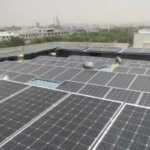
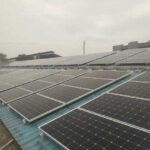
Your Solar PV System Array should be designed such that Shadow will not fall on the Solar PV Panels. Shadow can be from parapet walls, tanks, structures, trees, inter row shadow and other objects.
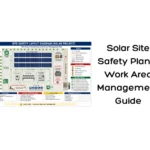
There are many objects , like parapet walls, water tanks , O/D units of AC’s, Dish of antennas, Mummty etc. which can cause shadow. As, shown in the picture above, the objects that are situated at the South Direction of the building will cause shadow on the Solar PV System. So, the system should be designed such that it avoids the shadow of these objects.
Ideally, Solar PV Rooftop System should be designed such that no shadow falls on array, on the day with longest shadow (i.e. usually from 9am to 3pm, on December 21 in Northern Hemisphere). For Shadow analysis from nearby objects and inter rows of solar array, “Solar Path Finder” should be used at the time of Site Assessment.
The thumb rule says, that we should leave at least 1.5 to 2 times the Height of object (placed in South of the building), to avoid the Shadow effect on the PV modules. The same goes with Inter Row Spacing of the Solar PV Array, at least 1.5 to 2 times the Height of the Structure should be left in between the two rows, to avoid the Shadow effect.
Now all you need is to cross check the layout design of the Rooftop Solar PV System, as provided by the installer or need to clarify this with the installer, that what distance they had left to reduce the losses due to shadow.
If it is less than 1.5 to 2 times the Object Height, and if he says “Sir! Solar Mein Itna Chalta Hai!!”, then you surely needs to change your installer.
We’ll be talking on more such issues in our future blogs.
Suggested Articles

Difference Between Inverter and Solar Inverter: A Complete Comparison
Confused between an inverter and a solar inverter? This guide explains their key differences, working principles, advantages, and which option is best for your home or business.

Benefits of Site Survey in Solar PV Installation
Shadow analysis is a critical step in solar site assessment. It helps solar installers identify shading obstacles and optimize panel placement for maximum energy generation.

Market Demand of Solar PV Installer in India – Growth, Opportunities & Future Scope
India’s solar energy sector is expanding rapidly, creating strong demand for skilled solar PV installers across rooftop, commercial, and utility-scale projects. With increasing investments in renewable energy and rising industrial solar adoption, trained installers are becoming critical to project execution and performance. This blog explores market growth trends, career opportunities, salary potential, and the future scope of solar PV installation jobs in India’s booming renewable energy industry.

Solar for Pharma & Chemical Industries: Cost, Benefits, Installation & ROI in India
A complete guide on solar systems for the FMCG industry in India covering installation cost, benefits, ROI, system sizing, and the installation process.

Top Solar Companies & Suppliers in Delhi/NCR – A Complete Guide
Looking for trusted solar panel suppliers in Delhi/NCR? Explore leading solar companies serving Gurgaon, Noida, Faridabad, Manesar, and Ghaziabad. Compare product quality, technology, and services to choose the right solar partner for your home, business, or factory.

India Solar Energy Policies: Key Updates and Government Initiatives
India is one of the leading countries in terms of solar energy development, having become the fastest-growing market for solar power globally.

How the RESCO Model Works in Solar: A Complete Guide for Industries
The RESCO model allows businesses to adopt solar with zero upfront investment. Under this model, a developer installs, owns, and operates the solar plant while you simply pay for the power you consume—making clean energy both affordable and hassle-free.

Financing made easy for the Rooftop Solar Projects
Switching to solar is easier than ever with flexible financing options. This guide explains how to fund your rooftop solar project through loans, subsidies, and government schemes to make clean energy more affordable and sustainable.