
Safety is the foundation of every successful solar photovoltaic (PV) project. Whether installing rooftop solar panels, commissioning a utility-scale solar power plant, troubleshooting an inverter, maintaining battery storage systems, or inspecting electrical equipment, every task must be carried out using established safe work procedures. Solar PV systems involve electrical, mechanical, environmental, and working-at-height hazards that can result in severe injuries, equipment damage, project delays, or even fatalities if proper safety practices are not followed.
As the global adoption of renewable solar technology continues to grow, ensuring workplace safety has become a critical responsibility for EPC contractors, installers, commissioning engineers, Operations & Maintenance (O&M) teams, supervisors, and facility owners. Safe work procedures provide a structured framework for identifying hazards, assessing risks, implementing control measures, using Personal Protective Equipment (PPE), following Lockout/Tagout (LOTO) procedures, and responding effectively to emergencies.
Solar PV installations present unique risks because photovoltaic modules generate direct current (DC) electricity whenever exposed to sunlight. Unlike conventional electrical systems, PV arrays cannot simply be switched off during daylight hours. This makes proper planning, isolation procedures, electrical testing, and safe working practices essential throughout the project lifecycle.
In addition to electrical hazards, technicians must manage risks associated with working at heights, lifting heavy equipment, confined spaces, adverse weather conditions, battery handling, hot surfaces, rotating machinery, and fire hazards. Establishing and following documented safe work procedures not only protects personnel but also improves work quality, minimizes downtime, reduces maintenance costs, and enhances the long-term reliability of solar electricity generation systems.
Safety is an integral part of every solar installation, commissioning, testing, and maintenance activity. Every technician should understand workplace hazards and consistently follow approved safety procedures before performing any task.
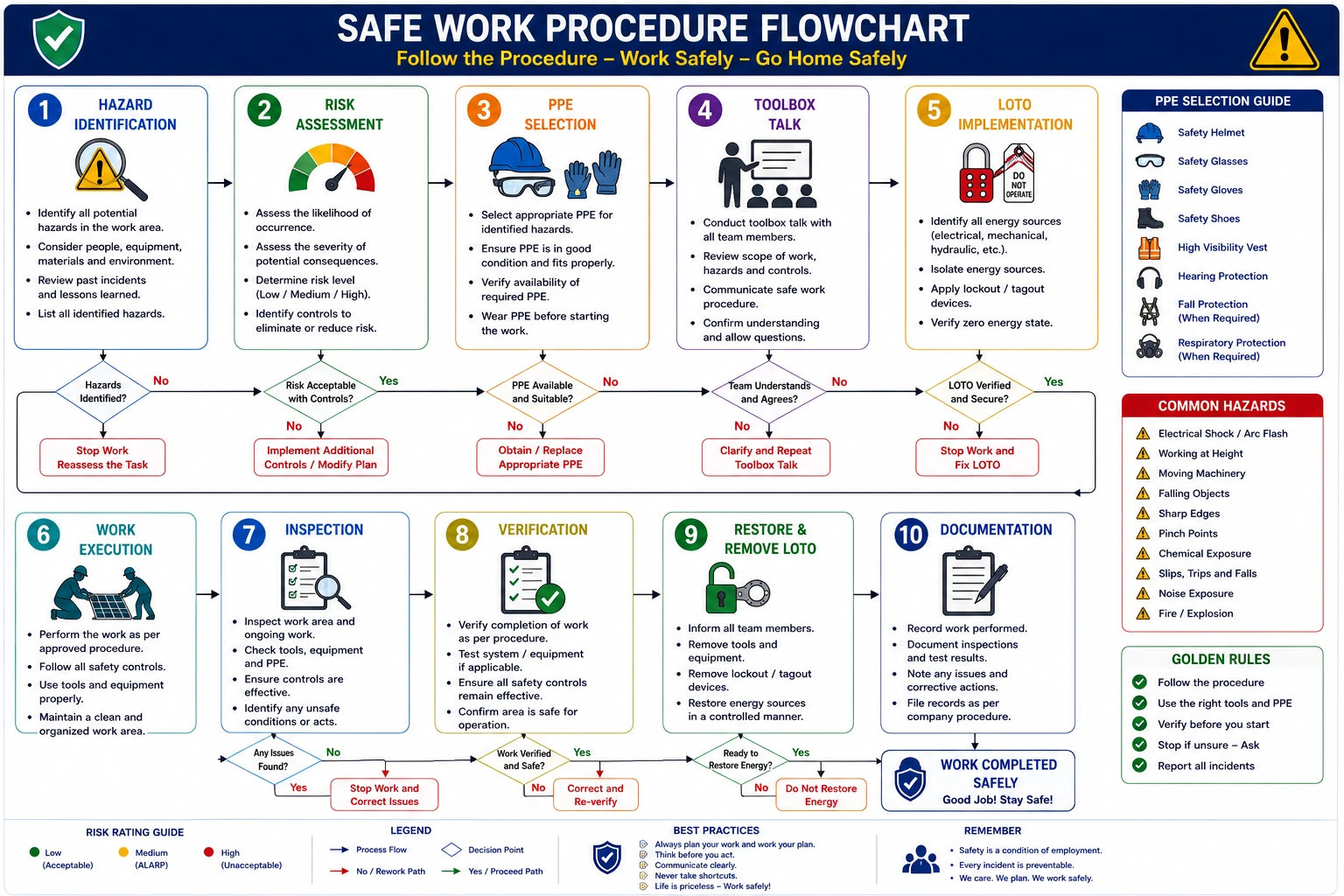
This comprehensive guide explains safe work procedures for solar PV systems, hazard identification, risk assessment, PPE requirements, Lockout/Tagout procedures, emergency preparedness, documentation, and industry best practices.
What Are Safe Work Procedures?
Safe work procedures are documented step-by-step instructions that describe how specific tasks should be performed safely while minimizing risks to personnel, equipment, and property.
They ensure that work is carried out:
- Safely
- Consistently
- Efficiently
In compliance with applicable regulations and project requirements, These procedures apply throughout the lifecycle of a solar plant, from design and installation to testing, commissioning, operation, maintenance, and decommissioning.
Why Are Safe Work Procedures Important?
Following safe work procedures helps to:
- Prevent workplace accidents
- Reduce electrical hazards
- Protect personnel from injuries
- Prevent equipment damage
- Improve work quality
- Reduce downtime
- Ensure regulatory compliance
- Improve the long-term performance of solar electricity systems
Safety also contributes to reducing the overall cost of solar per kWh installed by preventing costly incidents and equipment failures.
Common Hazards in Solar PV Systems
Technicians should be aware of hazards such as:
- Electric shock
- Arc flash
- DC electrical hazards
- AC electrical hazards
- Falls from rooftops
- Slips and trips
- Falling tools or equipment
- Manual handling injuries
- Fire hazards
- Battery chemical exposure
- High temperatures
- Sharp metal edges
- Adverse weather conditions
- Confined spaces
- Mechanical injuries
Each hazard requires appropriate preventive measures.
Key Elements of a Safe Work Procedure
A comprehensive procedure should include:
- Hazard identification
- Risk assessment
- Job planning
- Required PPE
- Approved tools and equipment
- Lockout/Tagout (LOTO) procedures
- Emergency response plan
- Communication protocols
- Inspection requirements
- Documentation and reporting
Personal Protective Equipment (PPE)
Appropriate PPE includes:
- Safety helmet
- Electrical insulating gloves
- Safety glasses or face shield
- Flame-resistant clothing where required
- Safety shoes
- High-visibility vest
- Hearing protection (where applicable)
- Fall arrest harness for rooftop work
PPE must be inspected before each use and replaced if damaged.
Step-by-Step Safe Work Procedure
Step 1 – Conduct a Job Hazard Analysis (JHA)
Before beginning work:
- Identify all potential hazards.
- Assess the level of risk.
- Determine appropriate control measures.
- Review emergency procedures.
No work should begin until hazards have been evaluated.
Step 2 – Review Project Documentation
Check:
- Single-line diagrams (SLDs)
- Layout drawings
- Equipment manuals
- Risk assessment reports
- Permit-to-work documentation
- Previous maintenance records
Understanding the system reduces the likelihood of errors.
Step 3 – Conduct a Toolbox Talk
Before starting work, supervisors should discuss:
- Scope of work
- Hazards
- Responsibilities
- Safety precautions
- Emergency contacts
- Weather conditions
This ensures all personnel understand the day’s activities.
Step 4 – Inspect Tools and Equipment
Verify that:
- Measuring instruments are calibrated.
- Power tools are in good condition.
- Ladders and scaffolding are secure.
- Insulated tools are undamaged.
- PPE is serviceable.
Defective equipment should not be used.
Step 5 – Follow Lockout/Tagout (LOTO) Procedures
Where applicable:
- Isolate electrical equipment.
- Lock isolation devices.
- Attach warning tags.
Verify the absence of hazardous voltage before commencing work. LOTO prevents accidental energization during maintenance.
Step 6 – Verify Electrical Safety
Before touching conductors:
- Measure voltage using an approved meter.
- Confirm polarity.
- Check grounding continuity.
- Verify insulation resistance where required.
Remember that PV modules generate electricity whenever exposed to sunlight.
Step 7 – Ensure Safe Working at Heights
When working on rooftops:
- Use certified fall protection systems.
- Secure ladders properly.
- Avoid stepping on PV modules.
- Maintain three points of contact while climbing.
- Keep tools secured to prevent falling objects.
Step 8 – Maintain Good Housekeeping
Keep the work area:
- Clean
- Dry
- Organized
- Free from trip hazards
- Properly illuminated
Good housekeeping reduces workplace accidents.
Step 9 – Follow Manufacturer Instructions
Always install, test, commission, and maintain equipment according to manufacturer recommendations.
This includes:
- Torque specifications
- Cable routing
- Grounding methods
- Commissioning procedures
- Maintenance intervals
Step 10 – Monitor Weather Conditions
Avoid outdoor work during:
- Heavy rain
- Thunderstorms
- Strong winds
- Lightning activity
- Extreme heat
Weather conditions directly affect worker safety.
Step 11 – Maintain Effective Communication
Ensure:
- Workers remain in contact with supervisors.
- Emergency contact numbers are available.
- Radios or mobile communication devices are operational.
- Lone working is avoided for high-risk activities.
Step 12 – Respond to Emergencies
Emergency procedures should address:
- Electrical shock
- Fire
- Falls
- Battery chemical spills
- Medical emergencies
- Equipment failures
Emergency equipment should remain accessible at all times.
Step 13 – Complete Work Verification
After completing work:
- Inspect the installation.
- Verify electrical integrity.
- Confirm proper operation.
- Remove temporary barriers.
- Restore equipment safely.
Step 14 – Document the Activity
Record:
- Work completed
- Hazards encountered
- Safety observations
- Corrective actions
- Equipment tested
- Personnel involved
- Date and time
- Supervisor approval
Documentation supports continuous safety improvement.
Safe Work Practices During Solar PV Installation
During installation:
- Verify structural stability before mounting equipment.
- Use approved lifting techniques.
- Protect cables from damage.
- Ensure proper grounding.
- Tighten electrical connections to specified torque values.
- Maintain safe distances from energized equipment.
Safe Work Practices During Maintenance
During maintenance:
- Follow LOTO procedures.
- Verify isolation.
- Inspect PPE.
- Use insulated tools.
- Test before touching conductors.
- Replace damaged components promptly.
Safe Work Practices During Testing and Commissioning
Commissioning personnel should:
- Use calibrated instruments.
- Confirm correct polarity.
- Verify grounding.
- Perform insulation resistance tests.
- Follow startup procedures.
- Record test results.
Conclusion
Safety is a fundamental requirement in every solar PV installation, testing, commissioning, operation, and maintenance activity. Establishing and consistently following safe work procedures enables technicians to identify hazards, manage risks effectively, protect personnel, and ensure that every task is completed safely and efficiently. Through proper planning, hazard assessments, PPE usage, Lockout/Tagout implementation, safe electrical practices, emergency preparedness, and comprehensive documentation, organizations can reduce workplace incidents while improving the quality and reliability of their solar projects.
Workplace safety is a core competency for solar installers, EPC contractors, commissioning engineers, and operations and maintenance professionals. Furthermore, adhering to technical recommendations and safety practices promoted by the Ministry of New and Renewable Energy, along with manufacturer guidelines and applicable electrical standards, ensures that solar PV work is performed responsibly, safely, and in compliance with industry requirements.
By fostering a strong safety culture, conducting regular training, maintaining accurate documentation, using appropriate PPE, following standardized procedures, and continuously improving workplace practices, solar professionals can optimize solar panel system cost, enhance renewable solar system reliability, maximize solar electricity generation, reduce the cost of solar per kWh installed, lower the solar installation cost per kWh, and support the long-term success of residential, commercial, industrial, and utility-scale solar energy projects.
FAQs
Q1. Why are safe work procedures important in solar PV systems?
Ans: Safe work procedures protect workers from electrical, mechanical, and environmental hazards while ensuring installations, testing, and maintenance activities are performed safely, efficiently, and in compliance with industry standards.
Q2. What are the main hazards encountered during solar PV installation?
Ans: Common hazards include electric shock, arc flash, falls from height, manual handling injuries, fire risks, battery chemical exposure, adverse weather conditions, and injuries caused by improper tool use or damaged equipment.
Q3. What is the purpose of Lockout/Tagout (LOTO) in solar maintenance?
Ans: LOTO prevents the accidental energization of electrical equipment during maintenance by isolating energy sources, locking isolation devices, and verifying that equipment is safe to work on before maintenance begins.
Q4. What Personal Protective Equipment (PPE) should solar technicians use?
Ans: Solar technicians should wear safety helmets, insulated gloves, safety glasses, safety footwear, flame-resistant clothing where required, high-visibility vests, and fall protection equipment when working at heights.
Q5. How do safe work procedures improve solar project performance?
Ans: By preventing accidents, reducing equipment damage, ensuring proper installation practices, minimizing downtime, improving maintenance quality, and supporting reliable solar electricity generation, safe work procedures contribute to the long-term efficiency and success of renewable solar projects.

Rooftop Solar for Factories: Cost, Benefits, ROI & Installation Guide in India
Learn how rooftop solar for factories in India lowers power costs with high ROI, faster payback, and long-term energy savings for industrial facilities.
Solar Structure Alignment and Leveling Guide for Installers
A step-by-step guide to solar tracking system installation, covering setup, alignment, and best practices for maximum efficiency and performance.
Steps Required for Conducting a Site Assessment Prior to Solar Installation
A solar site assessment helps installers evaluate location, shading, structure, and energy requirements before installation. This guide explains the essential steps for accurate solar system planning.
How Are Solar PV Modules Made? Complete Guide to the Manufacturing Process
Choosing the right solar panels can be confusing with so many options in the market. This guide simplifies solar panel selection by comparing types, efficiency ratings, and cost factors. Whether for your home, business, or industry, learn how to make an informed decision and maximize the return on your solar investment.
Questionnaire for Conducting Site Survey Before Solar Installation
A proper site survey is critical before solar installation. This questionnaire helps evaluate roof condition, load requirements, shading, and electrical infrastructure to ensure accurate system design and optimal performance.
Solar PV System Labeling Verification Guide
A complete guide to solar PV system labeling verification, ensuring compliance, safety, proper equipment identification, and efficient maintenance.

Electrical Measuring Instruments Every Solar Installer Must Know
Solar installers rely on accurate electrical measurements for safe and efficient system performance. This guide explains the role of voltmeters, ammeters, digital multimeters, and clamp meters in solar installations.
Solar PV Troubleshooting Guide: Fault Diagnosis & Solutions
A complete solar PV troubleshooting guide covering fault diagnosis, testing procedures, root cause analysis, and corrective actions to ensure safe, reliable, and efficient system operation.