
The rapid growth of the solar energy sector in India has created a strong demand for skilled professionals who can turn solar project plans into functional power systems. Among all roles in the solar ecosystem, the PV (Photovoltaic) Solar Installer plays one of the most critical positions. While engineers design the system and consultants plan finances, it is the installer who physically builds, connects, and activates the solar power plant.
A PV solar installer ensures that solar panels, inverters, wiring, mounting structures, and safety components are correctly installed so that the system generates maximum energy with minimal risk. In a country like India, where commercial and industrial solar installations are expanding rapidly, the installer’s role directly influences system performance, safety standards, and long-term savings.
Who is a PV Solar Installer?
A PV Solar Installer is a trained professional responsible for the on-site installation, connection, testing, and commissioning of solar power systems. Their work can range from small residential rooftop installations to multi-megawatt industrial or ground-mounted solar farms.
They act as the bridge between technical design and practical execution. Without proper installation, even high-quality solar equipment cannot deliver expected performance.
Core Responsibilities of a PV Solar Installer in India
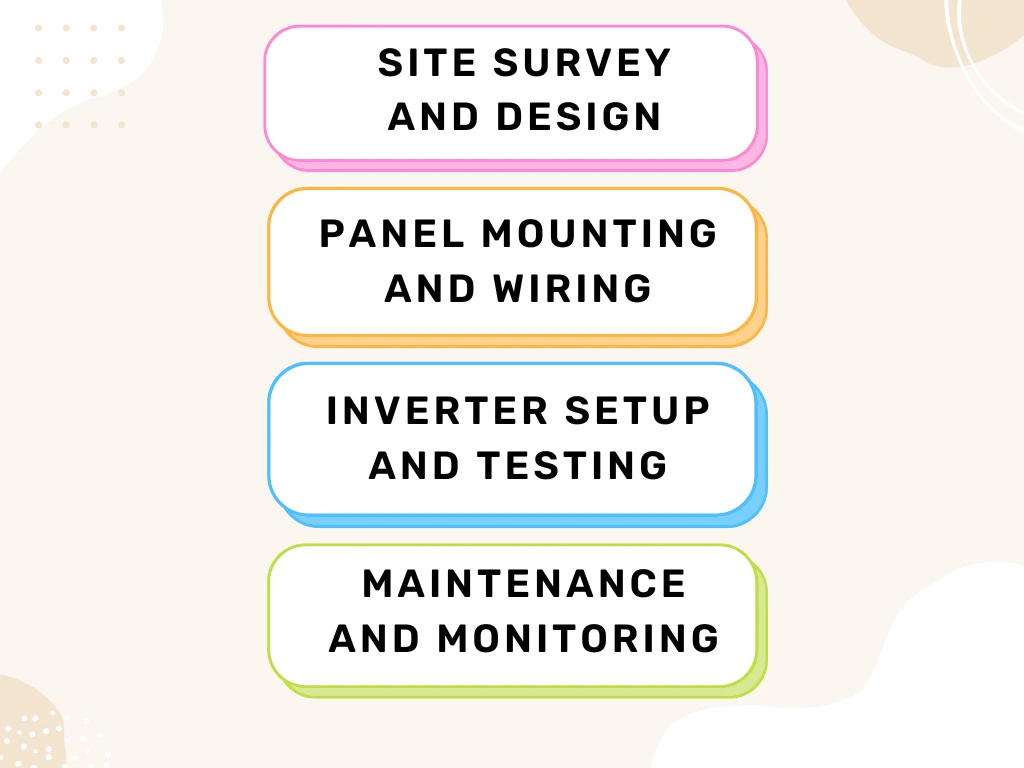
1. Site Assessment Support
Although primary site surveys are conducted by engineers, installers assist in evaluating:
- Roof strength and orientation
- Shadow analysis
- Cable routing feasibility
- Safety risks
2. Mounting Structure Installation
Installers fix aluminum or galvanized iron mounting structures securely to rooftops or ground foundations, ensuring:
- Correct tilt angle
- Wind resistance
- Structural balance
3. Solar Panel Placement
They carefully position photovoltaic modules while maintaining:
- Alignment precision
- Adequate spacing for airflow
- Damage-free handling
4. Electrical Wiring and Connections
One of the most technical tasks includes:
- DC cable routing
- MC4 connector crimping
- Earthing and lightning protection
- AC output wiring
5. Inverter and Battery Setup
Installers mount and configure inverters, batteries (if applicable), and distribution boards following safety and manufacturer guidelines.
6. Testing and Commissioning
Before system handover, installers:
- Check voltage levels
- Inspect loose wiring
- Verify inverter readings
- Ensure grid synchronization
7. Maintenance and Troubleshooting
Post-installation services often include cleaning panels, replacing connectors, and identifying faults to maintain performance ratio.
Skills Required for a PV Solar Installer
A professional solar installer must combine technical knowledge with physical skill. Essential competencies include:
- Basic electrical engineering knowledge
- Understanding of solar components and tools
- Safety protocol awareness
- Ability to read technical drawings
- Problem-solving skills
- Physical stamina for rooftop or outdoor work
- Attention to detail and precision
Certifications and Training in India
With the expansion of renewable energy, formal training programs have become more common. Certified installers are often preferred by solar EPC companies and industrial clients because certification ensures compliance with industry standards and safety norms. Training usually covers electrical safety, system design basics, and hands-on installation techniques.
Importance of PV Solar Installers in India’s Renewable Growth
India’s ambitious renewable energy targets rely heavily on effective on-ground execution. A well-trained installer ensures:
- Higher Energy Output – Correct tilt and wiring improve efficiency.
- Safety Compliance – Reduces electrical hazards and fire risks.
- System Longevity – Proper mounting and earthing extend equipment life.
- Customer Trust – Professional installation builds long-term credibility.
- Reduced Maintenance Costs – Fewer installation errors mean fewer repairs.
Without skilled installers, even well-planned solar projects may underperform or fail prematurely.
Career Opportunities and Demand
The Indian solar sector continues to grow across residential, commercial, and industrial segments. This expansion generates strong employment opportunities for PV installers in:
- Rooftop solar companies
- Industrial solar EPC firms
- Government renewable projects
- Solar farms and microgrids
- Maintenance and service providers
Experienced installers can progress to supervisory roles, project coordination, or even start independent solar service businesses.
FAQs
Q1. What does a PV solar installer do daily?
Ans: They install panels, wire systems, test performance, and ensure safety compliance.
Q2. Is certification necessary for solar installers in India?
Ans: Not mandatory everywhere, but certification increases credibility and job opportunities.
Q3. Can electricians become solar installers?
Ans: Yes, electricians with additional solar training transition easily.
Q4. What tools are commonly used by installers?
Ans: Multimeters, crimping tools, drills, safety harnesses, and cable cutters.
Q5. Do installers work only on rooftops?
Ans: No, they also work on ground-mounted and industrial solar plants.
How to Clean and Maintain Solar Power System for Maximum Efficiency
Regular cleaning of your solar power system is essential to maintain maximum efficiency and energy output. Dust, bird droppings, and pollution can reduce performance by up to 20%. This blog explains the right cleaning methods, schedules, and safety tips for residential, industrial, and commercial solar systems.
Solar PV Mounting Techniques: Rooftop & Ground Systems
A complete guide to solar PV module mounting techniques for rooftop and ground systems, including methods, structures, and best practices.

Solar Energy for Petrol Pumps: Benefits, Savings, and Implementation
Petrol pumps can significantly reduce energy costs and carbon footprint by adopting solar power. This guide explains the benefits, types of solar installations, and how fuel stations can leverage renewable energy for sustainable and efficient operations.
Choosing the Right Solar Panel: Complete Guide for India
Solar is among the fastest-growing industries in India. This is mainly because solar energy is not only renewable but is also attractive from a financial point of view.

1 MW Solar Plant Cost in Uttar Pradesh | A Complete Guide
Planning to install a 1 MW solar power plant in Uttar Pradesh? This guide covers 2025 pricing, subsidy details, ROI, and savings for industries and businesses.

Go Off-Grid with Solar Energy: A Complete Guide
Living off-grid, more commonly defined as not having a dependence on public utilities such as electricity, sounds appealing for a lot of reasons. The idea of being self-sufficient, powering your own home with solar energy, and maybe even building that home with your own two hands can sound like a dream and a challenge for people who wish to live life on their terms.
EIB Green Hydrogen India: €1 Billion Investment to Boost Clean Energy Transition
The European Investment Bank (EIB), the bank of the European Union, has joined forces with the India Hydrogen Alliance (IH2A) to increase support for the development of green hydrogen projects across India.
Why Go Solar: A Complete Guide to Solar Power for Homes and Industries
Switching to solar energy offers significant savings and environmental benefits. This guide explains why going solar is a smart choice, covering financial incentives, reduced electricity bills, and positive impacts on the planet.