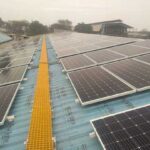
Renewable Energy Hits New Heights: 440 GW Capacity in 2023
Global renewable energy capacity additions are set to reach an all-time high of 440 GW in 2023. This growth is being driven by a number of factors, including expanding policy support, concerns over energy security, and the improved competitiveness of renewable energy compared to fossil fuel alternatives.
Solar is expected to account for two-thirds of the total increase, as policymakers in many countries, particularly in Europe, look to reduce their reliance on imported fossil fuels. Onshore wind is also expected to see significant growth, with capacity additions rebounding by 70% from 2022 levels.
India and the United States are expected to lead the way in terms of renewable capacity additions in 2023. In India, utility-scale solar projects are expected to slow briefly this year due to supply chain challenges, but overall, the country is on track to add more than 10 GW of renewable capacity. The United States is also expected to add more than 10 GW of renewable capacity, with both wind and solar technologies seeing significant growth.
The cost of electricity generation from new onshore wind and solar projects is expected to decline in 2024. However, the costs are still expected to be 10-15% above their pre-COVID levels in most markets outside China.
Solar and onshore wind are the most cost-effective options for new electricity generation in most countries, with 30-50% lower prices than future power contracts in key markets.
Governments need to consider recent inflation, interest rate rises, and commodity price turbulence when designing renewable energy auctions in order to attract investments effectively.
Market-driven procurement, particularly through corporate power purchase agreements, is expected to contribute around one-fifth of solar and wind capacity expansion in 2023 and 2024. The United States leads the expansion in corporate power purchasing agreements, followed by Brazil, Australia, Spain, and Sweden.
The global manufacturing capacity of solar is projected to reach nearly 1000 GW in 2024, which would be sufficient to meet the annual demand in the IEA’s Net Zero Emissions by 2050 Scenario. In contrast, wind equipment manufacturing is expanding slower and may struggle to keep up with the demand growth through 2030.
While China remains the dominant player in global solar manufacturing capacity, there have been announcements of solar manufacturing projects in the United States and India, indicating diversification of supply chains in the medium term.
Overall, the outlook for renewable energy in 2023 is very positive. The global market is expected to grow significantly, driven by a number of factors, including expanding policy support, concerns over energy security, and the improved competitiveness of renewable energy compared to fossil fuel alternatives.
Suggested Articles

Solar Power Park Scheme: Central Government Expands Clean Energy Initiative
The Union government plans to launch the second phase of a dedicated program to develop solar parks across the country that will aim to plug loopholes and overcome slow progress.

How MPPT Works in an Inverter: A Simple Guide for Solar Users
This simple guide explains how MPPT works in a solar inverter, helping users understand how it maximizes power output and improves system efficiency.

Developers fear unfair state-specific levies will make solar more expensive
Developers in India are concerned that state-specific levies on solar projects could increase costs, slow adoption, and impact the growth of renewable energy across residential, commercial, and industrial sectors.

Difference Between an On-Grid Inverter and a Hybrid Solar Inverter
Confused between an on-grid inverter and a hybrid solar inverter? This blog explains their differences, advantages, and which solar inverter is right for you.

Minimum Land Requirement for Solar Power Plants in India
Understanding the land requirement for solar plant projects in India is essential for accurate planning and approvals. This article explains minimum land needed per kW and MW, key influencing factors, and differences between rooftop and ground-mounted solar plants.

How to Read the Electricity Bill Before Deciding Solar Plant Capacity
Load assessment is an essential step before installing a solar PV system. It helps determine electricity consumption and ensures accurate system sizing for optimal solar performance.

GHI vs DNI Explained: Understanding Solar Radiation for Better Solar System Design
GHI and DNI are two critical solar radiation parameters used in designing efficient solar power systems. This guide explains the difference between GHI vs DNI, how each is measured, and why understanding them is essential for accurate solar system design and performance estimation.

Industrial Solar Power: 7 Reasons to Make the Switch
Top 7 benefits of solar energy for industries, including cost savings, environmental impact, and improved energy reliability.