
Testing the electrical output of solar photovoltaic (PV) modules is a critical step in ensuring system performance, efficiency, and safety. Even if installation is done correctly, improper or untested modules can lead to reduced solar electricity generation, increased solar installation charges, and long-term performance losses.
Accurate testing helps verify whether the modules are performing as per specifications and ensures optimal operation of the entire solar plant. Electrical testing is a fundamental practice for maintaining quality in renewable solar systems.
This blog provides a complete step-by-step guide to testing PV modules’ electrical output, aligned with industry standards and installer training requirements.
Why Electrical Testing of PV Modules is Important
Electrical testing helps:
- Verify module performance
- Detect faulty or damaged panels
- Ensure system efficiency
- Reduce solar energy installation cost
Without proper testing, defective modules can affect the entire solar panel system cost and performance.
Key Electrical Parameters to Test
1. Open Circuit Voltage (Voc)
- Voltage when no load is connected
- Indicates module health
2. Short Circuit Current (Isc)
- Current when terminals are shorted
- Reflects current-generating capacity
3. Maximum Power (Pmax)
Peak power output of the module
4. Voltage at Maximum Power (Vmp)
Voltage at optimal operating condition
5. Current at Maximum Power (Imp)
Current at maximum output
Tools and Equipment Required
1. Digital Multimeter
Measures voltage and current
2. Clamp Meter
Measures current without direct contact
3. Solar Irradiance Meter
Measures sunlight intensity
4. Temperature Sensor
Measures module temperature
5. I-V Curve Tracer (Advanced)
Provides complete performance analysis
Pre-Testing Preparation
1. Safety Measures
- Wear PPE (gloves, safety shoes)
- Ensure safe handling of electrical components
2. Check Weather Conditions
- Perform testing under clear sunlight
- Ensure consistent irradiance
3. Inspect Modules
- Check for visible damage
- Ensure clean surface
Step-by-Step Testing Process
Step 1 – Isolate the Module
- Disconnect module from system
- Ensure safe working conditions
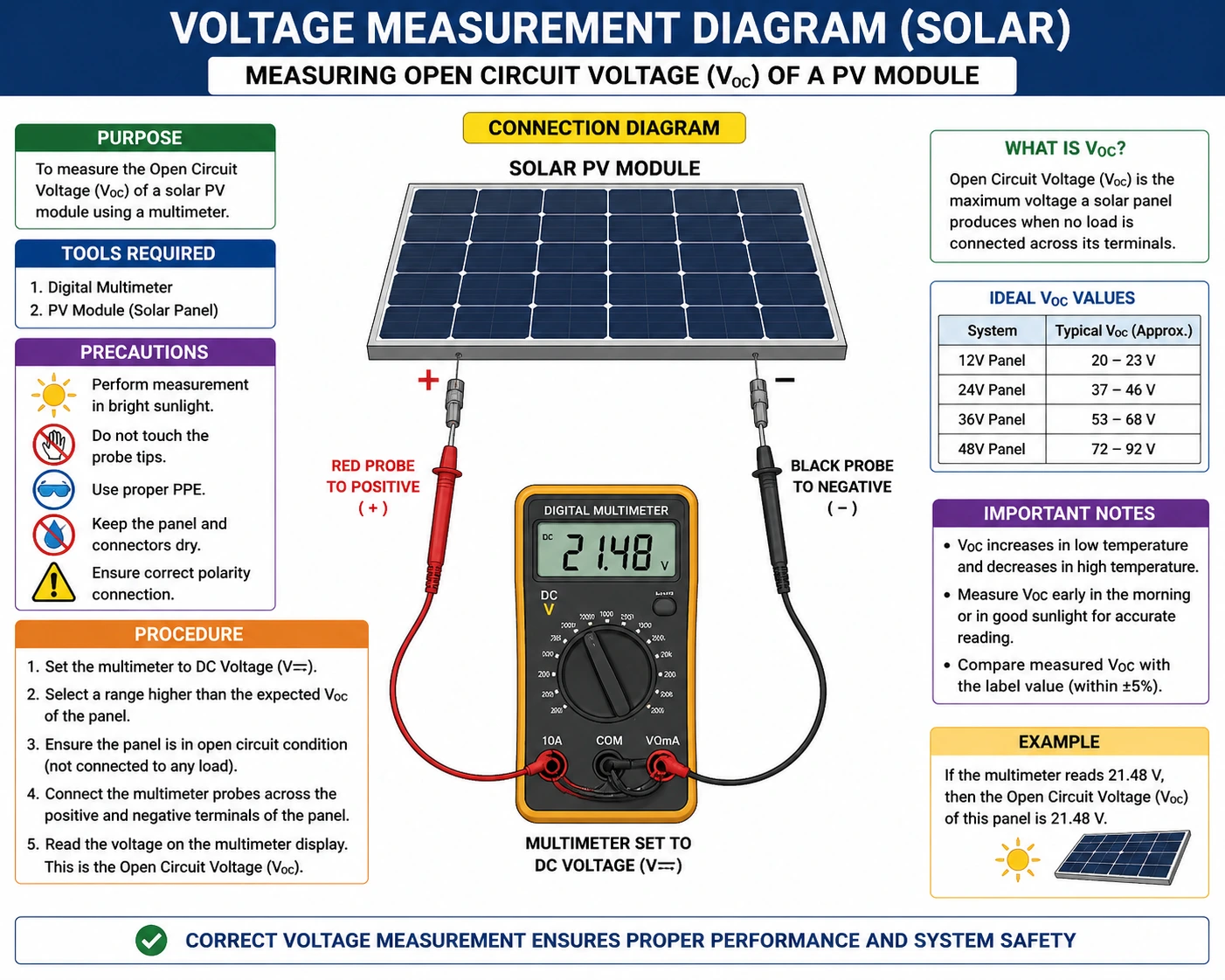
Step 2 – Measure Open Circuit Voltage (Voc)
- Set multimeter to voltage mode
- Connect probes to terminals
- Record voltage
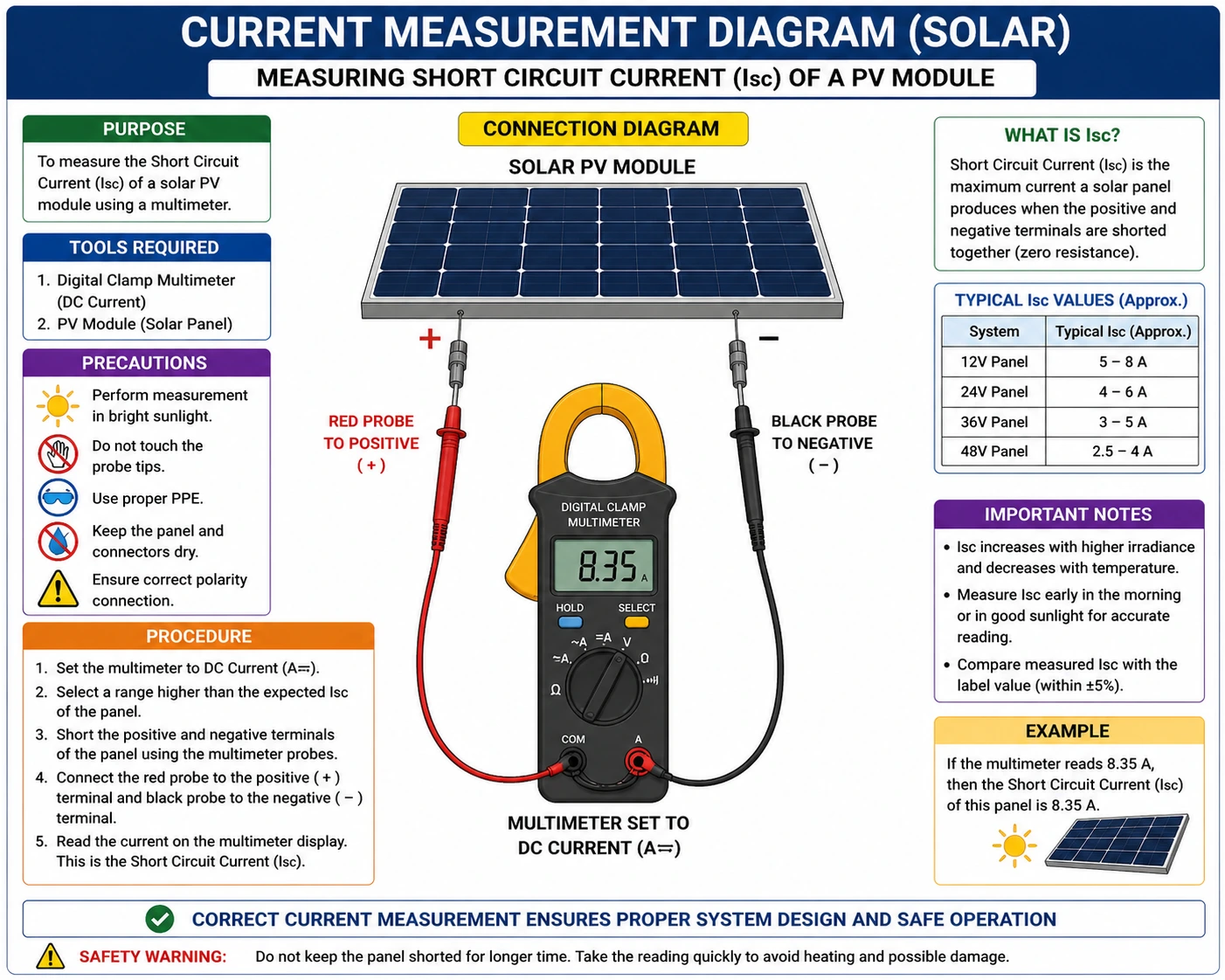
Step 3 – Measure Short Circuit Current (Isc)
- Set multimeter to current mode
- Connect terminals carefully
- Record current value
Step 4 – Measure Operating Parameters
- Use I-V curve tracer (if available)
- Determine Vmp, Imp, and Pmax
Step 5 – Check Irradiance and Temperature
- Record sunlight intensity
- Measure module temperature
Step 6 – Compare with Datasheet Values
- Verify readings against manufacturer specifications
- Adjust for irradiance and temperature
Step 7 – Document Results
- Record all measurements
- Identify deviations
Quality Checks
1. Voltage Accuracy
Ensure Voc matches expected range.
2. Current Output
Verify Isc under given irradiance.
3. Power Output
Check Pmax performance.
4. Consistency
Ensure uniform performance across modules.
Factors Affecting Test Results
1. Sunlight Intensity
Higher irradiance increases output.
2. Temperature
High temperature reduces efficiency.
3. Dust and Dirt
Reduces performance.
4. Shading
Significantly impacts output.
Conclusion
Testing PV modules’ electrical output is a vital step in ensuring efficient and reliable solar PV system performance. By following proper testing procedures, using accurate tools, and analyzing results carefully, installers can achieve optimal system efficiency and prevent future issues.
Electrical testing is essential for maintaining quality in renewable solar systems. Additionally, adherence to standards set by the Ministry of New and Renewable Energy ensures safety and reliability.
With proper testing practices, solar professionals can optimize solar panel system cost, enhance solar electricity generation, and contribute to sustainable solar energy for home use and large-scale renewable solar solutions.
FAQs
Q1. What is Voc in solar modules?
Ans: It is the open circuit voltage when no load is connected.
Q2. Why is Isc important?
Ans: It indicates the current-generating capability of the module.
Q3. What tools are used for testing PV modules?
Ans: Multimeter, clamp meter, irradiance meter, and I-V curve tracer.
Q4. Does temperature affect test results?
Ans: Yes, high temperature reduces efficiency.
Q5. How does testing impact solar panel system cost?
Ans: It reduces maintenance and improves system efficiency.

Latest MNRE List: Approved Solar Module Manufacturers
Check the latest MNRE-approved list of solar module manufacturers to ensure quality and compliance for your solar projects in India.

Top 10 Sustainable Building Practices to Consider for Your Construction Business
The construction industry is embracing sustainability like never before. From smart design to renewable energy use, these top 10 practices ensure businesses stay competitive, compliant, and environmentally responsible.
Updated Rates of Solar Subsidy in Delhi: Cost, Eligibility & Benefits
Discover the latest solar subsidy rates in Delhi for 2025. This guide explains the updated costs, eligibility criteria, and benefits to help you maximize savings on your rooftop solar installation.
How to Improve Energy Efficiency and Save Electricity Costs
Learn how energy conservation and efficiency can help you save electricity, cut costs, and make your home or business more sustainable

Solar Panel Unpacking Guide: Do’s & Don’ts on Site
A practical solar panel unpacking guide covering safe handling, on-site precautions, and key do’s and don’ts to avoid module damage.
How DISCOMs Implement Net Metering for Solar Power Plants
Discover the process of net metering implementation by DISCOMs for solar power plants. Understand the benefits, billing mechanism, and how it maximizes solar energy utilization.

Safe Handling of Solar PV Components: Complete Guide for EPC & Installers
Proper material handling is crucial in solar PV projects to avoid damage, reduce losses, and ensure safety. This guide covers best practices for transporting, storing, and installing solar components efficiently.
Choosing the Right Solar Panel: Complete Guide for India
Solar is among the fastest-growing industries in India. This is mainly because solar energy is not only renewable but is also attractive from a financial point of view.