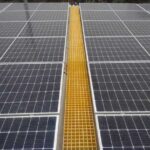
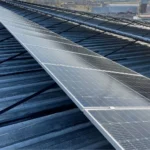
For businesses, institutions, and industries looking to reduce their solar roof installation cost, the Indian Renewable Energy Development Agency (IREDA) offers a compelling financing route. Its dedicated Rooftop Solar PV Grid-Connected Loan Scheme is especially tailored to help solar rooftop projects grow, making solar electricity more accessible and affordable.
Here’s a breakdown of IREDA Loan scheme, its benefits, eligibility, and how it can support your rooftop solar journey.
What Is IREDA Loan Scheme For Rooftop Solar?
IREDA loan scheme specifically targets grid-connected rooftop solar PV projects, including commercial, institutional, and industrial capacities. Under this scheme:
Eligible projects include new rooftop solar plants, whether on a single roof or aggregated across multiple rooftops.
There are two application categories: Aggregator (for multiple roofs/projects) and Direct (single roof).
The loan scheme is designed for technically compliant systems, with requirements aligned to MNRE and CEA standards.
This financing allows project developers or rooftop owners to access long-term funds and reduce up-front solar installation charges, making solar installations more financially viable.
Key Features and Terms of the IREDA Loan Scheme
1. Interest Rates & Credit Grading
- IREDA performs a credit-rating for rooftop solar applicants under its own Rooftop Rating Model (IRRM).
- Based on the risk grade, the interest rate varies, IREDA’s financing norms indicate rates between 10.05% and 10.90% for rooftop solar.
- There’s an additional 0.50% interest charged during the pre-commissioning (construction) phase.
2. Loan Tenure & Repayment
- The maximum repayment period for the scheme is 9 years, with a moratorium of 12 months from the date of commercial operations (COD).
- The construction period is capped at 12 months from first disbursement.
3. Amount Financed
- According to IREDA’s FAQs, the agency can finance up to 75–80% of project cost, depending on status (greenfield/commissioned) and creditworthiness.
- Security and credit rating are required: IREDA usually asks for external rating and charges against project assets or revenue stream.
4. Project Size & Eligibility
- Minimum aggregate capacity under aggregator or direct category: 1 MWp.
- The project must comply with technical standards for grid connectivity (CEA / MNRE guidelines).
- For aggregated applications: each sub-project should be at least 20 kWp and within a similar geographic or DISCOM area.
Benefits of This IREDA Loan Scheme for Solar Projects
Lower Upfront Cost
Because IREDA finances a large portion of the project, solar developers or system integrators don’t need to inject huge capital at once. This significantly lowers the cost of solar per kWh installed when compared to self-funding.
Competitive Interest Rates
Interest rates are fair and tied to risk grading, making the solar energy installation cost more predictable.
Support for Aggregators
Aggregators (such as ESCOs, RESCOs, or roof owners) can bundle multiple rooftop installations under one IREDA application, enabling economies of scale.
Long-Term Repayment
With a 9-year loan tenor and a 12-month moratorium, the model is well-suited for rooftop solar projects that generate stable revenue over time.
Technical Assurance
Since IREDA requires compliance with MNRE / CEA technical standards, the financed solar systems are likely to be robust, high-quality with a good expected performance ratio and longevity.
Who Can Apply for the IREDA Loan Scheme?
- Industrial, Commercial & Institutional rooftops: businesses with large roofs / flat terraces.
- Aggregators: those who own or manage multiple rooftop projects and want to pool them.
- Applicants must provide ownership or legal rights for rooftop area (e.g., lease agreement) and submit credit rating.
This makes IREDA’s scheme highly relevant for developers, ESCOs / RESCOs, housing societies, and large-scale users.
How to Apply for the IREDA Loan Scheme
Step 1: Use IREDA’s loan application form and checklist (available here: IREDA | Sectors – Solar Energy).
Step 2: Get credit-rated: Under IREDA’s Rooftop Rating Model (IRRM), secure a credit rating from an empanelled agency.
Step 3: Submit technical documents: Include PPA (if any), rooftop lease deed, load details, and technical drawings.
Step 4: Loan appraisal & sanction: IREDA will evaluate risk grade, project viability, roof ownership, and disburse funds accordingly.
Step 5: Implement & Commission: Install the solar rooftop project and commence operations within 12 months.
Step 6: Repay & Operate: Begin repayment after COD (with 12-month moratorium), monitor generation, and maintain system.
Why Smart Roof Solar Recommends This Scheme
As an EPC and solar solutions provider, Smart Roof Solar supports you in leveraging IREDA’s loan scheme by:
- Structuring the project design to meet IREDA norms (capacity, technical standards)
- Assisting you in preparing loan applications and documentation
- Helping you bundle rooftops (aggregator model) for better financing terms
- Offering O&M services to maintain performance throughout the loan duration
- Ensuring credit-worthy project planning to get favorable interest rates
With this scheme, you don’t just reduce capital burden, you also scale your solar efforts faster and more economically.
Things to Watch Out For
- Credit Rating Importance: Your interest rate depends on the grade you receive via IREDA’s rating model.
- Roof Ownership / Legal Rights: You need clear roof ownership or lease documents.
- Cash Flow Planning: Repayment begins after a one-year moratorium, make sure your business model supports that.
- System Quality: To comply, you must use MNRE / CEA-compliant modules and inverters; low-quality parts may disqualify you.
- Contractual Risk: If lease or PPA ends, your financing structure could be affected.
Conclusion
IREDA’s new (or updated) loan scheme for rooftop solar projects offers a powerful, structured, and affordable way to finance rooftop PV systems, especially for businesses and aggregators. It lowers your initial costs, ensures strong technical compliance, and gives you room to grow your solar capacity without massive capital investment.
If you’re evaluating rooftop solar for your factory, institution, or large-scale roof, Smart Roof Solar can help you leverage IREDA’s financing, from application to installation to ongoing maintenance. You can also refer to other financing options – Solar Loans, Subsidies and EMI Plans – Smart Roof Solar
FAQs
Q1. Can rooftop solar projects under this scheme be installed under the CAPEX or RESCO model?
Ans: Yes, both CAPEX and RESCO models are eligible as long as the project meets IREDA’s technical and credit requirements.
Q2. Are there penalties for project delays?
Ans: Yes, delays beyond the 12-month commissioning window can lead to revised terms, higher charges, or even cancellation of undisbursed amounts.
Q3. Is a PPA mandatory for applying?
Ans: Not always; self-consumption projects can apply too as long as financial viability is clearly demonstrated.
Q4. Can residential societies apply under this scheme?
Ans: Large housing societies or group residential entities can apply, provided they meet the minimum capacity and credit requirements.
Q5. Does IREDA offer any subsidy along with the loan?
Ans: No, subsidies are managed by MNRE; however, IREDA loans scheme can be combined with applicable government incentives if the project qualifies.