Best Solar Panels for Rooftop Projects: How to Choose the Right One
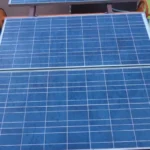
Crystalline silicon photo voltaic (PV) technology has given consistent performances in Indian conditions over the years. Limited experience with thin film technology has provided good performance in Rajasthan but slightly lower in other Indian Northern States compared to crystalline technology.
Selection of best solar panel
The reported annual degradation in performance of crystalline silicon panels is in the range of 0.8-1.0 % being slightly higher for thin film panels and at high temperature and humidity locations. It could also be slightly higher in the beginning, then steadies out. Best solar panel can provide over 90% performance after 10 years and 80% performance after 20 years over its life of 25 years. A few modules may need replacement at high voltage terminal end but limited to about 2 kW in a 100 kW array at the end of 10 years.
However, caution may need to be exercised as few domestic panel manufacturers have been facing the problem of PID (potential induced degradation) which can lead to much lower performance than expected.
The performance of best solar panel also depends on the system voltage apart from the temperature and the humidity. Higher the voltage, lower are the losses. Up to 5 kW systems, one should go for a voltage of 48 volts; up to 10 kW for 96 volts; and, for other rooftop systems 240 volts or higher.
Ask for the performance test certification of the modules from the manufacturers. NISE (National Institute of Solar Energy) under MNRE, Government of India, and other private sector agencies like UL (Underwriters Labs) and TUV are the key agencies providing certification. If you are going for a larger installation, ask for the random testing of say 5% of the modules. For example, a 100 kW system would require around 400 modules of 250 watts. So, the manufacturers should provide the test results at the factory premises for, say, 20 randomly selected modules.
Most of the PV modules available in the market today provide an efficiency of 14 – 15% though the peak performing panels are reported to have efficiency of over 18%. However, efficiency is not very critical as the module will provide its rated power output but the size of the module will be larger and occupy more roof space if the efficiency is lower.
A 250 watt module of 14% efficiency will occupy a roof space of around 1.8 square meters. The total roof space required for, say, a 10 kW installation comprising 40 modules of 250 watts, allowing for spacing between the arrays, will vary from 80-100 square meters, depending on the roof.
Check out the number of units generated by the solar power plants that may have been set up near your location. It would provide a broad indication of the solar radiation available as well as the observed solar generation in your area.
Suggested Articles

Sanctioned Load & Rooftop Solar: Everything You Need to Know
Learn why sanctioned load is crucial before rooftop solar installation. Understand its role, process, and impact on solar panel efficiency and subsidy eligibility.
The Rise of Clean Energy: Solar Energy Trends in 2023
The solar energy industry is on the rise, as the demand for clean and renewable energy sources continues to increase. 2023 is shaping up to be a big year for the solar energy sector, as new technologies and innovations are expected to drive growth and expand the reach of solar energy.

Steps for Conducting a Load Assessment Before Solar Installation and Its Requirements
Load assessment is an essential step before installing a solar PV system. It helps determine electricity consumption and ensures accurate system sizing for optimal solar performance.

UPNEDA Solar Subsidy 2025: How to Maximize Savings on Rooftop Solar
Discover how the UPNEDA Solar Subsidy 2025 can help you cut electricity costs and make rooftop solar more affordable. Learn about eligibility, subsidy rates, and the step-by-step application process.

How to Calculate Battery Capacity for Solar Off-Grid Applications
Sizing a solar battery correctly is vital for off-grid performance and energy independence. This guide explains how to calculate battery capacity, choose the right type, and design a balanced off-grid system for uninterrupted power supply.

Complete Guide to Net Metering and Electricity Bill Savings
Learn how net metering lets you sell excess solar energy back to the grid, reducing your electricity bills and maximizing your solar investment.

What is MPPT in a Solar System? Meaning, Working & Benefits
Solar radiation on a tilted surface directly affects how much energy a solar panel produces. Learn why tilt angle matters and how it impacts solar output.

100 kW Solar Power Plant Cost in Haryana: The Ultimate Guide to the Best Rate Per Watt
Explore the 100 kW solar power plant cost in Haryana for 2025. Learn about pricing, government subsidy options, and how much you can save with solar energy.