
Flat roof solar installations are widely adopted for residential, commercial, and industrial buildings due to their flexibility in design and scalability. However, one of the most critical aspects of installing a solar PV system on a flat roof is ensuring proper anchoring and structural safety.
Unlike sloped roofs, flat roofs require careful consideration of wind uplift forces, load distribution, waterproofing, and mounting stability. Improper anchoring can lead to system failure, safety hazards, and increased solar installation charges.
Secure mounting and structural safety are essential for reliable and efficient solar PV installations.
This blog provides a complete guide to anchoring techniques and structural safety for flat roof solar installations, helping installers optimize performance and solar panel system cost.
Why Anchoring is Critical in Flat Roof Solar Systems
Flat roofs are more exposed to environmental forces, especially wind uplift. Proper anchoring ensures:
- Stability of mounting structures
- Prevention of system displacement
- Protection of the roof structure
- Long-term durability
- Efficient solar electricity generation
Poor anchoring can increase solar energy installation cost due to repairs and maintenance.
Types of Anchoring Techniques for Flat Roofs
1. Ballasted Anchoring System
Description
Uses weights (concrete blocks) to hold the solar structure in place.
Advantages
- No roof penetration
- Easy installation
- Preserves waterproofing
Applications
Solar panel in rooftop installations on flat roofs
2. Mechanical Anchoring (Penetrative)
Description
Mounting structures are fixed directly to the roof using bolts and anchors.
Advantages
- High structural stability
- Suitable for high wind zones
Considerations
Requires proper waterproofing
3. Hybrid Anchoring System
Description
A combination of ballasted and mechanical anchoring.
Advantages
- Improved stability
- Reduced load compared to full ballast
4. Chemical Anchoring
Description
Uses chemical adhesives to secure bolts in concrete.
Advantages
- Strong bonding
- Suitable for RCC roofs
Structural Safety Considerations
1. Roof Load Capacity
Evaluate whether the roof can handle:
- Weight of panels
- Mounting structures
- Ballast (if used)
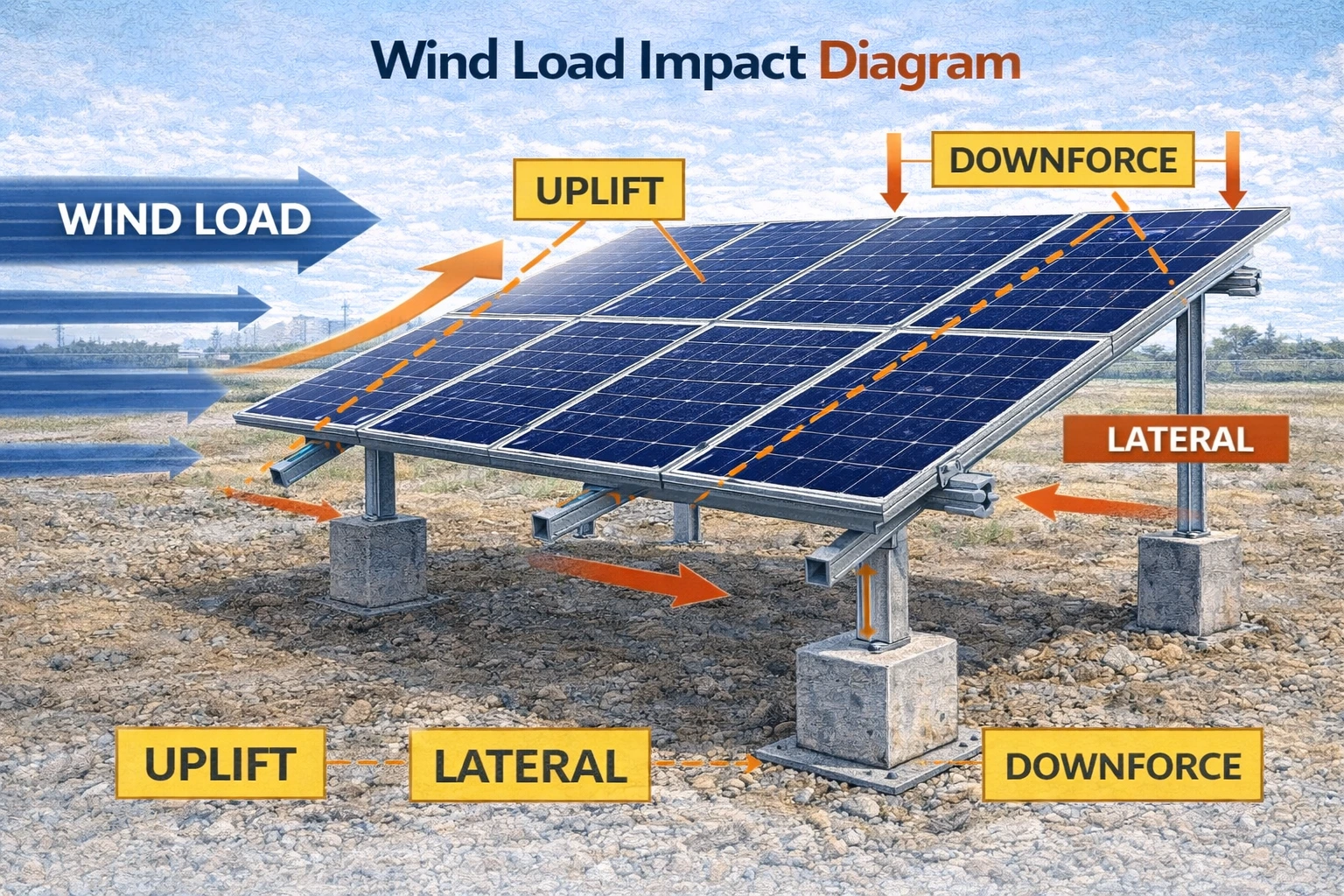
2. Wind Load Analysis
Calculate wind forces acting on the system. Essential for preventing uplift and displacement.
3. Waterproofing Protection
Ensure:
- Proper sealing of penetrations
- No damage to the roof membrane
4. Drainage System
Avoid blocking water drainage paths.
5. Structural Integrity
Ensure the building structure is strong enough to support the installation.
Steps for Anchoring Installation
Step 1 – Site Assessment
Evaluate:
- Roof type
- Load capacity
- Wind conditions
Step 2 – Select Anchoring Method
Choose an appropriate technique based on site conditions.
Step 3 – Mark Layout
Mark positions for mounting structures and anchors.
Step 4 – Install Anchors
- Place ballast or fix anchors
- Ensure correct positioning
Step 5 – Fix Mounting Structures
Secure structures to anchors.
Step 6 – Check Alignment and Stability
Ensure proper tilt and alignment.
Step 7 – Waterproofing and Sealing
Seal all penetrations properly.
Step 8 – Final Inspection
Verify structural safety and installation quality.
Conclusion
Flat roof solar installation requires careful planning of anchoring techniques and structural safety measures to ensure stability and efficiency. By understanding different anchoring methods, analyzing structural requirements, and following best practices, installers can achieve reliable and long-lasting solar PV systems.
Proper mounting and anchoring are essential for successful solar installations. Additionally, compliance with standards set by the Ministry of New and Renewable Energy ensures safety and performance.
With the right approach, solar professionals can optimize solar panel system cost, enhance solar electricity generation, and support sustainable solar energy for home use and large-scale renewable solar solutions.
FAQs
Q1. What is the best anchoring method for flat roofs?
Ans: Ballasted systems are commonly used, but the choice depends on site conditions.
Q2. Why is wind load analysis important?
Ans: It prevents system displacement and ensures structural safety.
Q3. Does anchoring affect solar panel system cost?
Ans: Yes, proper anchoring reduces maintenance and long-term costs.
Q4. How is waterproofing maintained during anchoring?
Ans: By sealing all penetrations and using proper installation techniques.
Q5. Can solar panels be installed without drilling on flat roofs?
Ans: Yes, ballasted systems allow installation without drilling.
Latest Solar Mounting Structures: Smarter, Stronger, and More Efficient
Learn how the latest solar mounting structures in 2025 improve efficiency, reduce costs, and power the future of solar installations.

What Does 1 kWp Mean in Solar Power Systems?
1 kWp is a standard unit used to measure the capacity of a solar power system under ideal conditions. This guide explains what 1 kWp means, how much energy it produces, and why it matters for system sizing.

Latest MNRE List: Approved Solar Module Manufacturers
Check the latest MNRE-approved list of solar module manufacturers to ensure quality and compliance for your solar projects in India.
Rajasthan Rooftop Solar Subsidy: What Homeowners Need to Know
Rajasthan homeowners can save big with the 2025 rooftop solar subsidy. Learn about the updated rates, eligibility criteria, and benefits to make your switch to solar more affordable.

Top Industrial Solar EPC: How to Choose the Right Solar EPC Company for Industries in India
Choosing the right industrial solar EPC is critical for plant performance and ROI. This guide explains how Indian industries can select the best solar EPC partner.

Grounding Conductor Sizing for Solar PV Systems
A complete guide to determining grounding conductor size for solar PV systems, ensuring safe, compliant, and reliable installations.
Solar Net Metering in Industrial Units: Opportunities and Risks
Solar net metering can help factories save on energy costs, but there are key pitfalls to consider. Learn the challenges and best practices for industrial adoption

Faulty Solar PV Module Detection Using Shading Test
A complete guide to detecting faulty solar PV modules using the shading test and ammeter readings, helping installers quickly identify underperforming modules and restore system performance.