
In solar photovoltaic (PV) installations, the quality of electrical work directly impacts system safety, performance, and longevity. A well-equipped and properly used electrical installation toolkit is essential for ensuring accurate connections, minimizing losses, and achieving efficient solar electricity generation.
Improper tools or incorrect usage can lead to faulty wiring, safety hazards, and increased solar installation charges. Therefore, every installer must know how to inspect, select, and correctly use electrical tools during solar plant installation.
Proper handling of tools and adherence to safety practices are crucial for successful renewable solar installations.
This blog provides a complete guide to inspecting and using electrical installation toolkits, helping installers maintain high-quality standards and optimize solar panel system cost.
Importance of Electrical Toolkit in Solar Installations
1. Accurate Connections
Ensures proper wiring and electrical continuity.
2. Safety
Reduces risk of electrical hazards.
3. Efficiency
Speeds up the installation process.
4. Quality Assurance
Improves the reliability of solar PV systems.
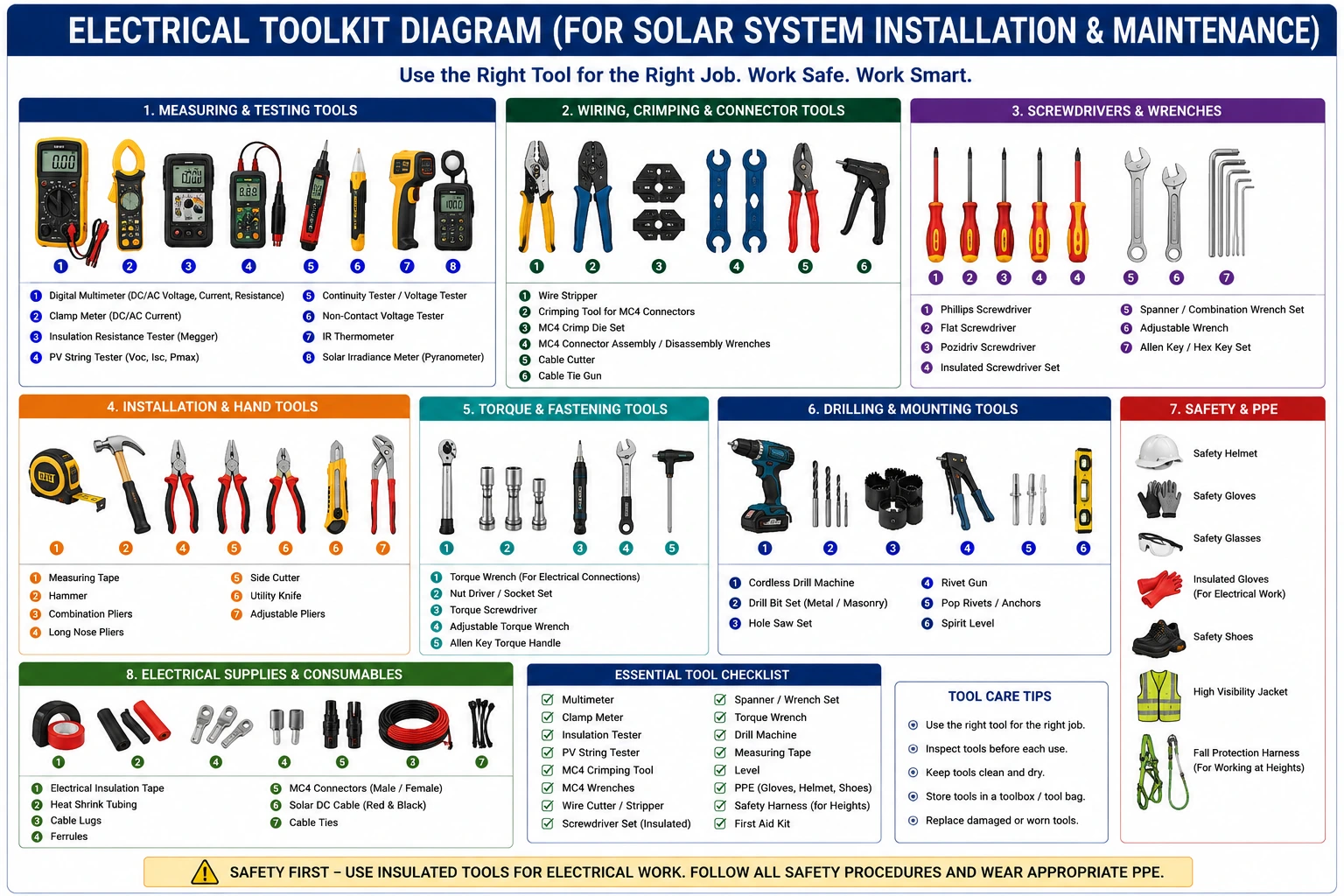
Essential Electrical Installation Tools
1. Multimeter
Purpose
- Measures voltage, current, and resistance
Usage
- Used for testing solar panel output and circuit continuity
2. Clamp Meter
Purpose
- Measures current without disconnecting the circuit
Usage
- Ideal for testing live systems
3. Wire Stripper
Purpose
- Removes insulation from wires
Usage
- Ensures clean and precise stripping
4. Crimping Tool
Purpose
- Secures connectors to cables
Usage
- Used for MC4 connectors
5. Screwdrivers (Insulated)
Purpose
- Tightening and loosening screws
Usage
- Used in inverter and junction box connections
6. Insulation Tester (Megger)
Purpose
- Checks insulation resistance
Usage
- Ensures the safety of electrical circuits
7. Cable Cutter
Purpose
- Cuts cables cleanly
Usage
- Prevents damage to conductors
8. Torque Wrench
Purpose
- Ensures proper tightening force
Usage
- Used for electrical and mechanical connections
9. MC4 Connector Tools
Purpose
- Crimping and assembling MC4 connectors
Usage
- Essential for solar panel connections
Tool Inspection Checklist
1. Physical Condition
Check for damage or wear
2. Insulation Integrity
Ensure insulation is intact
3. Calibration
Verify the accuracy of measuring tools
4. Cleanliness
Remove dust and debris
5. Functionality
Ensure tools operate correctly
Step-by-Step Tool Inspection Process
Step 1 – Visual Inspection
- Check for cracks or damage
Step 2 – Functional Check
- Test tool operation
Step 3 – Safety Check
- Ensure insulation and safety features
Step 4 – Calibration Check
- Verify measurement accuracy
Step 5 – Documentation
- Record inspection results
Demonstration of Tool Usage
1. Using a Multimeter
- Set to the appropriate mode
- Connect probes
- Measure voltage or current
2. Using a Wire Stripper
- Select the correct gauge
- Strip insulation carefully
3. Using a Crimping Tool
- Insert the connector and cable
- Apply pressure to secure the connection
4. Using a Clamp Meter
- Clamp around the conductor
- Read current value
5. Using an Insulation Tester
- Connect to the circuit
- Measure resistance
Conclusion
Inspecting and properly using electrical installation tools is a fundamental requirement for successful solar PV installations. By ensuring tools are in good condition and used correctly, installers can improve safety, efficiency, and system reliability.
Proper tool handling is essential for renewable solar installations. Additionally, adherence to standards set by the Ministry of New and Renewable Energy ensures safety and compliance.
With the right tools and practices, solar professionals can optimize solar panel system cost, enhance solar electricity generation, and support sustainable solar energy for home use and advanced renewable energy technology solutions.
FAQs
Q1. Why is tool inspection important?
Ans: It ensures safety and proper functioning.
Q2. What is the most important tool for solar installation?
Ans: A multimeter is essential for testing.
Q3. Why use insulated tools?
Ans: To prevent electrical shocks.
Q4. How often should tools be inspected?
Ans: Before every use and periodically.
Q5. Does tool quality affect solar panel system cost?
Ans: Yes, it reduces errors and maintenance costs.
What Is Renewable Energy? What Is the Best Source of Renewable Energy and Why? – Complete Guide
Renewable energy comes from natural sources like sunlight, wind, water, and biomass that are constantly replenished. As India accelerates its transition toward clean energy, understanding different renewable energy sources and identifying the most efficient and cost-effective option is crucial. This complete guide explains renewable energy types, their advantages, and compares them to determine the best source based on sustainability, scalability, and long-term benefits.
Solar Radiation on a Tilted Surface: Importance & Impact on Solar Output
Solar radiation on a tilted surface directly affects how much energy a solar panel produces. Learn why tilt angle matters and how it impacts solar output.
Sequential Troubleshooting for Grid Power Interruptions in Solar PV Systems
A complete guide to sequential troubleshooting in solar PV systems, helping identify and resolve faults during grid power supply interruptions through systematic testing and diagnosis.
Why Go Solar: A Complete Guide to Solar Power for Homes and Industries
Switching to solar energy offers significant savings and environmental benefits. This guide explains why going solar is a smart choice, covering financial incentives, reduced electricity bills, and positive impacts on the planet.
Selecting Solar Panels: Best Guide for Homes and Factories
Solar panels are a hot topic these days, as the cost of solar is finally approaching what the average family can afford.
Solar Farm Development: Overcoming the Rising Challenge of Wiring Costs
Wiring costs are soaring in solar farms, affecting project budgets and timelines. Learn why infrastructure is becoming a key challenge.

Solar Energy Myths vs. Facts: What You Should Know
Solar power myths often mislead homeowners. Learn the facts about cost, efficiency, and reliability of solar energy.
1 MW Solar Plant Cost in Uttar Pradesh | A Complete Guide
Planning to install a 1 MW solar power plant in Uttar Pradesh? This guide covers 2025 pricing, subsidy details, ROI, and savings for industries and businesses.