
In solar photovoltaic (PV) installations, the quality of electrical work directly impacts system safety, performance, and longevity. A well-equipped and properly used electrical installation toolkit is essential for ensuring accurate connections, minimizing losses, and achieving efficient solar electricity generation.
Improper tools or incorrect usage can lead to faulty wiring, safety hazards, and increased solar installation charges. Therefore, every installer must know how to inspect, select, and correctly use electrical tools during solar plant installation.
Proper handling of tools and adherence to safety practices are crucial for successful renewable solar installations.
This blog provides a complete guide to inspecting and using electrical installation toolkits, helping installers maintain high-quality standards and optimize solar panel system cost.
Importance of Electrical Toolkit in Solar Installations
1. Accurate Connections
Ensures proper wiring and electrical continuity.
2. Safety
Reduces risk of electrical hazards.
3. Efficiency
Speeds up the installation process.
4. Quality Assurance
Improves the reliability of solar PV systems.
Essential Electrical Installation Tools
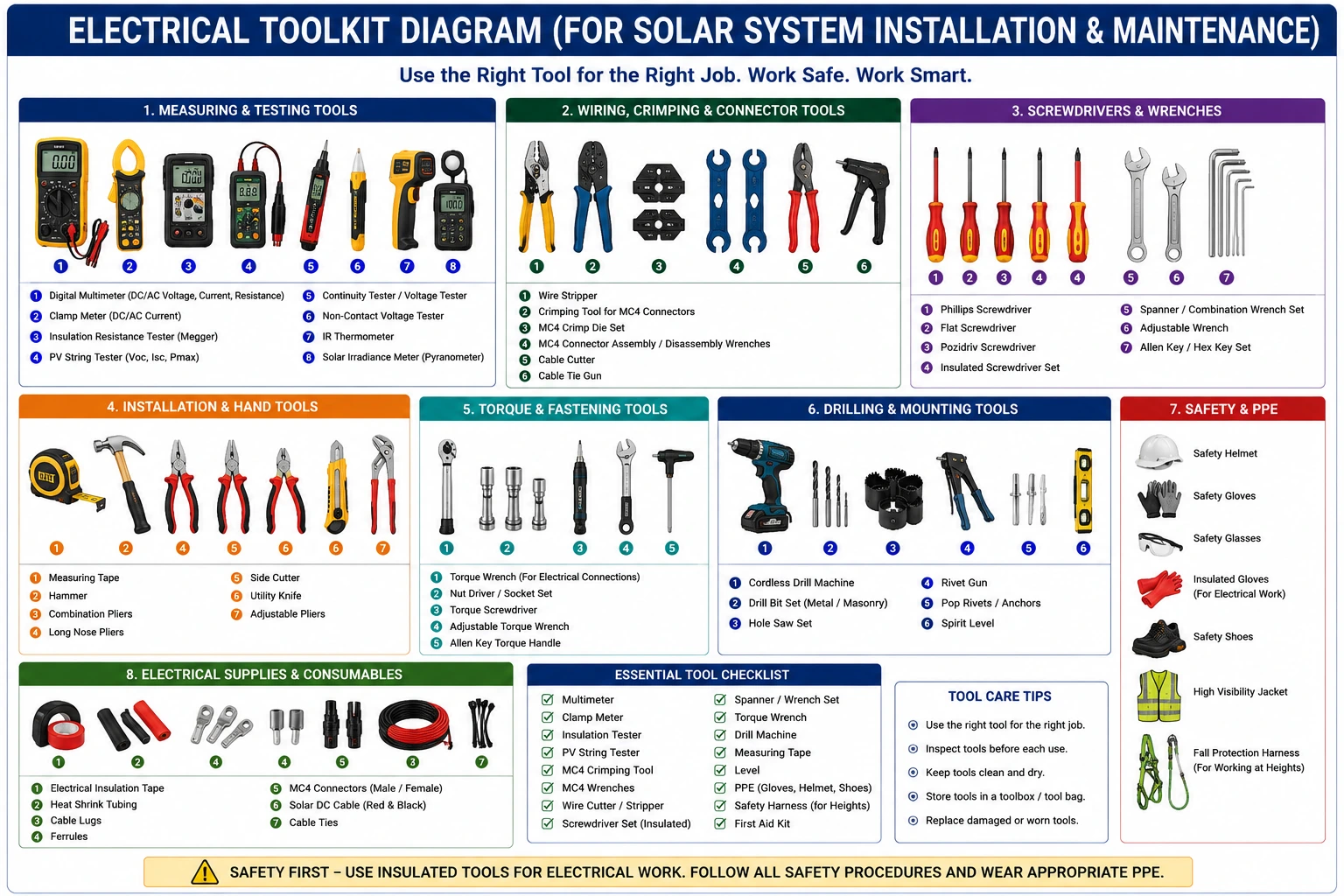
1. Multimeter
Purpose
- Measures voltage, current, and resistance
Usage
- Used for testing solar panel output and circuit continuity
2. Clamp Meter
Purpose
- Measures current without disconnecting the circuit
Usage
- Ideal for testing live systems
3. Wire Stripper
Purpose
- Removes insulation from wires
Usage
- Ensures clean and precise stripping
4. Crimping Tool
Purpose
- Secures connectors to cables
Usage
- Used for MC4 connectors
5. Screwdrivers (Insulated)
Purpose
- Tightening and loosening screws
Usage
- Used in inverter and junction box connections
6. Insulation Tester (Megger)
Purpose
- Checks insulation resistance
Usage
- Ensures the safety of electrical circuits
7. Cable Cutter
Purpose
- Cuts cables cleanly
Usage
- Prevents damage to conductors
8. Torque Wrench
Purpose
- Ensures proper tightening force
Usage
- Used for electrical and mechanical connections
9. MC4 Connector Tools
Purpose
- Crimping and assembling MC4 connectors
Usage
- Essential for solar panel connections
Tool Inspection Checklist
1. Physical Condition
Check for damage or wear
2. Insulation Integrity
Ensure insulation is intact
3. Calibration
Verify the accuracy of measuring tools
4. Cleanliness
Remove dust and debris
5. Functionality
Ensure tools operate correctly
Step-by-Step Tool Inspection Process
Step 1 – Visual Inspection
- Check for cracks or damage
Step 2 – Functional Check
- Test tool operation
Step 3 – Safety Check
- Ensure insulation and safety features
Step 4 – Calibration Check
- Verify measurement accuracy
Step 5 – Documentation
- Record inspection results
Demonstration of Tool Usage
1. Using a Multimeter
- Set to the appropriate mode
- Connect probes
- Measure voltage or current
2. Using a Wire Stripper
- Select the correct gauge
- Strip insulation carefully
3. Using a Crimping Tool
- Insert the connector and cable
- Apply pressure to secure the connection
4. Using a Clamp Meter
- Clamp around the conductor
- Read current value
5. Using an Insulation Tester
- Connect to the circuit
- Measure resistance
Conclusion
Inspecting and properly using electrical installation tools is a fundamental requirement for successful solar PV installations. By ensuring tools are in good condition and used correctly, installers can improve safety, efficiency, and system reliability.
Proper tool handling is essential for renewable solar installations. Additionally, adherence to standards set by the Ministry of New and Renewable Energy ensures safety and compliance.
With the right tools and practices, solar professionals can optimize solar panel system cost, enhance solar electricity generation, and support sustainable solar energy for home use and advanced renewable energy technology solutions.
FAQs
Q1. Why is tool inspection important?
Ans: It ensures safety and proper functioning.
Q2. What is the most important tool for solar installation?
Ans: A multimeter is essential for testing.
Q3. Why use insulated tools?
Ans: To prevent electrical shocks.
Q4. How often should tools be inspected?
Ans: Before every use and periodically.
Q5. Does tool quality affect solar panel system cost?
Ans: Yes, it reduces errors and maintenance costs.
How the RESCO Model Works in Solar: A Complete Guide for Industries
The RESCO model allows businesses to adopt solar with zero upfront investment. Under this model, a developer installs, owns, and operates the solar plant while you simply pay for the power you consume—making clean energy both affordable and hassle-free.
Affordable Solar Systems and Plants for Small and Medium Enterprises
Learn how SMEs can harness solar energy through tailored solar systems and plants to reduce electricity bills, improve sustainability, and boost efficiency.
Types of Hazards in PV Installations Guide
A complete guide to the types of hazards in PV installations, covering electrical, mechanical, fire, chemical, environmental, structural, and workplace safety risks.

Photovoltaic Power Output Explained: A Practical Guide for Homes & Businesses
Photovoltaic power output determines how much electricity a solar system can generate. This simple guide explains PV output, how it is calculated, and what it means for homes and businesses planning to go solar.
How to Improve Solar Panel Performance for Optimal Energy Output
Performance degradation in solar panels reduces energy output over time. This guide explains how to factor in degradation when calculating annual yields, ensuring accurate estimates for residential, commercial, and industrial solar installations.
Monitoring Services for Solar Plants by Smart Roof Solar to Maximize Performance and Efficiency
Smart Roof Solar provides advanced monitoring services for solar plants to ensure maximum performance and efficiency. With real-time data tracking and intelligent analytics, our monitoring solutions help detect issues early, reduce downtime, and enhance the overall energy yield of your solar system.
Solar Panel Selection Demystified: How to Choose the Right Panels for Solar Installation
Choosing the right solar panels can be confusing with so many options in the market. This guide simplifies solar panel selection by comparing types, efficiency ratings, and cost factors. Whether for your home, business, or industry, learn how to make an informed decision and maximize the return on your solar investment.
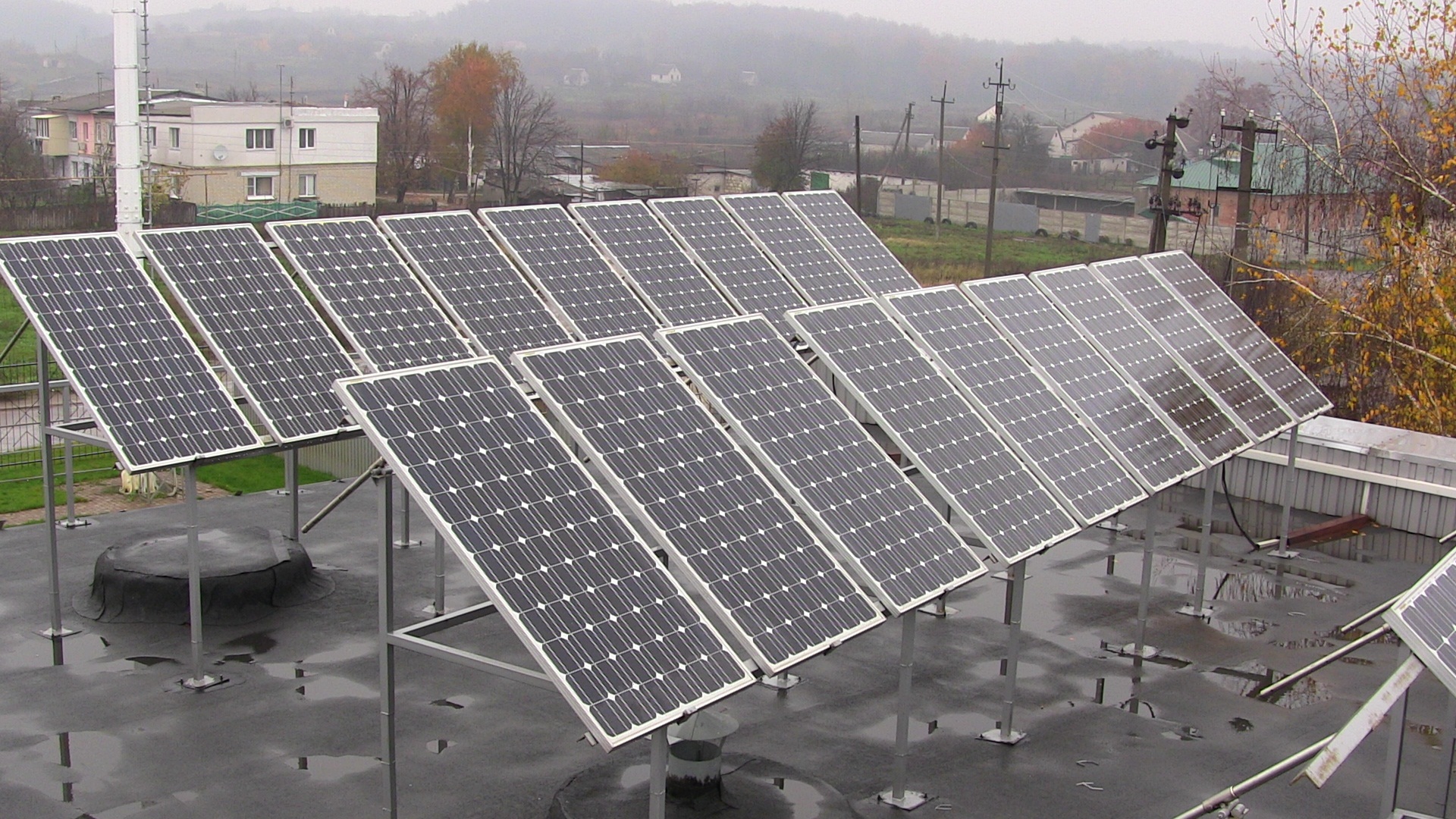
Solar Microgrids: All you need to know
Discover how solar batteries store excess energy, maximize your solar system’s efficiency, and provide reliable power during outages. Learn about the types, benefits, lifespan, and maintenance tips to make the most of your solar investment.