
In solar photovoltaic (PV) installations, the quality of electrical work directly impacts system safety, performance, and longevity. A well-equipped and properly used electrical installation toolkit is essential for ensuring accurate connections, minimizing losses, and achieving efficient solar electricity generation.
Improper tools or incorrect usage can lead to faulty wiring, safety hazards, and increased solar installation charges. Therefore, every installer must know how to inspect, select, and correctly use electrical tools during solar plant installation.
Proper handling of tools and adherence to safety practices are crucial for successful renewable solar installations.
This blog provides a complete guide to inspecting and using electrical installation toolkits, helping installers maintain high-quality standards and optimize solar panel system cost.
Importance of Electrical Toolkit in Solar Installations
1. Accurate Connections
Ensures proper wiring and electrical continuity.
2. Safety
Reduces risk of electrical hazards.
3. Efficiency
Speeds up the installation process.
4. Quality Assurance
Improves the reliability of solar PV systems.
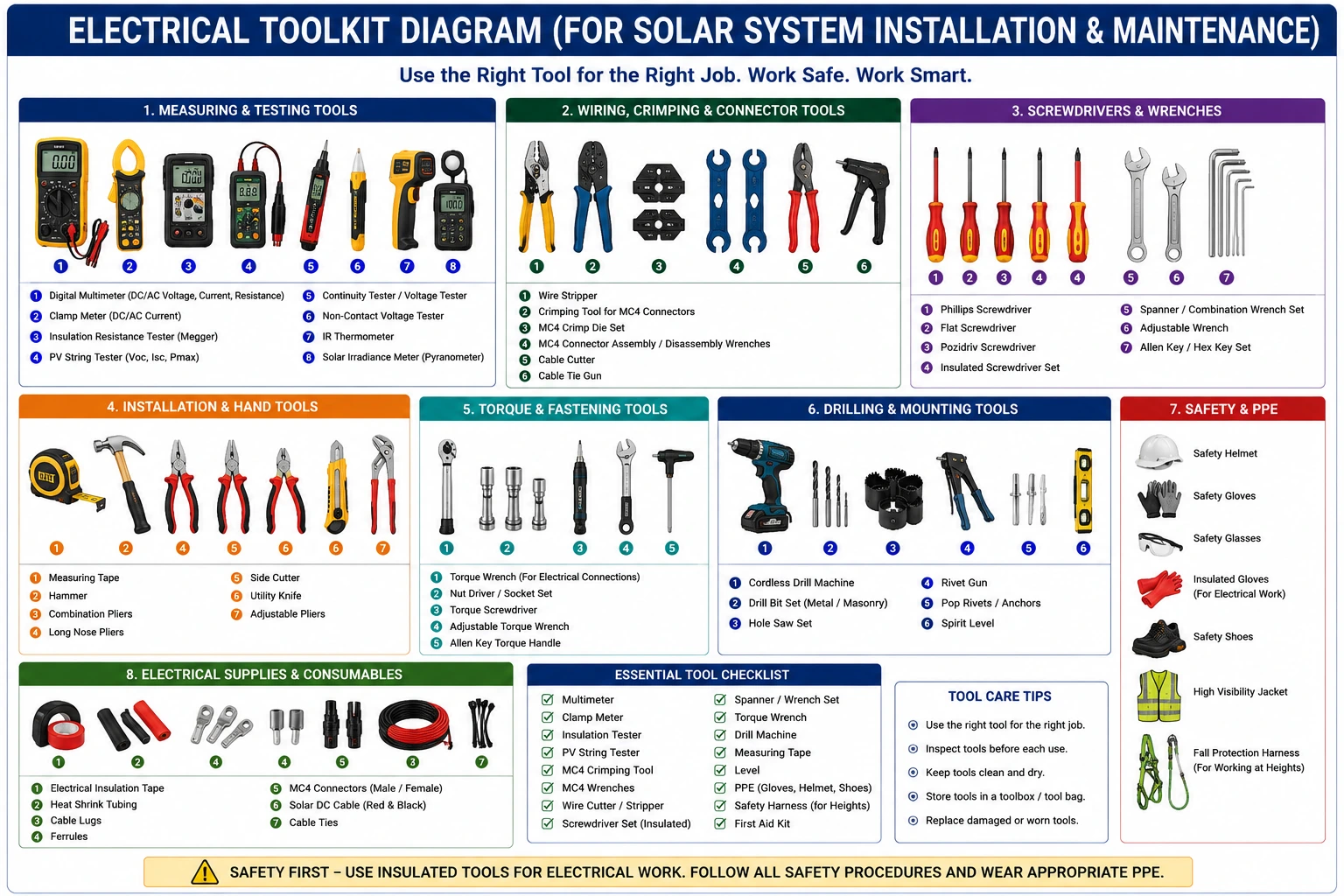
Essential Electrical Installation Tools
1. Multimeter
Purpose
- Measures voltage, current, and resistance
Usage
- Used for testing solar panel output and circuit continuity
2. Clamp Meter
Purpose
- Measures current without disconnecting the circuit
Usage
- Ideal for testing live systems
3. Wire Stripper
Purpose
- Removes insulation from wires
Usage
- Ensures clean and precise stripping
4. Crimping Tool
Purpose
- Secures connectors to cables
Usage
- Used for MC4 connectors
5. Screwdrivers (Insulated)
Purpose
- Tightening and loosening screws
Usage
- Used in inverter and junction box connections
6. Insulation Tester (Megger)
Purpose
- Checks insulation resistance
Usage
- Ensures the safety of electrical circuits
7. Cable Cutter
Purpose
- Cuts cables cleanly
Usage
- Prevents damage to conductors
8. Torque Wrench
Purpose
- Ensures proper tightening force
Usage
- Used for electrical and mechanical connections
9. MC4 Connector Tools
Purpose
- Crimping and assembling MC4 connectors
Usage
- Essential for solar panel connections
Tool Inspection Checklist
1. Physical Condition
Check for damage or wear
2. Insulation Integrity
Ensure insulation is intact
3. Calibration
Verify the accuracy of measuring tools
4. Cleanliness
Remove dust and debris
5. Functionality
Ensure tools operate correctly
Step-by-Step Tool Inspection Process
Step 1 – Visual Inspection
- Check for cracks or damage
Step 2 – Functional Check
- Test tool operation
Step 3 – Safety Check
- Ensure insulation and safety features
Step 4 – Calibration Check
- Verify measurement accuracy
Step 5 – Documentation
- Record inspection results
Demonstration of Tool Usage
1. Using a Multimeter
- Set to the appropriate mode
- Connect probes
- Measure voltage or current
2. Using a Wire Stripper
- Select the correct gauge
- Strip insulation carefully
3. Using a Crimping Tool
- Insert the connector and cable
- Apply pressure to secure the connection
4. Using a Clamp Meter
- Clamp around the conductor
- Read current value
5. Using an Insulation Tester
- Connect to the circuit
- Measure resistance
Conclusion
Inspecting and properly using electrical installation tools is a fundamental requirement for successful solar PV installations. By ensuring tools are in good condition and used correctly, installers can improve safety, efficiency, and system reliability.
Proper tool handling is essential for renewable solar installations. Additionally, adherence to standards set by the Ministry of New and Renewable Energy ensures safety and compliance.
With the right tools and practices, solar professionals can optimize solar panel system cost, enhance solar electricity generation, and support sustainable solar energy for home use and advanced renewable energy technology solutions.
FAQs
Q1. Why is tool inspection important?
Ans: It ensures safety and proper functioning.
Q2. What is the most important tool for solar installation?
Ans: A multimeter is essential for testing.
Q3. Why use insulated tools?
Ans: To prevent electrical shocks.
Q4. How often should tools be inspected?
Ans: Before every use and periodically.
Q5. Does tool quality affect solar panel system cost?
Ans: Yes, it reduces errors and maintenance costs.

Solar Loans, Subsidies & EMI Plans: Financing Made Easy
Explore solar loans, government subsidies, and flexible EMI plans to make installing solar panels affordable and hassle-free.
Solar PV Preventive Maintenance & Logbook Guide
A complete guide to creating a solar PV maintenance schedule and logbook for preventive maintenance, inspections, and accurate maintenance records.
Updated Rates of Solar Subsidy in Delhi: Cost, Eligibility & Benefits
Discover the latest solar subsidy rates in Delhi for 2025. This guide explains the updated costs, eligibility criteria, and benefits to help you maximize savings on your rooftop solar installation.
Open Circuit Voltage (Voc) Testing Guide for Solar PV Systems
A complete guide to measuring open circuit voltage (Voc) in solar PV systems, including testing procedures, safety guidelines, and performance evaluation techniques.

SmartRoof Solar Associate Program – Easy Way to Earn with Solar Referrals
Join the SmartRoof Solar Associate Program. Refer solar leads, earn rewards, and support clean energy growth in your community.

Solar Rooftop: अपने घर को बनाओ खुद का पावर हाउस | Complete Guide
सौर रूफटॉप सिस्टम आपके घर को पावर हाउस बना सकता है। यह न केवल बिजली के बिलों में बचत करता है, बल्कि साफ और नवीकरणीय ऊर्जा भी प्रदान करता है। जानें सौर पैनल की इंस्टालेशन प्रक्रिया, लागत, लाभ और कैसे यह आपके घर को आत्मनिर्भर ऊर्जा का स्रोत बना सकता है।
Complete Guide to Rooftop Solar Components for Industries
A rooftop solar system for factories typically includes solar panels, inverters, mounting structures, wiring, and monitoring systems. Additional components like net meters and energy storage may also be installed to optimize energy usage and track performance

Solar Power Set to Overtake Coal as World’s Largest Energy Source in Four Years
Solar power has come a long way in the past decade, moving from being an also-ran to one of the major players in the global energy race. According to the International Energy Agency, next year, solar photovoltaic capacity will surpass hydropower, followed by gas-fired generation in three years and coal in four years.