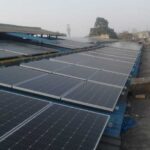
Stop Losing Power: The Ultimate Guide to Solar DC & AC Cable Sizing for Max Efficiency
When we are talking about 25 years of life for a Solar PV Rooftop System, Module Mounting Structure plays a crucial role. In this bog we will be discussing on Module Mounting Structures Quality and Design.
As per standards, Module mounting structure for a Solar PV Rooftop System should be designed to withstand storm condition with wind speed up to maximum 150 Kmph. But in the competitive market of Solar PV Rooftop Power plants, many installers are compromising with the quality and strength of Module mounting structures.
To ensure that the structure is designed with relevant max wind speed the STAAD PRO test (simulating the conditions of wind speed to see the stress on each joint) needs to be done. It costs the installer about 5000 but to save these 5000, he takes risk with the life of the structure. For a 10 KW power plant this is significant as it amounts to Rs 0.5/w of savings for the installer.
Many installers use pregalvanized sheets and forming sections out of it rather than making sections with MS Plates and then going for hot dipped galvanizing (80 microns coating) the same to make the structure; But the process being adopted with pregalvanized sheets gives a better look and feel to the structure, saves cost and time.
When somebody cuts the galvanized sheets the cut edge of the sheet does not remain galvanized and therefore when exposed to moisture and atmospheric conditions gets rusted with time reducing the strength of the structure. The difference in cost may be around Rs. 1-2/Watt, but this saving comes with the risk of damaging the power plant.
So if the Solar PV Rooftop system uses best Solar PV Module and best Inverter, but margins are created out of Structure compromising quality, then there is a possibility of Solar PV Module blowing off or structure uplifting and may more in the event of a storm or with time.
So, while comparing various installers for Solar PV Rooftop System installations at your premises, you should consider the importance of module mounting structure. You need to question your installer about the size, quality and strength of the material he would be using for your Solar PV Rooftop power plant. For best results, Module mounting structure should be a Hot Dipped Galvanized structure, designed to withstand a wind speed of maximum 150 Kmph and STAAD PRO analysis should be done for that structure.
So, when you are looking for quality installation of Solar PV Rooftop power plant that will work for 25 years and more, then you surely need to consider the importance of Structure Quality and the knowledge of the installing company. Do not go for price alone, as looking for cheaper supplier may result in costly repairs at a later stage.
Mounting of structure
While designing the structure the tilt angle of the panels is an important aspect which needs to be carefully considered because if the direction of the panels on mounted structure is not on true south at an elevation equal to latitude of the site then there is bound to be loss of power.
Assuming altitude to be 30 degrees then 180 degree south will give the best results.
Modules after mounting on structure are facing west then loss shall be 17% but if it is facing east then loss could be as high as 22%. For optimum results of power generation structure design should be such that after mounting of modules, modules remain in true south at appropriate altitude angle.
Register at our website for reading more of such blogs.
Suggested Articles

Solar Cell Technology: Monocrystalline vs Polycrystalline vs Thin-Film
Explore the different types of solar cells, including monocrystalline, polycrystalline, and thin-film, and learn their efficiency, applications, and benefits for solar energy systems.
Commercial Solar Power Plant Subsidy in India: What Businesses Need to Know
Businesses in India can reduce their solar installation costs through various MNRE-backed subsidies and state incentives. Learn eligibility, benefits, and the application process for commercial solar plants.
The Rise of Clean Energy: Solar Energy Trends in 2023
The solar energy industry is on the rise, as the demand for clean and renewable energy sources continues to increase. 2023 is shaping up to be a big year for the solar energy sector, as new technologies and innovations are expected to drive growth and expand the reach of solar energy.
How to Inspect and Maintain Solar Arrays
A complete guide to solar array inspection and maintenance, helping improve system reliability, energy output, and long-term performance through routine inspections and preventive care.
Steps Required for Conducting a Site Assessment Prior to Solar Installation
A solar site assessment helps installers evaluate location, shading, structure, and energy requirements before installation. This guide explains the essential steps for accurate solar system planning.
Inverter-Wise Solar Generation for C&I Plants
Discover how inverter-wise solar generation monitoring helps commercial and industrial (C&I) solar plants identify underperforming inverters, detect faults early, compare performance, and improve overall energy generation.
Solar PV Array Troubleshooting Guide: Diagnose & Fix Issues
Discover how to troubleshoot solar PV arrays with a step-by-step guide to diagnosing common faults, performing electrical tests, identifying damaged modules, and restoring optimal solar system performance.
What Is Solar Panel Efficiency? Meaning & Impact on Power Generation
Solar panel efficiency refers to how effectively a solar panel converts sunlight into usable electricity. This guide explains what solar panel efficiency means, why it matters, and how it directly impacts your solar system’s power output, space requirements, and overall performance.