Connecting a solar panel to a battery is the foundation of any solar power system. Whether you are installing solar panels on a rooftop, setting up a backup system for power cuts, or planning solar energy for home use, understanding the correct connection process ensures safety, efficiency, and maximum energy output.
A proper battery connection directly impacts solar electricity generation, the total cost of solar installation, system life, and overall performance.
Why Is Battery Connection Important in a Solar System?
Batteries store the solar electricity generated during the day and supply power when sunlight is unavailable. A correct connection:
- Prevents battery damage
- Improves energy storage efficiency
- Enhances backup reliability
- Supports optimized renewable solar systems
This also helps in controlling solar energy installation cost by reducing maintenance and early battery replacement.
Basic Components Required
To connect solar panels to a battery safely, you need:
- Solar panels
- Solar charge controller (MPPT or PWM)
- Battery bank
- DC cables and connectors
- Fuse/MCB and isolator
- Mounting and earthing system
These components together determine the solar panel system cost and system reliability.
Correct Connection Sequence (Very Important)
Always follow this safe order:
Battery → Charge Controller → Solar Panel → Inverter/Load
This protects the controller and prevents voltage damage.
Step-by-Step Process: How to Connect Solar Panels to a Battery
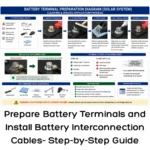
- Identify positive (+) and negative (–) terminals
- Connect the battery to the controller first
- Ensure tight and corrosion-free connections
This allows the controller to detect system voltage and protect battery health.
Step 2: Connect Solar Panel to Charge Controller
- Connect panel wires to solar input terminals
- Maintain correct polarity
- Use MC4 connectors and a DC isolator
This step begins solar electricity flow and impacts daily generation and the cost of solar per kWh installed.
Step 3: Connect the Inverter to the Battery
- Connect the inverter directly to the battery bank
- Install a DC fuse or breaker
- Maintain proper cable size to reduce loss
This enables conversion of stored solar energy into usable AC power.
Step 4: Grounding and Safety Check
- Install proper earthing
- Secure all cables
- Check voltage and current
- Monitor the first charge cycle
Good grounding improves system safety and lowers risk, supporting long-term renewable energy technology usage.
Wiring Configuration Options
Depending on the requirement:
- Series connection → increases voltage
- Parallel connection → increases current
- Series-parallel → balances both
System design impacts solar panel area per kW, home roof solar panels cost, and overall solar installation charges.
Common Mistakes to Avoid
- Skipping the charge controller
- Reversing polarity
- Using undersized cables
- No fuse or breaker
- Improper earthing
These errors increase losses and raise the total cost of solar installation over time.
How This Impacts Cost and Performance
Correct battery connection:
- Improves charging efficiency
- Reduces battery replacement
- Enhances ROI
- Lowers long-term solar roof installation cost
This is crucial when evaluating the average cost of solar panels on a house and long-term solar electricity savings.
Relevance in Modern Solar Systems
Battery-based systems are increasingly used due to rising electricity tariffs, unreliable grids, and growing demand for renewable energy and solar energy solutions. Smart battery integration ensures better backup, optimized output, and makes solar energy economical.
Conclusion
Knowing how to connect solar panels to a battery correctly is essential for system safety, efficiency, and durability. A proper connection improves solar electricity output, protects equipment, and ensures long-term savings.
At Smart Roof Solar, we design and install optimized battery-based solar systems using quality components to deliver reliable performance, reduced energy bills, and stable renewable power solutions.
FAQs
Q1. Which type of charge controller is better: MPPT or PWM?
Ans: MPPT controllers are more efficient and suitable for larger systems, while PWM controllers work for small, low-budget setups.
Q2. How do I choose the right battery for my solar system?
Ans: Battery selection depends on energy usage, system voltage, backup duration, and whether you use lithium or lead-acid technology.
Q3. What battery voltage should I use for home solar systems?
Ans: Most homes use 12V, 24V, or 48V systems, with higher voltages preferred for larger installations to reduce power losses.
Q4. Can I use lithium batteries instead of lead-acid batteries?
Ans: Yes, lithium batteries offer longer life, faster charging, and higher efficiency, but have a higher upfront cost.
Q5. How do I know if my battery is charging properly?
Ans: Charge controllers display battery voltage, charging current, and status indicators that confirm proper charging.