
In solar photovoltaic (PV) projects, the foundation system plays a vital role in ensuring the stability and durability of mounting structures. Concrete footings, widely used in solar installations, must be constructed precisely as per design specifications to handle structural loads and environmental conditions.
One of the most critical steps in this process is the construction of concrete formwork solar projects, which shape and support the concrete until it hardens. Poorly constructed formwork can lead to misaligned structures, weak foundations, and increased solar installation charges.
Adherence to design specifications and proper execution of civil works are essential for reliable solar PV installations.
This blog provides a complete guide to constructing concrete forms as per design specifications, ensuring accuracy, safety, and optimized solar panel system cost.
What are Concrete Forms Formwork Solar Projects?
Concrete forms, or formwork, are temporary or permanent molds used to hold and shape concrete until it sets and gains strength.
In solar PV installations, formwork is used for:
- RCC footings
- Foundations for mounting structures
Proper formwork ensures the correct shape, alignment, and strength of the footing.
Importance of Proper Formwork Construction
Correct formwork construction ensures:
- Accurate dimensions and alignment
- Structural strength and durability
- Smooth surface finish
- Reduced material wastage
- Efficient solar electricity generation through stable mounting
Improper formwork can lead to structural defects and increased maintenance costs.
Key Design Specifications to Follow
Before constructing formwork, review design documents such as:
- Structural drawings
- General Arrangement (GA) drawings
- Footing design details
Important parameters include:
- Footing dimensions
- Depth and width
- Reinforcement details
- Anchor bolt positions
Materials Used for Formwork
1. Timber Formwork
- Easy to use
- Suitable for small projects
2. Steel Formwork
- Strong and durable
- Suitable for large projects
3. Plywood Formwork
- Smooth finish
- Lightweight
4. Plastic Formwork
- Reusable
- Resistant to moisture
Tools Required for Formwork Construction
- Measuring tape
- Spirit level
- Hammer
- Saw or cutting tools
- Drilling machine
- Clamps and supports
Step-by-Step Process to Construct Concrete Forms
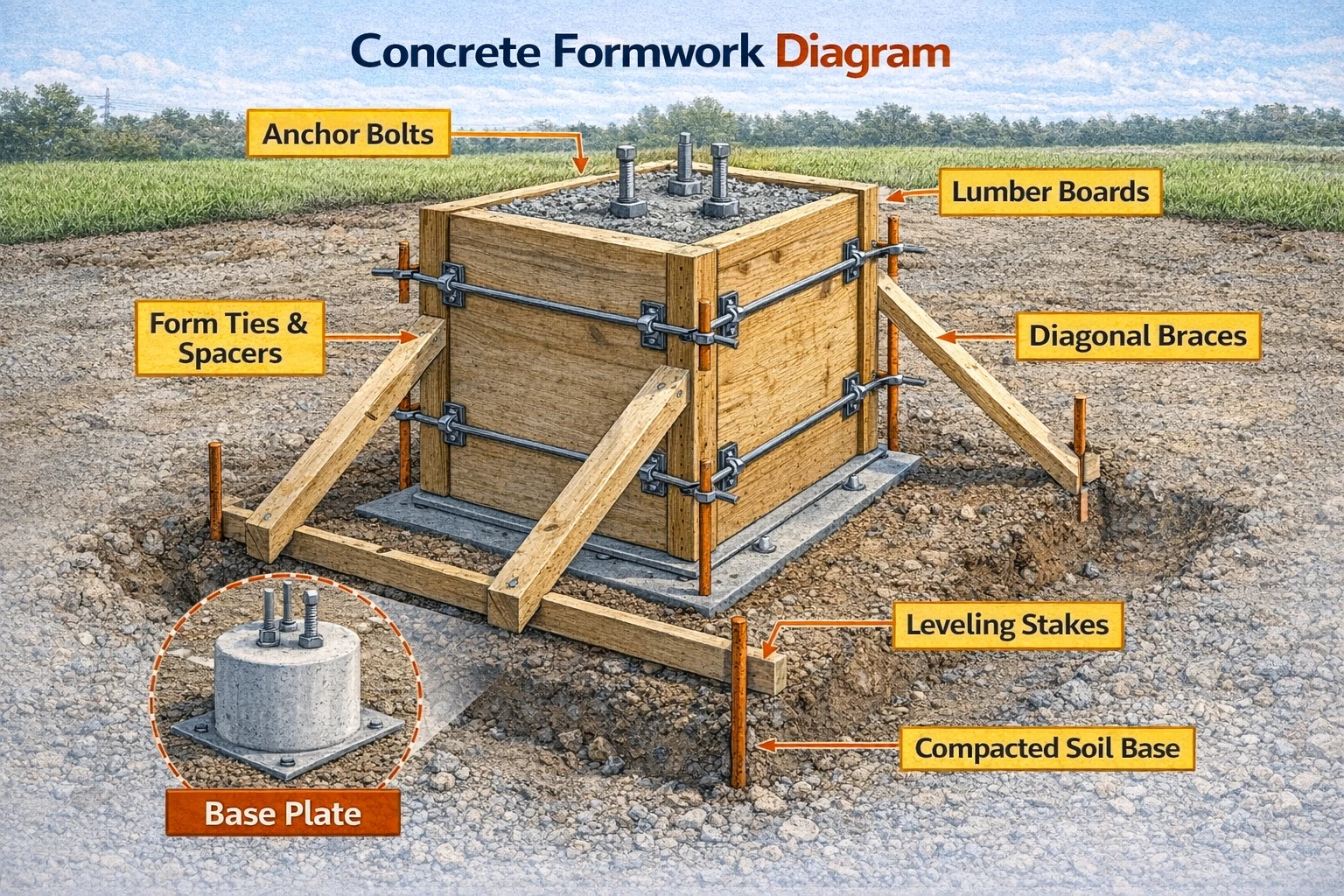
Step 1 – Study Design Drawings
Understand all specifications, including:
- Dimensions
- Layout
- Reinforcement details
Step 2 – Prepare the Site
- Clear and level the ground
- Mark foots positions accurately
Step 3 – Cut and Assemble Formwork
- Cut materials as per the required dimensions
- Assemble formwork panels securely
Step 4 – Position Formwork
- Place formwork at marked locations
- Ensure correct alignment and spacing
Step 5 – Check Level and Alignment
- Use a spirit level and measuring tools
- Ensure formwork is straight and level
Step 6 – Fix Reinforcement and Anchor Bolts
- Place steel reinforcement bars
- Position anchor bolts as per design
Step 7 – Provide Supports and Bracing
- Add supports to prevent movement
- Ensure formwork can withstand concrete pressure
Step 8 – Inspect Before Pouring Concrete
- Verify dimensions and alignment
- Check for gaps or leaks
Step 9 – Concrete Pouring and Curing
- Pour concrete carefully
- Allow proper curing
Quality Checks for Formwork
1. Dimensional Accuracy
- Ensure dimensions match design specifications.
2. Alignment and Level
- Check horizontal and vertical alignment.
3. Stability
- Formwork should be strong enough to hold wet concrete.
4. Leak Prevention
- Ensure no gaps for concrete leakage.
5. Surface Finish
- Smooth surfaces improve the quality of footing.
Impact on Solar Panel System Cost
Proper formwork construction helps:
- Avoid rework
- Reduce material wastage
- Improve structural stability
- Optimize the cost of solar per kWh installed
Poor formwork increases construction and maintenance costs.
Conclusion
Constructing concrete forms as per design specifications is a vital step in solar PV installations. Proper formwork ensures accurate dimensions, strong foundations, and long-term structural stability. By following systematic procedures, using appropriate materials, and conducting thorough inspections, installers can avoid costly errors and improve project efficiency.
Adherence to design and quality standards is essential for successful solar installations. Additionally, compliance with guidelines from the Ministry of New and Renewable Energy ensures safety and reliability in renewable solar projects.
With proper formwork practices, solar professionals can optimize solar panel system cost, enhance solar electricity generation, and support sustainable solar energy for home use and large-scale renewable solar solutions.
FAQs
Q1. What is the purpose of formwork in solar projects?
Ans: Formwork shapes and supports concrete until it hardens.
Q2. Which material is best for formwork?
Ans: It depends on project size; timber is common for small projects, while steel is used for large ones.
Q3. Why is alignment important in formwork?
Ans: Proper alignment ensures structural stability and accurate installation.
Q4. What happens if formwork is weak?
Ans: It can collapse or deform, leading to defective foundations.
Q5. Are inspections required before concrete pouring?
Ans: Yes, inspections ensure accuracy and prevent defects.
Steps Required for Conducting a Site Assessment Prior to Solar Installation
A solar site assessment helps installers evaluate location, shading, structure, and energy requirements before installation. This guide explains the essential steps for accurate solar system planning.
How to Improve Solar Panel Performance for Optimal Energy Output
Performance degradation in solar panels reduces energy output over time. This guide explains how to factor in degradation when calculating annual yields, ensuring accurate estimates for residential, commercial, and industrial solar installations.

What is MPPT in a Solar System? Meaning, Working & Benefits
Solar radiation on a tilted surface directly affects how much energy a solar panel produces. Learn why tilt angle matters and how it impacts solar output.

Solar for Metal & Fabrication Units: Cost, Benefits and Installation in India
A practical guide on solar for metal and fabrication units in India covering installation cost, benefits, system options, and the installation process.
Single Line Diagram (SLD) in Solar PV Systems: Complete Guide to Design, Symbols & Reading
Learn how to fetch a Bill of Material (BOM) for a solar PV system directly from design documents like SLD, layout, and GA drawings. This step-by-step guide helps installers and EPCs ensure accurate material estimation and efficient project execution.
Rooftop Solar: Reduce Your Electricity Bill and Increase Savings
Discover how installing a rooftop solar system can help you save on electricity bills, reduce peak demand charges, and take advantage of government incentives.

Inverter Operation and Anti-Islanding Testing Guide
A complete guide to solar inverter testing and anti-islanding performance verification, including AC system measurements and commissioning best practices.
How Installers Cut Costs on Solar PV Module Mounting Structures
Solar PV mounting structures can significantly impact project cost. Explore how expert installers optimize design, materials, and labor to achieve safe, durable, and cost-effective solar installations