
In solar photovoltaic (PV) projects, the foundation system plays a vital role in ensuring the stability and durability of mounting structures. Concrete footings, widely used in solar installations, must be constructed precisely as per design specifications to handle structural loads and environmental conditions.
One of the most critical steps in this process is the construction of concrete formwork solar projects, which shape and support the concrete until it hardens. Poorly constructed formwork can lead to misaligned structures, weak foundations, and increased solar installation charges.
Adherence to design specifications and proper execution of civil works are essential for reliable solar PV installations.
This blog provides a complete guide to constructing concrete forms as per design specifications, ensuring accuracy, safety, and optimized solar panel system cost.
What are Concrete Forms Formwork Solar Projects?
Concrete forms, or formwork, are temporary or permanent molds used to hold and shape concrete until it sets and gains strength.
In solar PV installations, formwork is used for:
- RCC footings
- Foundations for mounting structures
Proper formwork ensures the correct shape, alignment, and strength of the footing.
Importance of Proper Formwork Construction
Correct formwork construction ensures:
- Accurate dimensions and alignment
- Structural strength and durability
- Smooth surface finish
- Reduced material wastage
- Efficient solar electricity generation through stable mounting
Improper formwork can lead to structural defects and increased maintenance costs.
Key Design Specifications to Follow
Before constructing formwork, review design documents such as:
- Structural drawings
- General Arrangement (GA) drawings
- Footing design details
Important parameters include:
- Footing dimensions
- Depth and width
- Reinforcement details
- Anchor bolt positions
Materials Used for Formwork
1. Timber Formwork
- Easy to use
- Suitable for small projects
2. Steel Formwork
- Strong and durable
- Suitable for large projects
3. Plywood Formwork
- Smooth finish
- Lightweight
4. Plastic Formwork
- Reusable
- Resistant to moisture
Tools Required for Formwork Construction
- Measuring tape
- Spirit level
- Hammer
- Saw or cutting tools
- Drilling machine
- Clamps and supports
Step-by-Step Process to Construct Concrete Forms
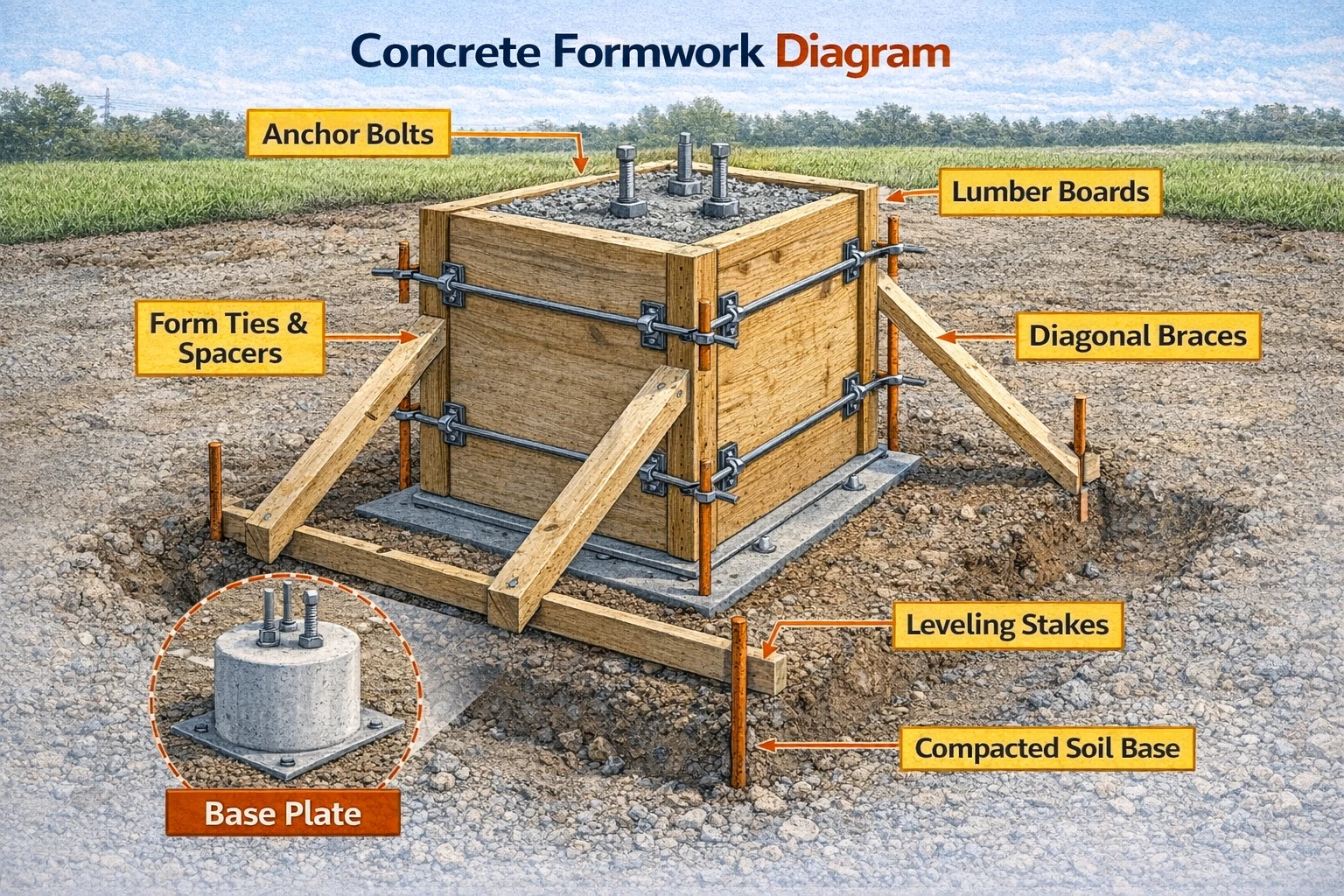
Step 1 – Study Design Drawings
Understand all specifications, including:
- Dimensions
- Layout
- Reinforcement details
Step 2 – Prepare the Site
- Clear and level the ground
- Mark foots positions accurately
Step 3 – Cut and Assemble Formwork
- Cut materials as per the required dimensions
- Assemble formwork panels securely
Step 4 – Position Formwork
- Place formwork at marked locations
- Ensure correct alignment and spacing
Step 5 – Check Level and Alignment
- Use a spirit level and measuring tools
- Ensure formwork is straight and level
Step 6 – Fix Reinforcement and Anchor Bolts
- Place steel reinforcement bars
- Position anchor bolts as per design
Step 7 – Provide Supports and Bracing
- Add supports to prevent movement
- Ensure formwork can withstand concrete pressure
Step 8 – Inspect Before Pouring Concrete
- Verify dimensions and alignment
- Check for gaps or leaks
Step 9 – Concrete Pouring and Curing
- Pour concrete carefully
- Allow proper curing
Quality Checks for Formwork
1. Dimensional Accuracy
- Ensure dimensions match design specifications.
2. Alignment and Level
- Check horizontal and vertical alignment.
3. Stability
- Formwork should be strong enough to hold wet concrete.
4. Leak Prevention
- Ensure no gaps for concrete leakage.
5. Surface Finish
- Smooth surfaces improve the quality of footing.
Impact on Solar Panel System Cost
Proper formwork construction helps:
- Avoid rework
- Reduce material wastage
- Improve structural stability
- Optimize the cost of solar per kWh installed
Poor formwork increases construction and maintenance costs.
Conclusion
Constructing concrete forms as per design specifications is a vital step in solar PV installations. Proper formwork ensures accurate dimensions, strong foundations, and long-term structural stability. By following systematic procedures, using appropriate materials, and conducting thorough inspections, installers can avoid costly errors and improve project efficiency.
Adherence to design and quality standards is essential for successful solar installations. Additionally, compliance with guidelines from the Ministry of New and Renewable Energy ensures safety and reliability in renewable solar projects.
With proper formwork practices, solar professionals can optimize solar panel system cost, enhance solar electricity generation, and support sustainable solar energy for home use and large-scale renewable solar solutions.
FAQs
Q1. What is the purpose of formwork in solar projects?
Ans: Formwork shapes and supports concrete until it hardens.
Q2. Which material is best for formwork?
Ans: It depends on project size; timber is common for small projects, while steel is used for large ones.
Q3. Why is alignment important in formwork?
Ans: Proper alignment ensures structural stability and accurate installation.
Q4. What happens if formwork is weak?
Ans: It can collapse or deform, leading to defective foundations.
Q5. Are inspections required before concrete pouring?
Ans: Yes, inspections ensure accuracy and prevent defects.

Sustainable Solar Panel Disposal: Recycling for a Greener Future
Sustainable solar panel disposal ensures old or damaged panels are recycled responsibly, reducing waste and environmental harm. By adopting eco-friendly recycling and reuse practices, we can recover valuable materials, lower carbon impact, and make solar energy truly sustainable from installation to end-of-life.
Installation of Solar Cables for Modules and Inverters
A step-by-step guide to solar cable installation for modules, inverters, and other system components to ensure safe and reliable operation.

1MW Solar Power Plant Construction Cost & Profit in India
Choosing the right industrial solar EPC is critical for plant performance and ROI. This guide explains how Indian industries can select the best solar EPC partner.
Installation of DC Energy Meters in Solar PV Systems: Step-by-Step Guide
DC energy meters are used in solar PV systems to measure generated DC power and energy. This guide explains installation, wiring, testing, and safety procedures for solar installers.

Should You Switch to Solar in India? Complete Guide
India has become a hot-selling solar market and people are interested in installing solar systems in their homes as well as in industries and factories.

Difference Between Inverter and Solar Inverter: A Complete Comparison
Confused between an inverter and a solar inverter? This guide explains their key differences, working principles, advantages, and which option is best for your home or business.
Grounding Conductor Sizing for Solar PV Systems
A complete guide to determining grounding conductor size for solar PV systems, ensuring safe, compliant, and reliable installations.
PWM vs MPPT Charge Controllers: Specifications and Key Differences
Choosing the right charge controller is essential for battery performance and system efficiency. This guide compares PWM and MPPT charge controllers, explaining their specifications, working principles, and key differences to help you select the best option.