
How to Clean and Maintain Solar Power System for Maximum Efficiency
After the solar panels used in solar power plant for generating solar energy for home/industrial/commercial roof top or ground mounted, are installed , the dirt starts to built up over the panels and can substantially affect system performance. It is required to be cleaned up from time to time regularly to avoid losses of solar energy. But while cleaning can enhance the system performance but wrong cleaning processes of materials used can lead to bad performance of the system. Therefore one needs to be careful in selecting the right materials , tools and processes for cleaning the solar power system. While the right materials , tools and processes are necessary , it is equally important to have trained manpower to do the job.
Given below are our recommendations for solar panels cleaning used in solar power plant for generating solar energy for home/industrial/commercial roof top or ground mounted.
Safety of workmen involved in cleaning:
Solar panels used in solar power plant for generating solar energy for home/industrial/commercial roof top or ground mounted, are connected in series and it can generate upto 1000V DC. Cracks in modules or damaged cable or joints in a string can pose serious dangerous situation for workmen involved in cleaning particularly when the modules are sprayed with water and are yet wet.
Even during early morning / late evening hrs of sunlight the array will generate lethal voltage. It is therefore important to inspect solar panels thoroughly for micro cracks, glass shield damage, and loose connections before solar panel cleaning is resorted to. workmen involved in cleaning should be made to wear appropriate electrically insulating gloves/shoes during cleaning. Or else the system should be switched off and cleaning should be done in zero sunlight hours.
Suitable Time for cleaning:
The recommended time for cleaning is when risk of electrical shock is minimum. That is when there is almost zero sunlight/ either just after sunrise or just before sunset.
Quality of water :
Soft water should be used to clean the modules. If soft water is not available, rainwater or potable tap water can be used. Water should have hardness of less than 75ppm. Water should be free of grit and particles or else we may see damage of panels over a period of time. cleaning agent: cleaning agent is not recommended but if one wishes then mild, non-abrasive, non-caustic detergent with water may be used. Alkali based or acidic detergents must not be used.
Removing spots:
Removing dead mosquitoes , dirts such as birds dropping, tar etc., use a soft sponge based wiper after spraying water over the spots and after wiping again cleaning with lots of water.
Drying:
Wipe the module surface with a little bit of pressure by hand through wiper from top to bottom to remove any residual water from the solar panels.
Water pressure:
Normal tap water pressure is enough at the cleaning end of nozzle. Use of high pressure for cleaning may damage the solar panels.
Water temperature:
Ambient temp of water is good enough for cleaning of panels and water should not be sprayed when the modules are hot to avoid thermal shocks. Or else we will have chances of developing micro cracks in the solar panels.
Suggested Articles

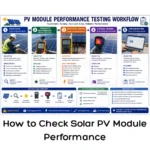
How to Check Solar PV Module Performance
A complete guide to testing solar PV module performance, including voltage and current measurements, power output analysis, and performance verification techniques.
Difference Between Inverter and Solar Inverter: A Complete Comparison
Confused between an inverter and a solar inverter? This guide explains their key differences, working principles, advantages, and which option is best for your home or business.
Solar Sector Growth in India Slows as Investments Decline in Q1 2023
India’s solar sector experiences an investment slowdown in Q1 2023, reflecting challenges in funding and growth for renewable energy projects.
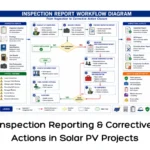
Inspection Reporting and Corrective Actions
A complete guide to preparing solar PV inspection reports and implementing corrective actions to ensure quality, compliance, and project performance.
Solar PV Conduit & Cable Routing Plan Guide
A complete guide to preparing solar PV conduit and cable routing plans, including layout design, routing methods, and installation best practices.
Can Solar Systems Support Industrial Motors and Machines? A Complete Guide
Discover how using solar for heavy machines can power industrial equipment reliably and cost-effectively for greener operations.
Utility Disconnect Installation in Solar PV Systems Guide
A step-by-step guide to utility disconnect installation in solar PV systems, including wiring, safety measures, and installation best practices.

New IREDA Loan Scheme for Solar Rooftop Projects: Benefits, Eligibility & Interest Rates
India’s renewable energy push gets a major boost with the new IREDA loan scheme for solar rooftop projects. This scheme offers low-interest financing, simplified approvals, and better support for residential, commercial, and industrial consumers. Here’s a detailed look at its benefits, eligibility, interest rates, and how to apply for funding.