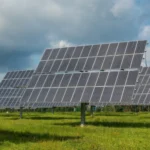
Solar Power Park Scheme: Central Government Expands Clean Energy Initiative
NEW DELHI Solar Power Park Scheme
The Union government plans to launch the second phase (solar power park scheme) of a dedicated program to develop solar parks across the country that will aim to plug loopholes and overcome slow progress.
Two officials with knowledge of the matter said the expanded scheme would seek to address the issue of solar park developers failing to make initial investments and delaying the development of projects till they receive money from power producers who place bids to develop power in such projects. The government is also looking to address the issue of inflated detailed project reports (DPR), they said.
According to one of the officials, “The people who come for developing solar parks, they don’t put in any money. They first do the bids for power developers. The money which comes from bids, they develop the solar parks.”
The scheme, which is known as ‘Development of Solar Parks and Ultra Mega Solar Power Projects’, was launched in December 2014 to help solar project developers set up projects in a plug-and-play model. The scheme is valid till the end of this fiscal. The government now plans to launch the second phase of this scheme with a focus on floating solar projects.
“We are thinking of expanding the scheme and coming up with a second part, particularly to take care of floating solar parks. The cost is higher in floating solar parks. Subsidy rates will be better,” the second official said. The focus on floating solar parks will reduce the need for vast stretches of land to set up similar parks.
However, the technology for floating solar module projects, wherein photovoltaic solar panels are mounted on floating structures on water bodies, is expensive. Under the current scheme, the MNRE provides central financial assistance (CFA) of up to ₹20 lakh per MW or 30% of the project cost, including grid-connectivity cost, whichever is lower. The solar parks are developed in partnerships with state governments and their agencies, CPSUs, and private entrepreneurs.
The implementing agency is termed as a solar power park developer (SPPD). Post the selection of the SPPD, bids are sought for power developers, which are largely independent power producers (IPP) to produce power at the site in a plug-and-play model.
On the instances of SPPDs lagging in infrastructure development, Amit Kumar, partner, and leader for Power, Utilities and Mining, PwC India said: “The scheme is aimed at providing a plug-and-play model of infrastructure for the power developers, but the opposite happens in some instances where the SPPD starts development of the project only after the money comes in from the IPPs. This delays the project.”
Further, according to sector experts, project development is delayed even if the SPPDs receive a grant from the Centre for the project.
Suggested Articles

Go Off-Grid with Solar Energy: A Complete Guide
Living off-grid, more commonly defined as not having a dependence on public utilities such as electricity, sounds appealing for a lot of reasons. The idea of being self-sufficient, powering your own home with solar energy, and maybe even building that home with your own two hands can sound like a dream and a challenge for people who wish to live life on their terms.

India Raises Solar Purchase Obligation (SPO) to 8%: A Complete Guide
The Solar Purchase Obligation (SPO) in India is set to increase to 8%, pushing companies to adopt more solar energy. This guide explains the implications for businesses, compliance strategies, and how organizations can align with renewable energy targets.

Why Solar Energy Makes Sense for the Healthcare Industry
Explore how the healthcare industry can leverage solar energy to reduce electricity bills, enhance reliability, and support green initiatives.

How to Prepare Battery Terminals and Install Interconnection Cables
Proper battery terminal preparation and cable installation are essential for safe and efficient battery bank operation. This guide explains the complete installation process for solar projects.

500 kW Solar System Price in Indore: Complete Industrial Guide
Planning to install a 500 kW solar power plant in Indore? Discover the complete cost details, government subsidy options, and potential savings for industries in 2025.
AVANCIS Pushes CIGS Thin-Film Solar Modules Beyond 20% Efficiency
AVANCIS achieves a breakthrough in solar technology, pushing CIGS thin-film modules beyond 20% efficiency for higher performance and energy output.

Rooftop Solar for Factories: Cost, Benefits, ROI & Installation Guide in India
Learn how rooftop solar for factories in India lowers power costs with high ROI, faster payback, and long-term energy savings for industrial facilities.

Data Acquisition System Calibration in Solar PV Plants
A complete guide to solar PV data acquisition system calibration, ensuring accurate monitoring, reliable data collection, and effective performance analysis.