
In solar PV systems that include energy storage, battery banks play a crucial role in ensuring an uninterrupted solar electricity supply. However, batteries, especially lead-acid types, require proper structural support and safety measures due to risks like acid leakage, corrosion, and electrical hazards.
The installation of a battery bank stand and spill containment system is essential for safety, compliance, and long-term performance. Incorrect setup can lead to safety risks, reduced system life, and increased solar installation charges.
Proper installation of battery systems with safety provisions is critical in renewable solar projects.
This blog provides a complete step-by-step guide for installing battery bank stands and spill containment systems as per design drawings, ensuring safety and efficiency.
Importance of Battery Bank Stand and Spill Containment
1. Structural Support
Battery stands provide stable support for heavy batteries.
2. Safety Against Spillage
Containment systems prevent acid leakage from spreading.
3. Corrosion Prevention
Protects the surrounding infrastructure.
4. Maintenance Ease
Allows easy inspection and servicing.
5. Compliance with Standards
Ensures adherence to safety regulations.
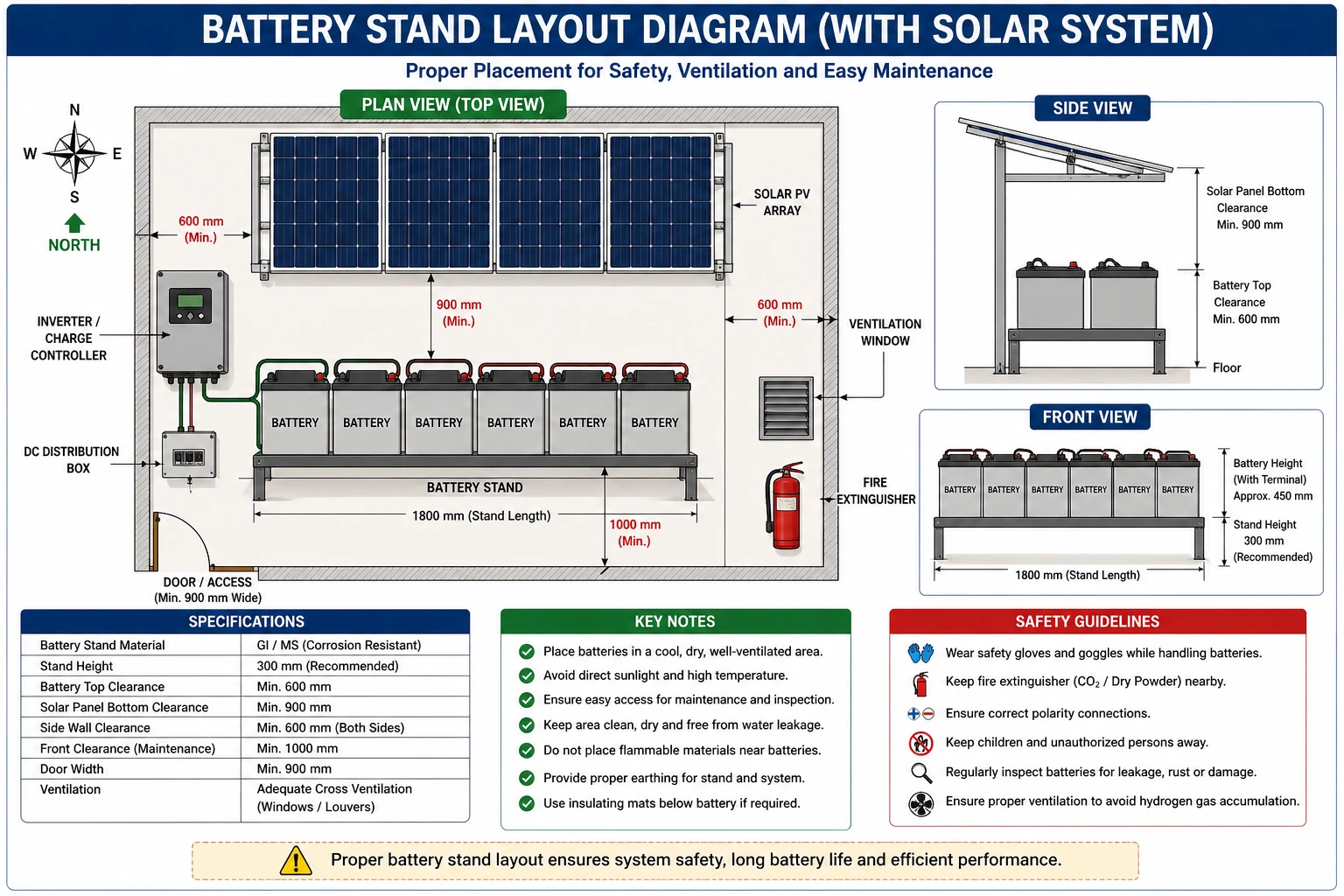
Components of Battery Bank Setup
- Battery stand (metal or coated structure)
- Spill containment tray
- Acid-resistant coating
- Fasteners and anchors
- Insulation mats
Tools and Materials Required
Tools
- Spanners and wrenches
- Torque wrench
- Measuring tape
- Spirit level
- Drilling machine
Materials
- Battery stand structure
- Spill containment trays
- Anchor bolts
- Protective coatings
Pre-Installation Preparation
1. Review Drawings
- Study layout and design
- Understand dimensions and placement
2. Site Preparation
- Ensure a clean and level surface
- Verify load-bearing capacity
3. Safety Planning
- Arrange PPE
- Ensure ventilation in the battery room
Step-by-Step Installation Process
Step 1 – Mark Installation Area
- Mark positions as per the drawings
- Ensure proper spacing
Step 2 – Install Foundation or Base
- Prepare a concrete base if required
- Ensure a level surface
Step 3 – Assemble Battery Stand
- Assemble frame components
- Ensure structural integrity
Step 4 – Fix the Stand to the Floor
- Use anchor bolts
- Ensure firm fixing
Step 5 – Install Spill Containment Tray
- Place the tray under the battery stand
- Ensure proper alignment
Step 6 – Apply Protective Coating
- Use acid-resistant coating
- Prevent corrosion
Step 7 – Check Alignment and Leveling
- Use a spirit level
- Ensure even placement
Step 8 – Place Insulation Mats
- Prevent electrical hazards
Step 9 – Final Inspection
- Verify stability
- Check spill containment effectiveness
Spill Containment Best Practices
1. Proper Sizing
Containment should hold the full electrolyte volume.
2. Leak Prevention
Ensure no gaps or cracks.
3. Regular Inspection
Check for damage or corrosion.
Quality Checks
1. Structural Stability
Ensure the stand can support the battery weight.
2. Leveling
Verify even placement.
3. Coating Integrity
Check for corrosion protection.
4. Containment Effectiveness
Ensure proper spill handling.
Conclusion
Installing battery bank stands and spill containment systems as per design drawings is essential for ensuring safety, durability, and efficient performance of solar PV systems. By following structured procedures and maintaining quality standards, installers can prevent risks and improve system reliability.
Proper installation and safety practices are crucial in renewable solar projects. Additionally, adherence to standards set by the Ministry of New and Renewable Energy ensures compliance and operational safety.
With the right installation approach, solar professionals can optimize solar panel system cost, enhance solar electricity generation, and support sustainable solar energy for home use and large-scale renewable solar solutions.
FAQs
Q1. Why is spill containment important in battery systems?
Ans: It prevents acid leakage and protects the surroundings.
Q2. What materials are used for battery stands?
Ans: Metal structures with corrosion-resistant coatings.
Q3. How does proper installation affect solar panel system cost?
Ans: It reduces maintenance and improves system lifespan.
Q4. Are safety measures necessary during installation?
Ans: Yes, they ensure safe handling and operation.
Q5. What should be checked after installation?
Ans: Alignment, stability, and containment effectiveness.

How to Assess Customer Requirements Before Solar Installation
Understanding customer requirements is essential before installing a solar plant. This guide explains key assessment methods such as energy analysis, site survey, and feasibility evaluation.
Everything you Need to Know about Bifacial Solar Panels technology
Learn how bifacial solar panels capture sunlight on both sides, boosting energy efficiency and maximizing solar power generation for homes and businesses.
Battery Bank Enclosure & Rack Installation Guide
A complete guide to battery bank enclosure and rack installation, including site verification, setup procedures, and safety practices for solar PV systems.

100 kW Solar Plant Cost in Rajasthan: Latest Cost, Maintenance & Payback Time
Installing a 100 kW solar plant in Rajasthan costs around ₹40–60 lakh in, with annual savings up to ₹10–12 lakh. Discover maintenance needs, ROI, and payback period of 4–6 years.
Solar Battery Hazard Prevention Guide
A complete guide to identifying battery hazards in solar PV systems and following effective prevention and safe handling practices.
OPEX Industrial Solar Provider in India: How It Works, Cost & ROI
An OPEX industrial solar provider installs and owns the solar plant while industries pay only for energy used. Learn cost, benefits, and ROI in India.
Maintenance Of Solar Power Plant in India: Everything You Need to know
Proper maintenance is key to maximizing the efficiency and lifespan of solar power plants in India. Learn essential tips, best practices, and common maintenance tasks.
How to Maintain Solar Power System for Homes, Industries & Commercial Buildings
A solar power generating system converts sunlight into electricity for residential, industrial, and commercial use. This blog explains the components, working, and benefits of solar systems, helping you understand how to harness solar energy efficiently and sustainably.