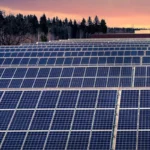
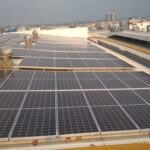
As India’s solar energy revolution continues to gain momentum, Uttar Pradesh (UP) has emerged as one of the fastest-growing solar markets. With abundant sunlight, progressive policies, and robust state incentives, installing a 1 MW solar power plant in Uttar Pradesh is now more affordable and beneficial than ever before.
Whether you’re an industrial owner, an institutional campus, or a commercial establishment, investing in solar can drastically reduce your electricity costs, promote sustainability, and ensure long-term energy independence.
At Smart Roof Solar, we specialize in end-to-end solar EPC (Engineering, Procurement & Construction) services, from designing and installation to maintenance and performance monitoring, ensuring that your transition to solar is seamless and profitable.
What is a 1 MW Solar Power Plant?
A 1 MW (megawatt) solar power plant equals 1,000 kilowatts, capable of producing approximately 1.4-1.6 million units of solar electricity per year under Uttar Pradesh’s average solar irradiation conditions.
Quick Facts:
1 MW = 1,000 kW = 1,000,000 Wp
Average daily generation: 4,500-5,000 units
Annual generation: 14-16 lakh units
Solar panel area per kW: ~100 sq. ft.
Total land/rooftop area required: 80,000-1,00,000 sq. ft.
With a 1 MW solar plant, consumers can offset up to 90% of their annual electricity bill, significantly reducing operating expenses and carbon emissions.
1 MW Solar Power Plant Cost in UP (Uttar Pradesh)
The solar energy installation cost for a 1 MW project in UP depends on the system configuration (on-grid, hybrid, or ground-mounted) and the quality of solar components used.
Capacity | Estimated Cost (excluding GST) |
100 kW in UP | Starting from ₹24,00,000* |
200 kW in UP | Starting from ₹47,00,000* |
300 kW in UP | Starting from ₹35,25,000* |
400 kW in UP | Starting from ₹47,00,000* |
500 kW in UP | Starting from ₹1,25,00,000* |
600 kW in UP | Starting from ₹1,44,00,000* |
700 kW in UP | Starting from ₹1,64,50,000* |
800 kW in UP | Starting from ₹1,88,00,000* |
900 kW in UP | Starting from ₹2,16,00,000* |
1 MW in UP | Starting from ₹2,35,00,000* |
*Prices quoted are indicative starting rates for the above-mentioned solar installations may vary based on project-specific requirements, including ground mount or tin-shed structures, RC installation types, additional accessories like DG sync, safety rails, etc. Final pricing will be confirmed upon detailed site evaluation and project scope assessment.
These include solar installation charges, mounting structure, DC/AC cabling, inverters, earthing, and commissioning.
The cost of solar per kWh installed in such setups averages ₹3.5-₹4/unit, making solar a highly economical renewable energy technology for industrial and commercial consumers.
Power Generation and Payback Period
A 1 MW solar power plant in Uttar Pradesh typically generates around 1.5 million units of clean energy annually.
Financial Highlights:
- Annual savings: ₹1.2-₹1.5 crore (based on ₹8-₹10/unit tariff)
- Payback period: 3-5 years
- System life: 25+ years
- Annual O&M cost: ₹3-₹5 lakh
After the payback period, the electricity generated is almost free, making solar energy economical for decades.
Who Should Install a 1 MW Solar Power Plant?
Ideal for:
- Manufacturing plants and industrial parks
- Cold storage facilities and agro units
- Hospitals and educational institutions
- IT parks and large offices
- Government buildings and public sector units
Such users benefit the most because their solar panel system cost is recovered quickly due to high energy usage and reliable returns.
Environmental and Social Impact
- Reduces carbon emissions by over 1,200 tonnes per year
- Supports India’s net-zero target for 2070
- Creates green jobs and boosts local manufacturing
- Promotes renewable energy and solar energy adoption in Uttar Pradesh
By adopting solar, you not only lower the cost of solar panels per unit but also become part of a cleaner, self-reliant energy ecosystem.
Monitoring and O&M Services
At Smart Roof Solar, our dedicated Operation & Maintenance (O&M) services ensure:
- Real-time monitoring through advanced data systems
- Preventive maintenance for uninterrupted performance
- Quick fault detection and on-site servicing
- Extended performance warranties
This ensures your investment delivers optimal output and a total cost of solar installation that remains low throughout the project lifespan.
Why Choose Smart Roof Solar?
- 100+ successful installations across North India
- In-depth knowledge of UPNEDA solar policies
- Transparent pricing with a solar module price per watt breakdown
- End-to-end EPC and O&M services
- Expert assistance with subsidy documentation and net metering
We help you transform your unused rooftops or open lands into profitable renewable energy assets, ensuring reliable performance and compliance with all standards.
Conclusion
A 1 MW solar power plant in Uttar Pradesh offers unbeatable financial, environmental, and social returns. With the right partner like Smart Roof Solar, you can ensure smooth installation, faster ROI, and guaranteed savings for decades.
Join the solar movement today, because sustainable energy is not just the future, it’s the present.
FAQs
Q1. How long does it take to recover the investment?
Ans: The payback period is usually between 3 to 5 years, depending on energy usage and tariff rates.
Q2. Is a subsidy available for installing a 1 MW solar plant in UP?
Ans: Subsidies are generally limited for large commercial projects, but policy-based incentives may apply.
Q3. How does a 1 MW solar plant contribute to the environment?
Ans: It offsets over 1,200 tonnes of carbon emissions annually and supports India’s clean energy targets.
Q4. Can the system be connected to the grid?
Ans: Yes, on-grid systems allow you to export excess power through net metering arrangements.
Q5. Are solar panels recyclable?
Ans: Yes, most components like glass, aluminum, and silicon can be recycled at the end of life.