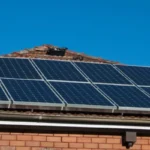
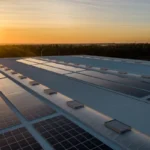
Rajasthan remains India’s frontrunner in solar energy thanks to high irradiance, strong policy support, and abundant land/rooftop space. For industrial, commercial, or institutional users, installing a 1 MW solar power plant in Rajasthan means large-scale savings, sustainable operations, and a compelling long-term asset.
At Smart Roof Solar, we help you design, deploy, and maintain such large-scale systems, optimizing the solar installation charges, reducing the total cost of solar installation, and ensuring you extract maximum value from your solar investment.
What is a 1 MW Solar Power Plant?
A 1 MW (megawatt) solar power plant refers to a system capable of generating around 14-16 lakh kWh of solar electricity yearly, given Rajasthan’s favorable climate and irradiation levels.
Quick facts:
- 1 MW = 1,000 kW = 1,000,000 Wp
- Typical solar panel area per kW for rooftop/ground systems: ~80-100 sq ft
- Estimated area for 1 MW: 80,000-1,00,000 sq ft (rooftop or ground mount)
- Ideal applications: large manufacturing units, universities, hospitals, commercial complexes
Such a system offers significant scale benefits, dropping cost of solar per kWh installed and boosting ROI compared to smaller systems.
1 MW Solar Power Plant Cost in Rajasthan
The overall 1 MW solar power plant cost in Rajasthan depends on component quality, mounting type, site conditions, and project scale. Here’s a cost benchmark you can update with your company’s rates:
Capacity | Estimated Cost (excluding GST) |
100 kW in Rajasthan | Starting from ₹24,00,000* |
200 kW in Rajasthan | Starting from ₹47,00,000* |
300 kW in Rajasthan | Starting from ₹53,25,000* |
400 kW in Rajasthan | Starting from ₹75,00,000* |
500 kW in Rajasthan | Starting from ₹1,25,00,000* |
600 kW in Rajasthan | Starting from ₹1,44,00,000* |
700 kW in Rajasthan | Starting from ₹1,64,50,000* |
800 kW in Rajasthan | Starting from ₹1,88,00,000* |
900 kW in Rajasthan | Starting from ₹2,16,00,000* |
1 MW in Rajasthan | Starting from ₹2,35,00,000* |
*Prices quoted are indicative starting rates for the above-mentioned solar installations and may vary based on project-specific requirements, including ground mount or tin-shed structures, RC installation types, additional accessories like DG sync, safety rails, etc. Final pricing will be confirmed upon detailed site evaluation and project scope assessment.
Power Generation & Payback Period
Given Rajasthan’s high solar insolation, a well-designed 1 MW system can generate around 14-16 lakh units/year.
Financial snapshot:
- Annual generation: 14-16 lakh kWh
- Annual savings: ₹1.1 – ₹1.5 crore (assuming tariff ₹8-₹10/unit)
- Payback: ~3 to 5 years (depending on cost and generation)
- System life: 25 + years, after payback, forever-cheap electricity
With volume and strong performance, the cost of solar per kWh installed can drop to around ₹3-₹4/unit or lower over time.
Ideal Use-Cases for 1 MW Solar Plant in Rajasthan
- Large-scale manufacturing or industrial units
- Cold storage farms, warehouses, and logistics hubs
- University campuses, schools, and hospitals
- Commercial complexes, hotels, or resorts
- Government buildings and public sector estates
These users often have large energy consumption and gain the greatest benefit from scale, reducing solar roof installation cost, maximising generation, and achieving strong ROI.
Environmental and Social Benefits
- Investing in a 1 MW plant means:
- ~1,200+ tonnes of CO₂ savings per year
- Supports India’s national renewable energy target
- Enhances ESG credentials for organisations
- Promotes clean, renewable energy technology and sustainable practices
By switching to solar, you’re not just reducing bills, you’re shaping a green future and contributing to community welfare.
O&M & Maintenance Support
At Smart Roof Solar, we offer full-scale Operation & Maintenance (O&M) services:
- Real-time monitoring, data analytics, and fault alerts
- Preventive maintenance, module cleaning, and inspections
- Annual performance reviews and optimisation
- Transparent reporting on generation, performance ratio, and system health
This ensures your system continues to perform at peak while keeping your installation charges and long-term costs under control.
Why Choose Smart Roof Solar?
- Experts in large-scale solar installations across North India
- Transparent cost breakdown showing solar installation cost per kWh, average cost of solar panels on a house/commercial roof
- Full support with approvals, incentives, and compliance under the government solar subsidy scheme
- Turnkey service from design to commissioning and ongoing O&M
We help you transform large rooftops or land into reliable revenue-generating solar assets with minimal risk.
Conclusion
A 1 MW solar power plant in Rajasthan represents a smart, future-proof investment. With strong solar irradiation, excellent policy framework, and competitive installation costs, the time to act is now.
Partner with Smart Roof Solar for a seamless transition to solar energy, reduced dependency on grid power, and long-term savings. Upgrade to solar, optimise your energy costs, and secure your sustainable future with Smart Roof Solar.
FAQs
Q1. Is government approval required for a 1 MW solar project?
Ans: Yes, approvals from local DISCOMs and relevant authorities are needed before installation.
Q2. Does the 1 MW plant work during power cuts?
Ans: Yes, if connected with a hybrid inverter and battery backup system.
Q3. How can I finance a 1 MW solar installation?
Ans: Smart Roof Solar can help in financing, and you can read more about – Solar Loans, Subsidies and EMI Plans – Smart Roof Solar.
Q4. What is the typical performance ratio (PR) of a 1 MW solar plant?
Ans: A good system in Rajasthan achieves a PR between 75% and 85%.
Q5. What makes Rajasthan ideal for solar investments?
Ans: Abundant sunlight, government support, and low land costs make it highly favorable.