
Safety is the backbone of every successful solar photovoltaic (PV) project. Whether installing rooftop systems or working on a large-scale solar plant, workers are exposed to multiple risks such as electrical hazards, working at heights, sharp tools, and heavy equipment.
To ensure safe operations and uninterrupted project execution, having a proper Personal Protective Equipment (PPE) checklist is essential. Lack of PPE can lead to accidents, delays, and increased solar installation charges due to downtime and liabilities.
Safety practices, including the use of PPE, are critical for maintaining quality and reliability in renewable solar installations.
This blog provides a complete PPE checklist for solar installations, helping installers ensure worker safety while optimizing solar panel system cost.
Why PPE is Important in Solar Installations
1. Protection Against Hazards
PPE protects workers from electrical shocks, falls, and injuries.
2. Compliance with Safety Standards
Ensures adherence to industry regulations.
3. Improved Productivity
Safe workers perform better and faster.
4. Reduced Costs
Prevents accidents and lowers solar energy installation cost.
Common Risks in Solar Projects
1. Working at Heights
Risk of falling during rooftop installations.
2. Electrical Hazards
Exposure to live circuits and high voltage.
3. Mechanical Injuries
From tools and mounting structures.
4. Environmental Conditions
Heat, dust, and weather-related risks.
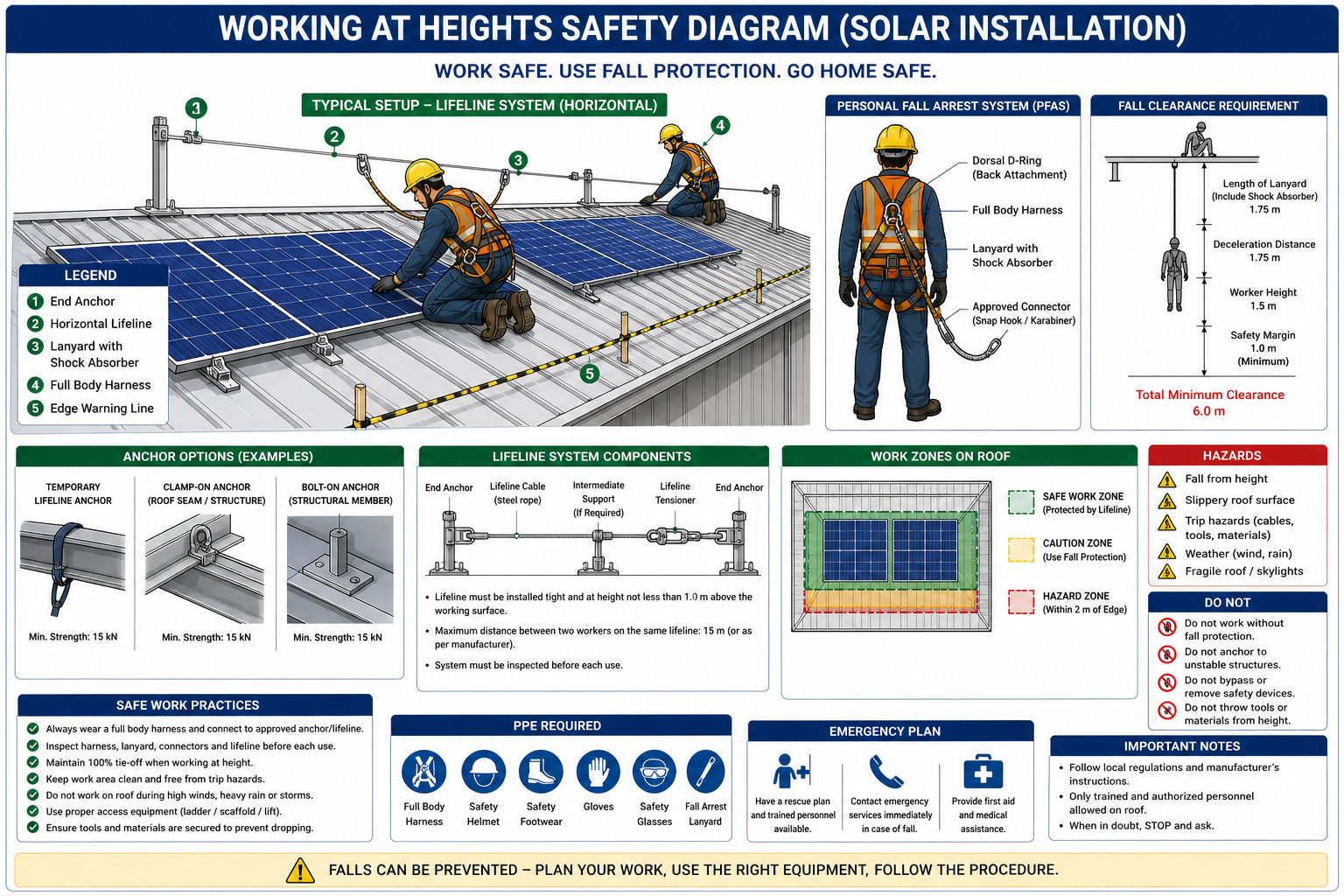
Complete PPE Checklist for Solar Installations
1. Head Protection
- Safety Helmet
- Protects against falling objects
- Mandatory on all sites
2. Eye Protection
- Safety Goggles / Glasses
- Protects from dust and debris
- Essential during drilling and cutting
3. Hand Protection
- Safety Gloves
- Insulated gloves for electrical work
- Cut-resistant gloves for handling materials
4. Foot Protection
- Safety Shoes
- Steel-toe shoes
- Anti-slip soles
5. Fall Protection
- Safety Harness
- Required for rooftop work
- Prevents falls
- Lifeline and Anchors
- Provides secure attachment points
6. Body Protection
- Reflective Jackets
- Improves visibility on the site
- Protective Clothing
- Protects against heat and minor injuries
7. Respiratory Protection
- Masks
- Protect against dust and pollutants
8. Hearing Protection
- Earplugs / Earmuffs
- Used in noisy environments
9. Electrical Safety Gear
- Insulated Tools
- Prevent electrical shocks
- Rubber Mats
- Provide insulation
Step-by-Step PPE Implementation Process
Step 1 – Identify Site Hazards
- Assess risks
- Determine required PPE
Step 2 – Provide PPE to Workers
- Ensure the availability of all safety gear
Step 3 – Conduct Training
- Educate workers on PPE usage
Step 4 – Enforce Usage
- Ensure workers wear PPE at all times
Step 5 – Regular Inspection
- Check the condition of PPE
- Replace damaged items
Step 6 – Maintain Records
- Track PPE distribution and usage
Quality Checks for PPE
1. Condition of Equipment
Ensure PPE is not damaged.
2. Proper Fit
Ensure the correct size for workers.
3. Compliance
Ensure PPE meets safety standards.
4. Usage Monitoring
Ensure workers use PPE consistently.
Impact on Solar Panel System Cost
Proper PPE usage helps:
- Reduce accidents and delays
- Improve productivity
- Lower maintenance and medical costs
- Optimize the cost of solar per kWh installed
Lack of PPE increases solar installation cost per kWh and project risks.
Conclusion
Implementing a proper PPE checklist is crucial for ensuring worker safety and the successful execution of solar PV projects. By identifying risks, providing appropriate safety gear, and enforcing usage, installers can prevent accidents and improve project efficiency.
Safety practices are a key aspect of renewable solar installations. Additionally, adherence to standards set by the Ministry of New and Renewable Energy ensures compliance and operational safety.
With proper PPE practices, solar professionals can optimize solar panel system cost, enhance solar electricity generation, and contribute to sustainable solar energy for home use and large-scale renewable solar solutions.
FAQs
Q1. What is PPE in solar installations?
Ans: It refers to safety equipment used to protect workers.
Q2. Why is PPE important?
Ans: It prevents injuries and ensures safe working conditions.
Q3. What PPE is required for rooftop installations?
Ans: Helmet, harness, gloves, safety shoes, and goggles.
Q4. Does PPE affect solar panel system cost?
Ans: Yes, it reduces accidents and improves efficiency.
Q5. Who is responsible for PPE usage?
Ans: Both employers and workers must ensure compliance.

Delhi charges one of the highest tariffs for commercial load and industrial – average over Rs 10.00 per kWh
Delhi imposes some of the highest electricity tariffs for commercial and industrial consumers, averaging over ₹10 per kWh, impacting businesses and operating costs
Solar for Pharma & Chemical Industries: Cost, Benefits, Installation & ROI in India
A complete guide on solar systems for the FMCG industry in India covering installation cost, benefits, ROI, system sizing, and the installation process.
How to Fetch the BOM of a Solar PV System from Design Documents: Step-by-Step Guide for Installers & EPCs
Learn how to prepare a detailed Bill of Material (BOM) for solar PV systems using design documents like SLDs and layouts. This step-by-step guide helps installers ensure accurate material planning, reduce errors, and improve project execution.

Net Metering and Its Advantages Explained: How Solar Users Save More on Energy Bills
Learn what Net Metering and its advantages mean for you—cut electricity costs, earn energy credits, and boost solar efficiency easily.
Inverter Circuit Board Fault Guide for Solar PV Systems
A complete guide to identifying inverter circuit board faults in solar PV systems, recognizing when professional service is required, and following safe maintenance procedures.
China’s Solar Industry Poised for Continued Growth in 2023 and Beyond
China’s solar industry is set for continued growth in 2023 and beyond, driving global renewable energy expansion and technological advancements.
Solar PV AC Power Hazards Guide
A complete guide to identifying AC power hazards in solar PV systems and following safe work practices during installation, testing, operation, and maintenance.
India and IMT-GT JBC Sign MoU to Boost Energy Efficiency in Southeast Asia
The first meeting of the G20 Energy Transitions Working Group was held in Bengaluru, India, and was a success, with participants sharing a consensus on the priority areas of energy security and diversified supply chains.