
In solar photovoltaic (PV) installations, structure alignment is a critical factor that directly impacts system performance, safety, and longevity. Even the best solar panels and components cannot perform efficiently if the mounting structure is not properly aligned.
Two key aspects of alignment are plumb (vertical alignment) and leveling (horizontal alignment). Incorrect alignment can lead to uneven load distribution, poor panel orientation, reduced solar electricity generation, and increased solar installation charges due to rework.
Proper structural alignment is essential for ensuring efficient and durable renewable solar installations.
This blog provides a complete guide to plumb and leveling techniques for solar structure alignment, helping installers achieve precision and optimize solar panel system cost.
What is Plumb and Leveling?
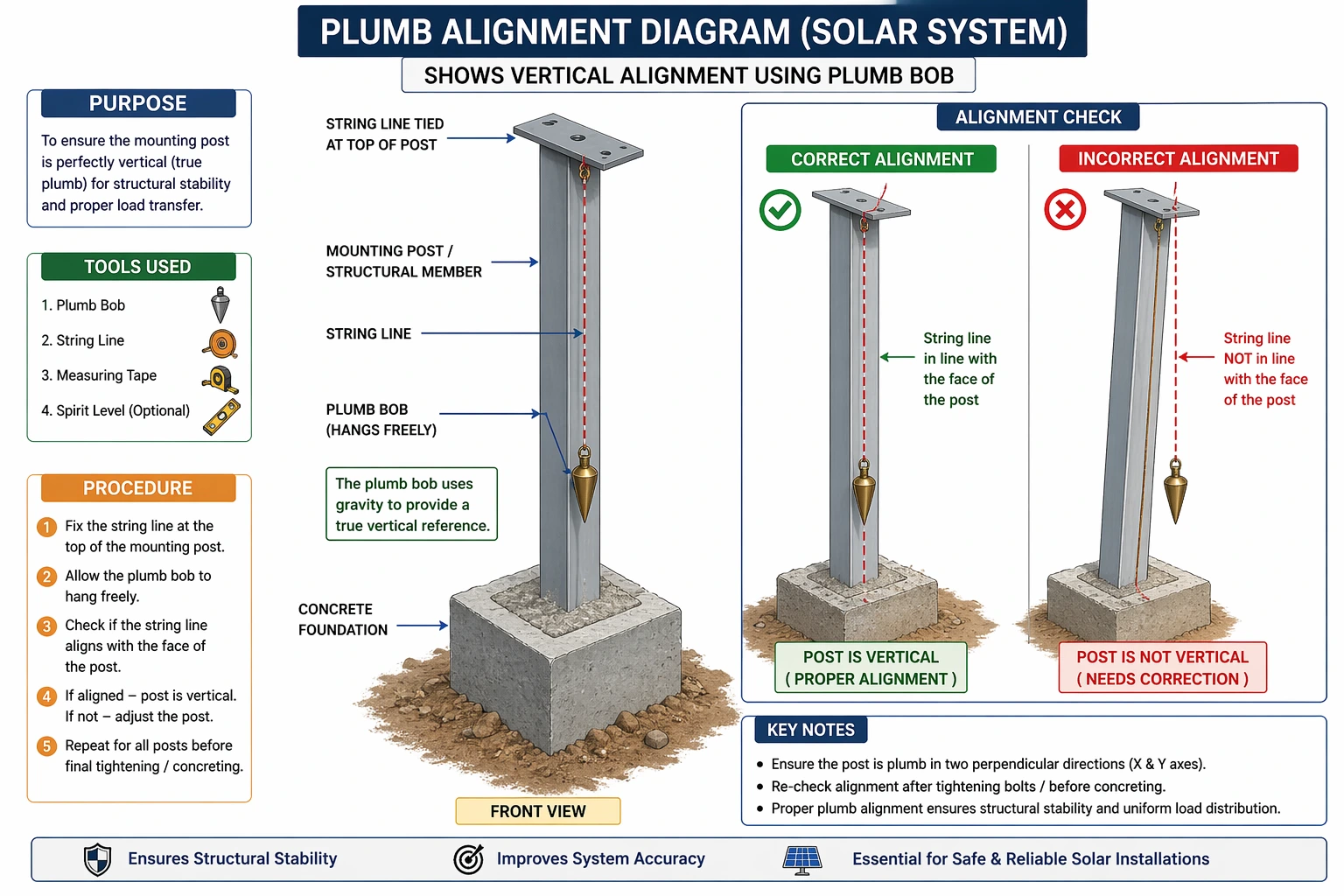
Plumb (Vertical Alignment)
Plumb refers to ensuring that vertical components (like mounting posts) are perfectly upright (90° to the ground).
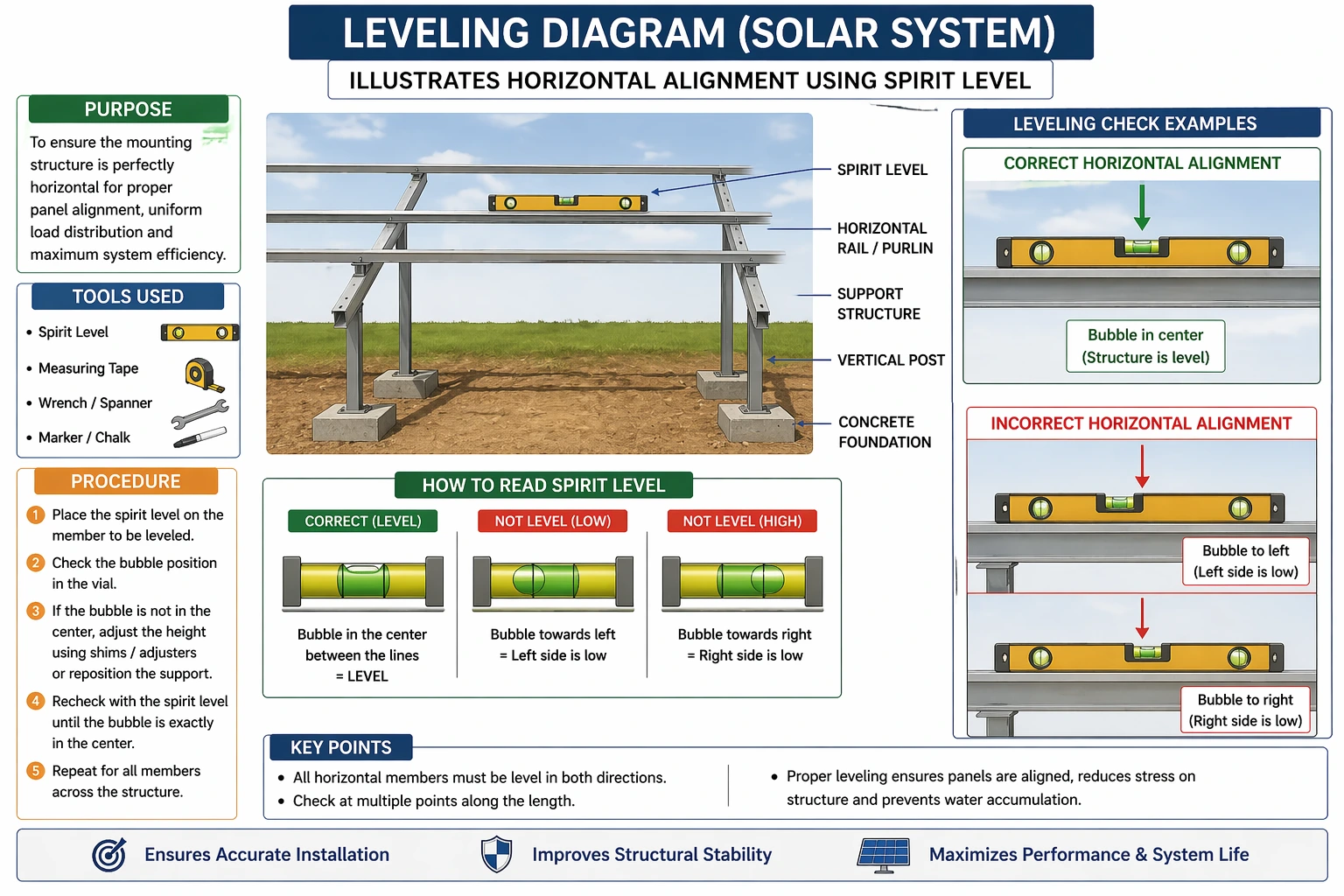
Leveling (Horizontal Alignment)
Leveling ensures that horizontal components (like rails) are perfectly flat and even.
Why Alignment is Important in Solar PV Systems
Proper alignment ensures:
- Maximum solar electricity generation
- Even load distribution
- Structural stability
- Long system lifespan
- Reduced maintenance and solar energy installation cost
Misalignment can increase solar panel system cost due to inefficiency and damage.
Tools Used for Alignment
1. Spirit Level
Used for checking horizontal and vertical alignment
2. Plumb Bob
Ensures vertical alignment
3. Laser Level
Provides high-precision alignment
4. Measuring Tape
Ensures accurate spacing
5. Theodolite or Total Station
Used for large solar plant installations
Step-by-Step Guide for Plumb and Leveling
Step 1 – Prepare the Base
- Ensure foundation or roof attachments are properly installed
- Verify footing positions
Step 2 – Check Mounting Posts for Plumb
- Use plumb bob or spirit level
- Adjust posts until perfectly vertical
Step 3 – Fix Posts Securely
- Tighten anchor bolts
- Ensure posts remain vertical
Step 4 – Install Rails
- Attach rails to mounting posts
- Ensure proper spacing
Step 5 – Level the Rails
- Use spirit level or laser level
- Adjust height if necessary
Step 6 – Check Alignment Across Rows
- Ensure all rows are straight
- Maintain uniform spacing
Step 7 – Tighten All Fasteners
- Use torque wrench
- Avoid over-tightening
Step 8 – Final Alignment Check
- Recheck plumb and level
- Ensure no deviation
Common Alignment Errors
- Tilted mounting posts
- Uneven rails
- Incorrect spacing
- Loose fasteners
- Ignoring alignment checks
Impact on Solar Panel System Cost
Proper alignment helps:
- Improve system efficiency
- Reduce maintenance costs
- Avoid reinstallation
- Optimize cost of solar per kWh installed
Incorrect alignment increases solar installation cost per kWh and long-term expenses.
Best Practices for Installers and EPCs
- Use precision tools like laser levels
- Perform alignment checks at every stage
- Follow design drawings strictly
- Ensure proper tightening of fasteners
- Conduct final inspection before panel installation
Conclusion
Solar structure alignment is a critical step in PV installations that directly affects performance, durability, and safety. By ensuring proper plumb and leveling, installers can achieve optimal panel orientation and maximize solar electricity generation.
Precise alignment is essential for successful renewable solar systems. Additionally, compliance with standards set by the Ministry of New and Renewable Energy ensures safety and quality.
With the right alignment practices, solar professionals can optimize solar panel system cost, enhance solar electricity generation, and contribute to sustainable solar energy for home use and large-scale renewable solar solutions.
FAQs
Q1. What is plumb in solar installation?
Ans: It refers to vertical alignment of mounting posts.
Q2. What is leveling in solar PV systems?
Ans: It ensures horizontal alignment of rails and structures.
Q3. Why is alignment important?
Ans: It improves efficiency, stability, and system lifespan.
Q4. What tools are used for alignment?
Ans: Spirit level, plumb bob, laser level, and measuring tools.
Q5. Does alignment affect solar panel system cost?
Ans: Yes, proper alignment reduces maintenance and improves efficiency.
Solar PV System Labeling Verification Guide
A complete guide to solar PV system labeling verification, ensuring compliance, safety, proper equipment identification, and efficient maintenance.

Solar Panel Unpacking Guide: Do’s & Don’ts on Site
A practical solar panel unpacking guide covering safe handling, on-site precautions, and key do’s and don’ts to avoid module damage.
Solar PV Troubleshooting Guide: Fault Diagnosis & Solutions
A complete solar PV troubleshooting guide covering fault diagnosis, testing procedures, root cause analysis, and corrective actions to ensure safe, reliable, and efficient system operation.
Utility Disconnect Installation in Solar PV Systems Guide
A step-by-step guide to utility disconnect installation in solar PV systems, including wiring, safety measures, and installation best practices.
Sanctioned Load & Rooftop Solar: Everything You Need to Know
Learn why sanctioned load is crucial before rooftop solar installation. Understand its role, process, and impact on solar panel efficiency and subsidy eligibility.
Solar Rooftop Projects: Benefits of Intentional Islanding for Power Backup
Discover the role of intentional islanding in solar rooftop projects. Ensure continuous power supply, system safety, and reliable energy even during grid failures.
Battery Bank Installation in Solar Projects: Site Selection & Best Practices
Battery banks are essential for energy storage in solar projects. This guide explains site selection, installation procedures, safety measures, and best practices for solar battery systems.
OPEX Industrial Solar Provider in India: How It Works, Cost & ROI
An OPEX industrial solar provider installs and owns the solar plant while industries pay only for energy used. Learn cost, benefits, and ROI in India.