What Is a Solar Power Generating System? | Complete Guide
Solar Power Generating System
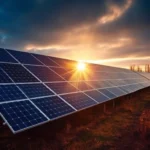
Solar photovoltaic (PV)cells / modules generate electricity from sunlight, which can be fed into the mains electricity supply of a home/industry/building or sold to the public distribution company connected to the grid. This will Reduce the need for generation through fossil fuel technology. More and more solar energy systems on roof top will help create jobs, enabling home/industry/building to save money, and cut greenhouse emissions/ pollution.
PV Modules
PV modules use semiconductor materials (usually silicon) to generate DC electricity from sunlight. A large area is needed to collect as much sunlight as possible. So the semiconductor is either made into thin, flat, crystalline cells, or deposited as a very thin continuous layer onto a support material, usually glass. The cells are wired together and sealed into a weather proof module, with electrical connectors added.
Modern modules for grid connection usually have between 48 and 72 cells and produce dc voltages of typically 25 to 40 volts, with a rated output of between 150 and 300 Wp solar panels . Then these panels are combined to give a certain voltage and current to be fed to an inverter which will then convert DC to AC electricity to be further used for energy/power needs of a home/industry/commercial building.
Grid-tied PV systems for producing/generating electricity are installed on the rooftop or ground in or around a building. This can also be taken up at a land that could’nt be used for other purposes like agriculture. Ideally the PV faces towards the equator and the exact direction is critical otherwise there is loss of production of solar energy.
However, it is important to make sure that there is minimal shading of the PV. If the PV electricity production exceeds building demand then the excess can be exported to the grid, and vice versa. With net metering being permitted by govt in almost all states , clients are billed on net of export and import of electricity.
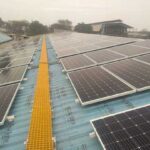
A typical grid connected system rated at 1 kWp requires an area of about 10 m2. However if the roof is slanted tin shed ( mostly industries have slanted roof of tin shed)and south facing then the area required reduces to 7 sq mts.
Suggested Articles

Perovskite: Future of Solar Cells
Discover how solar batteries store excess energy, maximize your solar system’s efficiency, and provide reliable power during outages. Learn about the types, benefits, lifespan, and maintenance tips to make the most of your solar investment.

Solar Panel Sizes and Features in Delhi/NCR: A Complete Guide
Planning to install solar panels in Delhi/NCR? Explore the different sizes, technologies, and key features of solar panels available for residential, industrial, and commercial use. Learn how to choose the right one for your energy needs and roof space.

100 kW Solar Power Plant Cost in Haryana: The Ultimate Guide to the Best Rate Per Watt
Explore the 100 kW solar power plant cost in Haryana for 2025. Learn about pricing, government subsidy options, and how much you can save with solar energy.

Difference Between Inverter and Solar Inverter: A Complete Comparison
Confused between an inverter and a solar inverter? This guide explains their key differences, working principles, advantages, and which option is best for your home or business.

Solar Site Assessment: Shadow Analysis for Maximum Energy Generation
Shadow analysis is a critical step in solar site assessment. It helps solar installers identify shading obstacles and optimize panel placement for maximum energy generation.

Understanding Solar Battery Specifications: Capacity, Voltage & Efficiency Explained
Solar batteries are essential for energy storage and backup in PV systems. This guide explains key specifications like capacity, voltage, efficiency, and depth of discharge to help you choose the right battery.

Safe Handling of Solar PV Components: Complete Guide for EPC & Installers
Proper material handling is crucial in solar PV projects to avoid damage, reduce losses, and ensure safety. This guide covers best practices for transporting, storing, and installing solar components efficiently.

UP Electricity Tariff Increase 2015-16: Rates Rise by Rs 0.40–1.00 per Unit – What Consumers need to know
Uttar Pradesh has increased electricity tariffs for 2015-16, ranging from Rs 0.40 to 1.00 per unit. This update explains the revised rates, the sectors affected, and what consumers need to know about the tariff hike.