MPPT stands for Maximum Power Point Tracking. It is a smart technology used in solar inverters and charge controllers to extract the maximum possible power from solar panels at any given time.
Solar panels do not always produce the same voltage or current. Their output changes with sunlight, temperature, and weather conditions. MPPT in Solar helps adjust automatically so that the panels always operate at their most efficient point.
In simple terms, MPPT ensures that your solar electricity generation is optimized, even when conditions are not perfect.
Why MPPT Is Important in Solar Energy Systems
Without MPPT, solar panels may not work at their full potential, leading to energy loss. MPPT helps bridge the gap between panel output and system requirements.
It plays a critical role in:
- Improving energy generation
- Reducing power loss
- Increasing system efficiency
- Enhancing return on investment (ROI)
This is especially important when considering solar installation charges, solar panel system cost, and making solar energy economical for long-term use.
How MPPT in Solar Works
MPPT in Solar works by continuously tracking the voltage and current output of solar panels and finding the point where power output (V × I) is highest.
Here’s how it functions in real life:
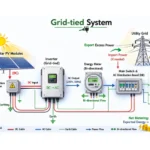
- Solar panels send DC power to the inverter
- MPPT analyzes changing sunlight and temperature
- The inverter adjusts input voltage and current
- Maximum usable power is delivered to the system
This dynamic adjustment allows better performance compared to traditional systems, especially during mornings, evenings, and cloudy conditions.
MPPT vs Non-MPPT (PWM) Controllers
MPPT controllers are more advanced than older PWM (Pulse Width Modulation) controllers.
Key differences include:
- MPPT offers 20-30% higher efficiency
- Better performance in low sunlight
- Suitable for high-voltage solar panels
- Faster battery charging
Though MPPT-based systems may slightly increase solar module price per watt, they significantly reduce the cost of solar per kWh installed over time.
Role of MPPT in Grid-Tied and Hybrid Solar Systems
MPPT in Solar is used in:
- On-grid solar systems
- Hybrid solar systems
- Off-grid solar systems with batteries
In grid-connected systems, MPPT ensures maximum export of power, reducing grid dependency. In hybrid systems, it balances solar, battery, and grid power efficiently, improving backup reliability and lowering total cost of solar installation.
This makes MPPT essential for solar energy for home use, commercial buildings, and large solar plants.
How MPPT in Solar Improves Solar Panel Output
MPPT in Solar directly impacts:
- Daily energy generation
- Performance ratio (PR)
- System efficiency
- Battery life (in hybrid systems)
By ensuring optimal operating voltage, MPPT helps extract more units from the same solar panel area per kW, making rooftop installations more space-efficient.
This is crucial when planning solar panel in rooftop projects where space is limited.
Does MPPT in Solar Affect Solar Installation Cost?
Yes, but positively.
While MPPT-based inverters may slightly increase upfront solar energy installation cost, they:
Produce more energy over time
Reduce electricity bills faster
Shorten payback period
Improve system reliability
This makes MPPT-based systems a smarter choice for homeowners and businesses looking at the average cost of solar panels on a house versus long-term savings.
MPPT and Renewable Energy Performance
MPPT in Solar enhances the effectiveness of renewable solar systems by ensuring consistent energy output across varying conditions. It plays a key role in advancing renewable energy technology, making solar more dependable and scalable.
As solar adoption increases, MPPT continues to be a standard feature in modern, high-efficiency systems.
Conclusion: Is MPPT in Solar Worth It?
MPPT is not just a feature; it is a necessity for modern solar systems. It ensures maximum energy generation, better efficiency, and faster returns on investment. Whether you are installing a residential rooftop system or a large commercial plant, MPPTin Solar significantly improves performance.
At Smart Roof Solar, we design and install MPPT-enabled solar systems to ensure optimized generation, reduced energy loss, and long-term value—helping customers fully benefit from renewable energy and solar energy solutions.
FAQs
Q1. Can MPPT work with all types of solar panels?
Ans: Yes, MPPT is compatible with mono, poly, and bifacial panels as long as voltage ranges are supported.
Q2. Does MPPT still function on very hot days?
Ans: Yes, MPPT in Solar compensates for voltage drops caused by high temperatures to maintain optimal power output.
Q3. Is MPPT useful for small residential solar systems?
Ans: Absolutely, even small systems benefit from higher efficiency and faster energy recovery.
Q4. How many MPPT trackers does a solar inverter need?
Ans: It depends on system design; multiple MPPTs are useful for panels facing different directions.
Q5. Can MPPT in Solar help reduce shading losses?
Ans: MPPT in Soar minimizes power loss from partial shading, though it cannot completely eliminate it.