UP Government Incentive: Stamp Duty Exemption for Solar Land
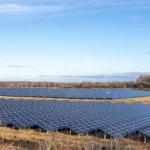
Solar developers will be exempted from paying any Stamp Duty for land acquired or leased for solar projects and solar parks in Uttar Pradesh.
The Uttar Pradesh government has announced the 100% exemption on stamp duty as per the state’s Solar Energy Policy 2022.
The stamp duty exemption could help solar capacity additions in the state where land acquisition has been a major challenge.
Solar parks need large areas of continuous land. Several cases of land acquisition have faced problems with local authorities, landowners, and government agencies, which lead to higher costs for developers and make projects unfeasible.
The stamp duty exemption will be applicable after the district magistrate or the Deputy Commissioner of Industries confirmation. They have to confirm that the deed is being executed under the Uttar Pradesh Solar Policy 2022.
At the time of registering the land deed, developers are required to present the irrevocable bank guarantee of the amount equivalent to the remission of the stamp duty in favor of the Uttar Pradesh New and Renewable Energy Development Agency (UPNEDA).
The validity of the bank guarantee must be at least the time prescribed to complete the project.
However, units that have obtained the stamp duty exemption benefit under any other policy will not be eligible for a similar exemption under the Solar Policy.
Last November, the Uttar Pradesh government approved the ‘Solar Energy Policy, 2022,’ revising its target upwards to 22 GW of solar capacity by FY 2026-27.
The state had proposed a 16 GW solar capacity target in its draft policy earlier last year. The approved target capacity includes 14 GW of utility-scale power projects, 6 GW of rooftop solar projects, and 2 GW of distributed solar projects.
UPNEDA has been designated the nodal agency for implementing the policy.
Suggested Articles

Connection in Series and Parallel: Meaning, Differences, Formula & Applications
Understanding the difference between single-phase and three-phase voltage is essential for solar PV installers. While single-phase supply is common in residential systems, three-phase power is widely used in commercial and industrial solar projects. This complete guide explains electrical phase differences, applications in solar installations, and how choosing the right phase connection impacts system efficiency, safety, and performance.

Updated Rates of Solar Subsidy in Delhi: Cost, Eligibility & Benefits
Discover the latest solar subsidy rates in Delhi for 2025. This guide explains the updated costs, eligibility criteria, and benefits to help you maximize savings on your rooftop solar installation.

Haryana’s GEOA 2025: A Boost for Captive Solar Plants and Wind Energy Developers
Haryana’s GEOA 2025 paves the way for growth in captive wind and solar energy projects with investor-friendly reforms.

Solar Installation Corrosion Protection & Weatherproofing Guide
A complete guide to solar corrosion protection and weatherproofing, covering methods to prevent seepage and structural damage in solar installations.

Go Off-Grid with Solar Energy: A Complete Guide
Living off-grid, more commonly defined as not having a dependence on public utilities such as electricity, sounds appealing for a lot of reasons. The idea of being self-sufficient, powering your own home with solar energy, and maybe even building that home with your own two hands can sound like a dream and a challenge for people who wish to live life on their terms.

500 kW Rooftop Solar for Industries in India: Complete Guide 2026
A complete guide to 500 kW solar for industries covering installation cost, energy generation, ROI, savings, and why it is a smart business investment.

Types of Hazards in PV Installations Guide
A complete guide to the types of hazards in PV installations, covering electrical, mechanical, fire, chemical, environmental, structural, and workplace safety risks.

India and Japan Strengthen Renewable Energy Cooperation
India and Japan have initiated a partnership under the Asia Energy Transition Initiative (AETI) to support India’s clean energy transition. India has set an ambitious target of achieving net-zero by 2070, while Japan aims to achieve the same by 2050.