
UP Government Incentive: Stamp Duty Exemption for Solar Land
Solar developers will be exempted from paying any Stamp Duty for land acquired or leased for solar projects and solar parks in Uttar Pradesh.
The Uttar Pradesh government has announced the 100% exemption on stamp duty as per the state’s Solar Energy Policy 2022.
The stamp duty exemption could help solar capacity additions in the state where land acquisition has been a major challenge.
Solar parks need large areas of continuous land. Several cases of land acquisition have faced problems with local authorities, landowners, and government agencies, which lead to higher costs for developers and make projects unfeasible.
The stamp duty exemption will be applicable after the district magistrate or the Deputy Commissioner of Industries confirmation. They have to confirm that the deed is being executed under the Uttar Pradesh Solar Policy 2022.
At the time of registering the land deed, developers are required to present the irrevocable bank guarantee of the amount equivalent to the remission of the stamp duty in favor of the Uttar Pradesh New and Renewable Energy Development Agency (UPNEDA).
The validity of the bank guarantee must be at least the time prescribed to complete the project.
However, units that have obtained the stamp duty exemption benefit under any other policy will not be eligible for a similar exemption under the Solar Policy.
Last November, the Uttar Pradesh government approved the ‘Solar Energy Policy, 2022,’ revising its target upwards to 22 GW of solar capacity by FY 2026-27.
The state had proposed a 16 GW solar capacity target in its draft policy earlier last year. The approved target capacity includes 14 GW of utility-scale power projects, 6 GW of rooftop solar projects, and 2 GW of distributed solar projects.
UPNEDA has been designated the nodal agency for implementing the policy.
Suggested Articles

Net Metering and its Advantages
Net Metering allows solar panel owners to feed excess electricity back to the grid and earn credits, reducing energy bills. Learn the key advantages of net metering for homes and businesses.
AC Combiner Box Installation in Solar PV Systems Guide
A step-by-step guide to AC combiner box installation in solar PV systems, covering setup, wiring, and safety best practices.
End of Rooftop Solar Subsidy for Industrial & Commercial Consumers: What You Need to Know
The rooftop solar subsidy for industrial and commercial consumers is coming to an end. This guide explains the implications for businesses, updated policies, and strategies to adopt solar power without relying on subsidies.
Solar Radiation on a Tilted Surface: Importance & Impact on Solar Output
Solar radiation on a tilted surface directly affects how much energy a solar panel produces. Learn why tilt angle matters and how it impacts solar output.
Complete Guide to Rooftop Solar Components for Industries
A rooftop solar system for factories typically includes solar panels, inverters, mounting structures, wiring, and monitoring systems. Additional components like net meters and energy storage may also be installed to optimize energy usage and track performance
Series Connection of PV Modules – Effect on Voltage and Current
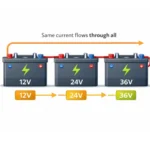
Connecting PV modules in series is a common practice in solar installations. This guide explains how series connections affect voltage and current and why they are used in solar PV systems.
Researchers Propose New Way to Make Nuclear Power Plants Safer
Researchers propose innovative methods to enhance the safety of nuclear power plants, aiming to reduce risks and improve operational security.

Complete Guide to Net Metering and Electricity Bill Savings
Learn how net metering lets you sell excess solar energy back to the grid, reducing your electricity bills and maximizing your solar investment.