
With electricity bills rising and pollution increasing, more people are turning to the sun for clean, cost-effective, and unlimited energy. That’s where solar panels and solar cells were introduced, that turns sunlight into power you can actually use.
In this blog, we’ll learn about solar cells, what constitutes the solar panels, in the simplest way possible. From what a solar cell is and how it works, we’ll learn that this technology is changing the way we live, one rooftop at a time.
What is a Solar Cell?
A solar cell, popularly called a solar panel solar cell, converts sunlight into electricity. As the light hits the cells, it creates a small electric current, and a combination of such cells power houses and businesses.
In India, first generation solar panels are mostly used, such as monocrystalline and polycrystalline solar panels. But recently, high efficiency solar cells like bifacial solar cells are gaining traction because of their enhanced properties.
Panels made out of these high-performance cells use multi-busbar, passivated layers, or vertical bifacial design. These methods reduce energy loss and improve performance.
According to MNRE, India’s Grid-Connected Rooftop Solar Programme Phase II aims to increase demand for solar panels and solar systems.
How it Works
A solar cell turns sunlight into electricity. Each cell is made of silicon which absorbs light. As the sunlight is absorbed, particles called electrons go out, generating electric current behind them. This flow of electricity powers the home appliances.
Many of these solar cells connected, forming a solar panel. The amount of electricity produced is proportional to the amount of sunlight the panel gets. These panels are connected to an inverter which changes the direct current (DC) to alternating current (AC), which is used in homes and buildings.
There are two main ways to use this electricity, with on-grid solar systems or with off-grid solar systems.
Types of Solar Systems
There are main 2-types of solar systems that are installed, based on the type of setup and grid-distance from the site.
On-Grid Systems (Grid-Connected)
On-grid systems connect the solar cell and module setup directly to the electricity grid. If the energy consumption is less than the energy produced, then the unused energy is sent back to the grid through net metering.
This benefits the user, as they earn credits that cuts down on electricity expenses. This setup eradicates the use of battery storage, which makes it further cost-effective for urban and sub-urban installations.
Modern systems use bifacial solar cells or half-cut Mono-PERC for greater power input. With MNRE’s Phase II rooftop scheme, on-grid installations and rooftop solar adoption is increasing.
Off-Grid Systems (Standalone)
Off-grid setups store solar energy in batteries, which would be utilized in absence of sunlight. They are very common in remote areas, where grid access is limited.
These systems are more expensive comparatively, due to the need for battery storage. Cells like thin-film or polycrystalline are used on the basis of cost and availability, further adding it to the cost.
Most Prominent Types of Solar Cells used in India
The main three types of solar cell types that are preferred in India in 2025 are Monocrystalline Silicon, Polycrystalline, and Thin-Film Solar Cells. Let’s see their key features which make them remarkable.
Monocrystalline Silicon Solar Cells
- Known for their dark black colour.
- These cells lead the market with a 37-41% share in 2025.
- Provides 19-22% efficiency and long lifespan.
Polycrystalline Solar Cells
- Recognizable by their bluish color.
- These cost-effective cells hold around 22-25% market share.
- Provides 16-18% efficiency.
Thin-Film Solar Cells
- Lightweight and flexible
- Contribute to 10-12% of installations
- Provides 10-12% efficiency,
- Better for large, low-cost, or remote applications.
New technology has led to the innovation of dye-sensitized solar cells (DSSC), perovskite solar panels and organic photovoltaic panels, which fall under third generation solar panels. But bifacial and Mono-PERC panels offer higher yield and better performance in home installations.
Market analysis predicts that India will reach 73 GW of solar panel installations by 2033, growing 25% annually. Rooftop PV alone accounted for 17.7 GW by April 2025 out of the total capacity of 108 GW.
Recent Government Support & Market Trends in 2025
India is continuously expanding in its solar system sector, with the PM Surya Ghar: Muft Bijli Yojana. It offers up to ₹78,000 subsidy for residential solar (till 3 kW) and additional support for bigger systems in housing societies.

India’s total solar capacity is currently at 108 GW as of April 2025, with 17.7 GW contributions from the rooftop solar installations. Market analysts estimate that it may cross 60 GW by manufacturing capacity, by the end of this year.
Final Words
India’s solar market in 2025 is captured by monocrystalline, polycrystalline and thin-film solar cells. On-grid systems with net metering are preferable for homes, with bifacial variants, which offer best performance especially for rooftop solar users.
With a strong backbone of government solar subsidy schemes and programmes, solar installations are expanding exponentially. If you’re looking to switch to solar, Smart Roof Solar is here to help. With expert guidance, and top-quality service, renewable solar can be made affordable.
FAQs
Q1: Why Are Monocrystalline and PERC Preferred for Homes?
Ans: Monocrystalline silicon cells are preferred due to their high efficiency and compact size. They fit well on limited roof space and produce more electricity per square metre.
Q2: Can solar panels be made in different colors or transparent?
Ans: Yes, organic modern cells can be semi-transparent or colored for design use.
Q3: Are there solar cells that work indoors?
Ans: Yes, the organic and dye-sensitized solar cells can generate power from indoor light sources too.
Q4: Is there a solar cell that can be sprayed or printed?
Ans: Perovskite and organic solar cells can be made using printing or spraying, making them cheap and lightweight.

SmartRoof Solar Associate Program – Easy Way to Earn with Solar Referrals
Join the SmartRoof Solar Associate Program. Refer solar leads, earn rewards, and support clean energy growth in your community.
Developers fear unfair state-specific levies will make solar more expensive
Developers in India are concerned that state-specific levies on solar projects could increase costs, slow adoption, and impact the growth of renewable energy across residential, commercial, and industrial sectors.

Solar Microgrid Solutions: Smart, Reliable & Scalable Power Systems
Solar microgrid solutions provide smart, reliable, and scalable power by integrating solar energy, battery storage, and intelligent control systems. These systems ensure uninterrupted electricity for industries, campuses, communities, and remote locations while reducing grid dependency and energy costs.
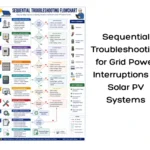
Sequential Troubleshooting for Grid Power Interruptions in Solar PV Systems
A complete guide to sequential troubleshooting in solar PV systems, helping identify and resolve faults during grid power supply interruptions through systematic testing and diagnosis.

Breakthrough in Solar Technology: 33.2% Efficient Perovskite-Silicon Cell
Scientists achieve a breakthrough in solar technology with a perovskite-silicon tandem cell reaching a record 33.2% efficiency for higher energy output.
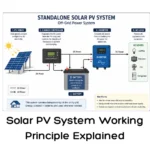
Solar PV System Working Principle Explained
A complete guide explaining how solar PV systems work, covering the photovoltaic effect, solar modules, DC power generation, inverters, energy distribution, and grid integration.
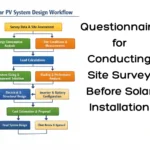
Questionnaire for Conducting Site Survey Before Solar Installation
A proper site survey is critical before solar installation. This questionnaire helps evaluate roof condition, load requirements, shading, and electrical infrastructure to ensure accurate system design and optimal performance.

Solar for Manufacturing Units: Cost, Benefits, ROI & Installation in India
A detailed guide on 1 MW solar plant for industry covering installation cost, area requirement, power generation, ROI, and long-term savings in India.