
Rooftop Solar for Factories: Maximum kW You Can Install
Industrial rooftop solar guide: Understand KW capacity limits, installation guidelines, and best practices for factories and manufacturing units

How to Check Solar PV Module Performance
A complete guide to testing solar PV module performance, including voltage and current measurements, power output analysis, and performance verification techniques.
Earthing and Lightning Protection Required for Solar Installation – Complete Guide for Solar Installers
Earthing and lightning protection are critical safety components in solar PV installations. This guide explains their importance, types, components, and best practices for solar installers.
Single Line Diagram (SLD) in Solar PV Systems: Complete Guide to Design, Symbols & Reading
Learn how to fetch a Bill of Material (BOM) for a solar PV system directly from design documents like SLD, layout, and GA drawings. This step-by-step guide helps installers and EPCs ensure accurate material estimation and efficient project execution.
New IREDA Loan Scheme for Solar Rooftop Projects: Benefits, Eligibility & Interest Rates
India’s renewable energy push gets a major boost with the new IREDA loan scheme for solar rooftop projects. This scheme offers low-interest financing, simplified approvals, and better support for residential, commercial, and industrial consumers. Here’s a detailed look at its benefits, eligibility, interest rates, and how to apply for funding.
How DISCOMs Implement Net Metering for Solar Power Plants
Discover the process of net metering implementation by DISCOMs for solar power plants. Understand the benefits, billing mechanism, and how it maximizes solar energy utilization.
What Is Solar Performance Ratio (PR)? Meaning, Formula & Importance
Solar Performance Ratio (PR) is a key indicator of how efficiently a solar power system converts available sunlight into usable electricity. This guide explains what PR is, how it is calculated, why it matters, and how it directly impacts your solar system’s actual energy output.
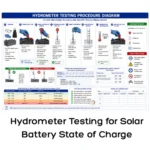
Hydrometer Testing for Solar Battery State of Charge
A complete guide to hydrometer testing for solar battery state of charge, helping assess battery health, performance, and maintenance needs.