The Fast-Moving Consumer Goods (FMCG) industry is one of the largest electricity consumers in India. Manufacturing plants, packaging units, cold storage facilities, warehouses, and distribution centers operate almost continuously, using power for processing lines, refrigeration, air handling, lighting, automation, and logistics. Rising energy tariffs directly impact production costs, making solar systems for the FMCG industry an increasingly strategic investment.
By deploying solar panel systems across factory rooftops, warehouse sheds, and available land, FMCG companies can transition toward renewable energy and solar energy, significantly lowering long-term operational expenditure while strengthening sustainability credentials.
Why Solar System for FMCG is Ideal
FMCG operations run largely during the daytime, aligning perfectly with peak solar electricity generation. This enables high on-site power consumption, faster return on investment, and stable energy planning.
Key benefits include:
- Significant reduction in electricity bills
- Lower per-unit product manufacturing cost
- Protection against future tariff escalation
- Reliable power support for temperature-sensitive operations
- Enhanced ESG and brand sustainability positioning
- Adoption of modern renewable energy technology
For FMCG organizations focused on efficiency, cost control, and environmental responsibility, solar power becomes both an economic and strategic asset.
Solar System for FMCG : Types of Solar Systems Suitable
1. Rooftop Solar Panel Systems
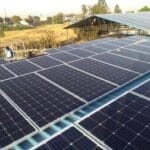
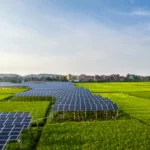
A solar panel in rooftop system utilizes large production sheds, cold storage roofs, and warehouse buildings, making it the most common choice.
2. Ground-Mounted Solar Power Plants
Facilities with available land can install higher-capacity systems to meet manufacturing and warehousing loads.
3. Hybrid Solar Systems
Hybrid systems integrate battery storage to support cold chains, automation systems, and essential processes during grid outages.
Solar System for FMCG : Installation Cost
The solar panel system cost for FMCG plants varies based on system size, roof structure, energy profile, and technical configuration.
Cost analysis generally considers:
- Solar module price per watt
- Inverters and electrical protections
- Mounting structures and foundations
- Installation and commissioning
- Monitoring and safety compliance
Frequently evaluated commercial metrics include:
- Solar installation cost per kWh
- Solar energy installation cost
- Solar roof installation cost
- Total cost of solar installation
- Cost of solar per kWh installed
- Home roof solar panels cost (for admin and office blocks)
Larger FMCG installations benefit from economies of scale, reducing the effective cost per unit of power generated.
Space Requirement and Engineering Considerations
Accurate feasibility assessment ensures seamless integration of solar into FMCG industry.
Key engineering factors include:
- Solar panel area per kW
- Roof strength and waterproofing
- Shadow and thermal analysis
- Fire safety and food-grade compliance
- Future expansion planning
Professional design ensures that solar deployment does not interfere with hygiene standards, ventilation, or logistics movement.
Power Generation, Savings & ROI
FMCG solar plants can supply a significant share of daily operational energy, supporting:
- 40-80% reduction in grid electricity consumption
- Stabilized power procurement budgets
- Reduced demand charges
- Strong 3-5 year payback potential
- Over 25 years of low-cost energy
Across its lifecycle, solar delivers one of the lowest average cost of solar panels on a house or commercial facility, making it an optimal solution for large-scale FMCG operations.
Government Support and Commercial Solar Growth
While capital subsidies for large FMCG projects are limited, government initiatives support solar adoption through:
- Net metering and open-access policies
- Accelerated depreciation benefits
- Waivers on certain duties and charges
- Simplified grid connectivity frameworks
These measures align with the broader government solar subsidy scheme goals and indirectly support subsidised solar panels for home and commercial establishments.
Solar System for FMCG : Smart Technology used
Modern FMCG solar installations integrate:
- High-efficiency mono PERC or TOPCon panels
- Smart MPPT inverters
- Real-time monitoring dashboards
- Automated fault detection
- Predictive performance analytics
With advancements in renewable energy technology, FMCG companies can operate highly optimized and digitally monitored solar assets.
Solar System for FMCG : Making Solar Energy Economical
The continuous decline in the cost of solar panels, combined with increasing grid tariffs, has made solar one of the most effective tools for making solar energy economical in the FMCG sector.
Solar reduces production volatility, strengthens long-term procurement planning, and enhances environmental responsibility across supply chains.
Conclusion
A solar system for the FMCG industry is more than an energy solution, it is a business strategy. It transforms idle roofs and land into revenue-protecting assets, improves manufacturing economics, and supports sustainability leadership.
For FMCG companies focused on growth, operational resilience, and regulatory preparedness, solar energy offers one of the most impactful infrastructure investments available today.
FAQs
Q1. Can solar power support FMCG cold storage operations?
Ans: Yes, solar can significantly offset refrigeration and cooling loads.
Q2. Is solar suitable for continuous FMCG production lines?
Ans: Yes, solar integrates seamlessly with grid supply for stable operations.
Q3. Can FMCG companies use solar across multiple facilities?
Ans: Yes, rooftop and open-access models allow multi-location solar deployment.
Q4. Will solar affect food safety or compliance standards?
Ans: No, systems are engineered to meet industrial and food-grade regulations.
Q5. Can solar reduce operational carbon footprint?
Ans: Yes, it substantially lowers emissions and supports ESG commitments.