
In solar photovoltaic (PV) installations, testing equipment plays a vital role in ensuring system safety, performance, and reliability. From checking voltage and current to analyzing insulation resistance and system efficiency, testing instruments help installers verify that every component of the solar plant is functioning correctly.
However, even the best testing equipment can produce inaccurate results if it is not properly inspected and maintained. Faulty or poorly calibrated tools may lead to incorrect measurements, system failures, and increased solar installation charges.
Regular inspection and maintenance of testing equipment are essential for maintaining quality in renewable solar installations.
This blog provides a complete guide to inspecting and maintaining testing equipment used in solar PV systems, helping installers improve accuracy, safety, and overall solar electricity generation performance.
Importance of Testing Equipment in Solar PV Systems
Testing equipment helps installers:
- Verify system performance
- Detect faults and abnormalities
- Ensure electrical safety
- Maintain system efficiency
Properly maintained equipment ensures accurate readings and reliable solar electricity generation.
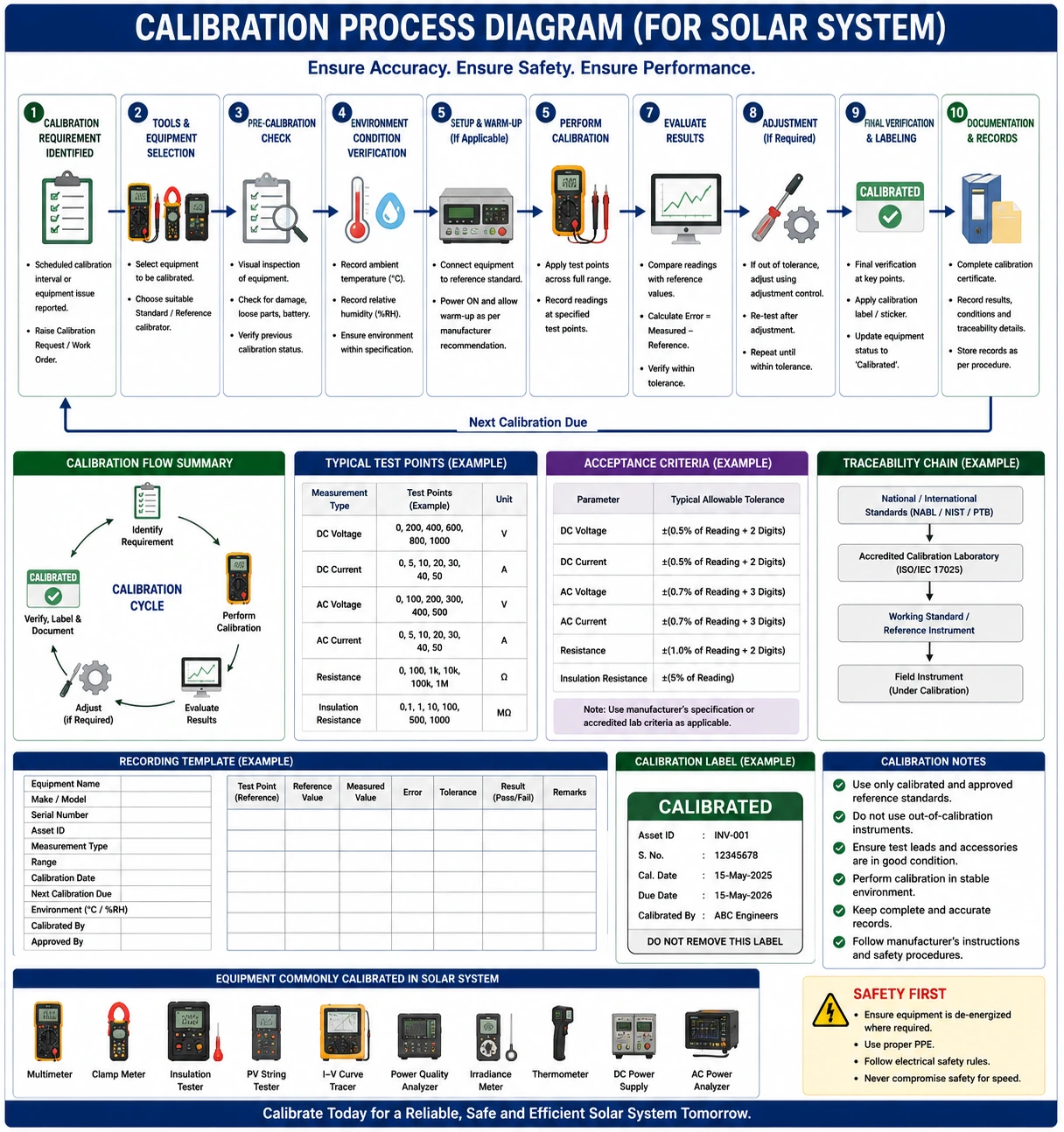
Common Testing Equipment Used in Solar Installations
1. Digital Multimeter
Purpose
- Measures voltage, current, and resistance.
2. Clamp Meter
Purpose
- Measures current without disconnecting circuits.
3. Insulation Resistance Tester (Megger)
Purpose
- Check insulation quality and leakage resistance.
4. Earth Resistance Tester
Purpose
- Measures grounding effectiveness.
5. Solar Irradiance Meter
Purpose
- Measures sunlight intensity.
6. I-V Curve Tracer
Purpose
- Analyzes solar module performance.
7. Thermal Imaging Camera
Purpose
- Detects hotspots and overheating.
Why Inspection of Testing Equipment is Important
1. Measurement Accuracy
Ensures reliable readings.
2. Safety
Prevents electrical accidents.
3. Compliance
Ensures adherence to testing standards.
4. Equipment Longevity
Reduces wear and damage.
Step-by-Step Inspection Process
Step 1 – Visual Inspection
Check for:
- Cracks
- Broken parts
- Damaged cables
Step 2 – Functional Testing
- Turn equipment on
- Verify display and controls
Step 3 – Calibration Verification
- Ensure readings are accurate
- Compare with reference values
Step 4 – Battery Check
- Inspect battery condition
- Replace weak batteries
Step 5 – Safety Inspection
- Check insulation
- Verify protective features
Step 6 – Documentation
- Record inspection details
- Maintain maintenance logs
Maintenance Procedures for Testing Equipment
1. Cleaning
- Remove dust and moisture
- Use soft dry cloth
2. Proper Storage
- Store in dry and safe area
- Use protective cases
3. Regular Calibration
- Calibrate periodically
- Follow manufacturer recommendations
4. Battery Maintenance
- Recharge or replace batteries regularly
5. Cable and Probe Inspection
- Replace damaged leads immediately
Quality Checks for Testing Equipment
1. Reading Accuracy
Verify measurements.
2. Physical Condition
Ensure no visible damage.
3. Calibration Status
Ensure equipment is calibrated.
4. Operational Safety
Check insulation and protective features.
Common Problems in Testing Equipment
1. Inaccurate Readings
Caused by poor calibration.
2. Battery Failure
Leads to unreliable operation.
3. Damaged Probes
Can cause unsafe measurements.
4. Moisture Damage
Affects internal electronics.
Conclusion
Inspecting and maintaining testing equipment is a critical part of ensuring safe, efficient, and reliable solar PV system installations. By following proper inspection procedures, maintaining calibration, and storing equipment correctly, installers can improve testing accuracy and system performance.
Maintaining testing instruments is essential for quality assurance in renewable solar projects. Additionally, adherence to standards set by the Ministry of New and Renewable Energy ensures compliance and operational safety.
With proper maintenance practices, solar professionals can optimize solar panel system cost, enhance solar electricity generation, and support sustainable solar energy for home use and modern renewable energy technology adoption.
FAQs
Q1. Why is testing equipment maintenance important?
Ans: It ensures accurate measurements and safe operation.
Q2. What is the most commonly used testing tool in solar installations?
Ans: A digital multimeter is widely used.
Q3. How often should testing equipment be calibrated?
Ans: As per manufacturer recommendations and project requirements.
Q4. What happens if testing equipment is not maintained?
Ans: It may produce inaccurate readings and compromise safety.
Q5. Does equipment maintenance affect solar panel system cost?
Ans: Yes, it reduces failures and improves installation quality.
Latest Solar Mounting Structures: Smarter, Stronger, and More Efficient
Learn how the latest solar mounting structures in 2025 improve efficiency, reduce costs, and power the future of solar installations.

UP Government Incentive: Stamp Duty Exemption for Solar Land
Uttar Pradesh offers stamp duty exemption on land for solar projects, encouraging investment and growth in renewable energy.
How to Monitor Power Generation in Solar PV Systems
A complete guide to solar PV power generation monitoring, including performance tracking, energy analysis, fault detection, and optimization for improved system efficiency.
Solar PV Fault Escalation & Troubleshooting Guide
A complete guide to escalating unresolved faults in solar PV systems, including troubleshooting procedures, documentation, supervisor notification, and technical support for efficient maintenance.

Top 10 Sustainable Building Practices to Consider for Your Construction Business
The construction industry is embracing sustainability like never before. From smart design to renewable energy use, these top 10 practices ensure businesses stay competitive, compliant, and environmentally responsible.
Preventive Measures for PV Installers
A complete solar PV safety guide covering essential preventive measures for installers, from PPE and electrical safety to fall protection and emergency preparedness.
How to Fetch the BOM of a Solar PV System from Design Documents: Step-by-Step Guide for Installers & EPCs
Learn how to prepare a detailed Bill of Material (BOM) for solar PV systems using design documents like SLDs and layouts. This step-by-step guide helps installers ensure accurate material planning, reduce errors, and improve project execution.

Concrete Formwork for Solar Projects: Design & Execution Guide
A practical guide to concrete formwork in solar projects, covering how to construct forms as per design specifications for accurate and durable foundations.