
Material handling is a critical yet often underestimated aspect of solar photovoltaic (PV) projects. From the moment components leave the supplier to the final installation on-site, proper handling ensures safety, quality, and performance of the solar plant.
Solar PV components such as panels, inverters, cables, and batteries are sensitive to mechanical damage, environmental exposure, and improper storage. Poor handling can lead to reduced efficiency, increased solar installation charges, and long-term system failures.
Proper material handling practices are essential for maintaining component integrity and ensuring efficient renewable solar system performance.
This blog provides a complete guide to material handling in solar PV projects, covering best practices for transport, storage, and installation.
Importance of Material Handling in Solar Projects
Proper material handling ensures:
- Protection of sensitive solar components
- Reduction in damage and losses
- Improved system performance
- Enhanced safety during installation
- Optimization of solar energy installation cost
Improper handling can lead to micro-cracks in panels, cable damage, and inverter failures.
Types of Materials in Solar PV Projects
Solar projects involve handling various materials such as:
- Solar PV modules
- Inverters
- Batteries
- Mounting structures
- Cables and connectors
- Electrical panels
Each material requires specific handling techniques.
Best Practices for Transportation
1. Proper Packaging
Solar panels should be packed in:
- Shock-resistant packaging
- Moisture-proof materials
This prevents damage during transit.
2. Secure Loading and Unloading
- Use lifting equipment for heavy components
- Avoid stacking panels improperly
- Handle with care to prevent breakage
3. Avoid Mechanical Stress
- Do not place heavy objects on panels
- Prevent bending or twisting
This protects panel integrity and solar electricity performance.
4. Use Suitable Transport Vehicles
Vehicles should provide:
- Protection from the weather
- Stable platform for materials
5. Follow Manufacturer Guidelines
Always adhere to the handling instructions provided by manufacturers.
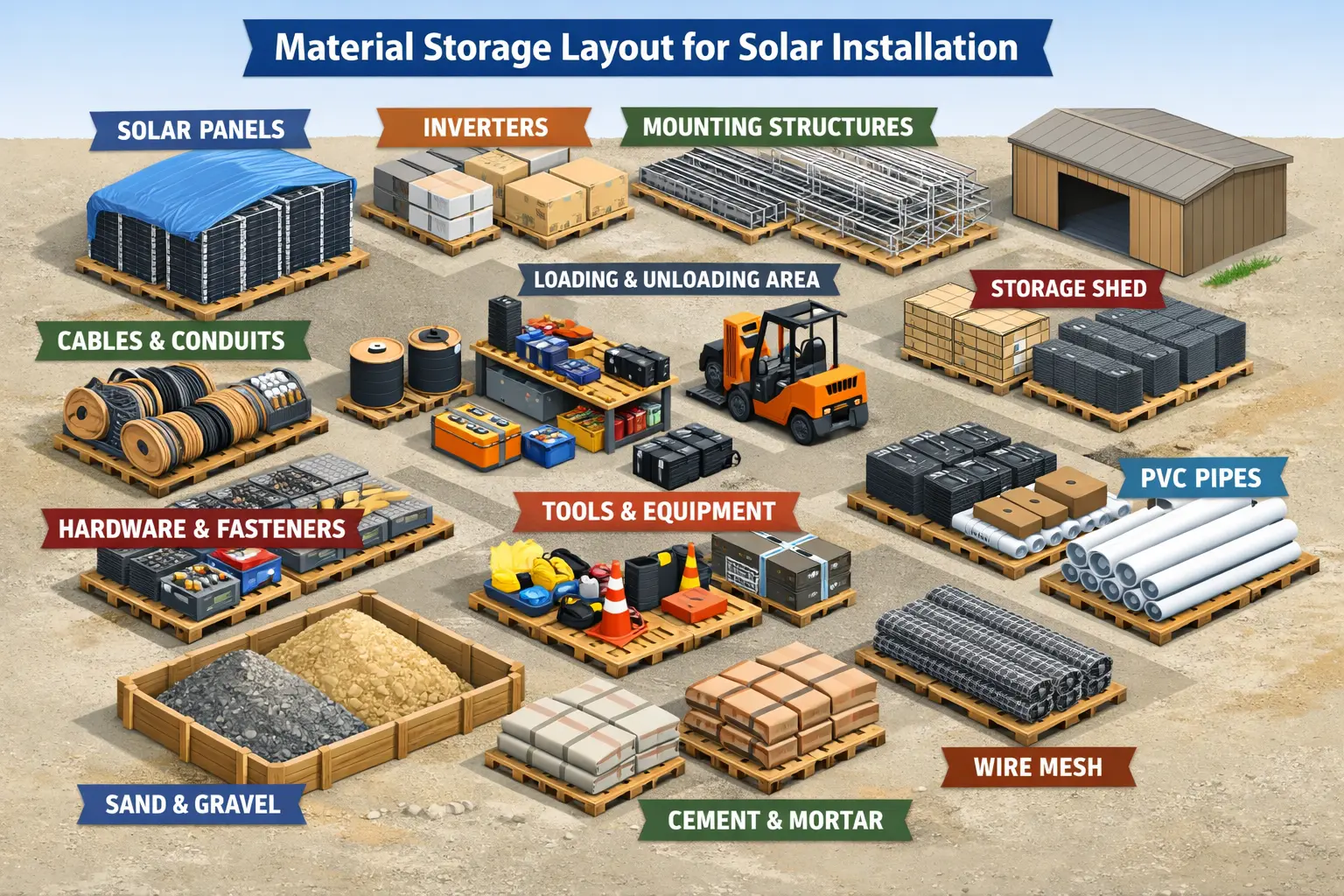
Best Practices for Storage
1. Store in a dry and Clean Environment
Avoid exposure to:
- Moisture
- Dust
- Direct sunlight (for certain components)
2. Maintain Proper Stacking
- Stack panels vertically or as recommended
- Avoid excessive stacking height
3. Protect from Physical Damage
- Use protective covers
- Avoid contact with sharp objects
4. Temperature Control
- Store batteries and inverters within the recommended temperature range.
5. Label and Organize Materials
- Clearly label components
- Maintain inventory records
This improves efficiency in solar panel in rooftop installations.
Best Practices for On-Site Handling
1. Use Proper Lifting Techniques
- Use panel lifting tools
- Avoid manual lifting of heavy components
2. Handle Panels Carefully
- Hold panels by the edges
- Avoid touching the glass surface unnecessarily
3. Prevent Electrical Damage
- Avoid short circuits
- Use insulated tools
4. Follow Safety Protocols
- Use personal protective equipment (PPE)
- Ensure safe working conditions
5. Coordinate Team Activities
- Proper coordination reduces accidents and improves efficiency.
Handling Specific Components
Solar Panels
- Avoid dropping or hitting
- Protect from scratches
- Store properly
Inverters
- Handle with care due to sensitive electronics
- Avoid exposure to moisture
Batteries
- Store in ventilated areas
- Avoid overheating
Cables
- Prevent bending and twisting
- Store in coils
Mounting Structures
- Protect from corrosion
- Store in dry conditions
Safety Measures in Material Handling
1. Use PPE
Includes:
- Helmets
- Gloves
- Safety shoes
2. Training for Workers
- Workers should be trained in safe handling practices.
3. Follow Guidelines
- Adhere to safety standards set by the Ministry of New and Renewable Energy.
4. Emergency Preparedness
- Be prepared for accidents and emergencies.
Impact on Solar Panel System Cost
Proper material handling helps:
- Reduce damage-related losses
- Avoid replacement costs
- Improve system efficiency
- Lower maintenance expenses
- Optimize cost of solar per kWh installed
Conclusion
Material handling is a vital part of solar PV project execution that directly impacts system performance, safety, and cost. By following best practices for transport, storage, and installation, solar professionals can ensure the integrity of components and avoid unnecessary losses. Proper handling not only enhances solar electricity generation but also reduces solar energy installation cost.
Adherence to proper handling techniques is essential for efficient solar installations. Additionally, following standards set by the Ministry of New and Renewable Energy ensures safety and reliability in renewable solar projects.
With effective material handling practices, installers and EPC companies can optimize solar panel system cost, improve system longevity, and contribute to the growth of sustainable solar energy for home use and large-scale renewable solar solutions.
FAQs
Q1. Why is material handling important in solar PV projects?
Ans: It prevents damage to components and ensures efficient system performance.
Q2. How should solar panels be transported?
Ans: They should be transported in secure, shock-resistant packaging and handled carefully.
Q3. What are the best storage practices for solar components?
Ans: Store in dry, clean environments with proper stacking and protection.
Q4. How does improper handling affect solar systems?
Ans: It can cause damage, reduce efficiency, and increase costs.
Q5. What safety measures should be followed during handling?
Ans: Use PPE, follow guidelines, and ensure proper training of workers.
Updated Rates of Solar Subsidy in Delhi: Cost, Eligibility & Benefits
Discover the latest solar subsidy rates in Delhi for 2025. This guide explains the updated costs, eligibility criteria, and benefits to help you maximize savings on your rooftop solar installation.
Inverter Circuit Board Fault Guide for Solar PV Systems
A complete guide to identifying inverter circuit board faults in solar PV systems, recognizing when professional service is required, and following safe maintenance procedures.
Safety Hazard Identification & Mitigation in Solar PV
A complete guide to identifying and mitigating safety hazards in solar PV systems, including risk assessment, hazard control, preventive measures, and workplace safety practices.

Haryana Electricity Tariff Hike Impacts All Consumer Categories in 2015-16
Haryana electricity tariffs were increased across all consumer categories in 2015-16, raising power costs for households, industries, and businesses statewide.

Commercial Solar Power Plant Subsidy in India: What Businesses Need to Know
Businesses in India can reduce their solar installation costs through various MNRE-backed subsidies and state incentives. Learn eligibility, benefits, and the application process for commercial solar plants.
UP Government Incentive: Stamp Duty Exemption for Solar Land
Uttar Pradesh offers stamp duty exemption on land for solar projects, encouraging investment and growth in renewable energy.
Solar PV Testing Equipment Inspection & Maintenance Guide
A complete guide to solar PV testing equipment inspection and maintenance, ensuring accurate measurements and reliable system performance.
How DISCOMs Implement Net Metering for Solar Power Plants
Discover the process of net metering implementation by DISCOMs for solar power plants. Understand the benefits, billing mechanism, and how it maximizes solar energy utilization.