
Solar energy systems are not just about selecting the right solar panel system cost or calculating solar installation charges. One of the most critical technical factors that directly impacts solar electricity generation, performance efficiency, and long-term return on investment is the angle at which solar photovoltaic (PV) modules are installed.
This blog explains the different angles associated with solar PV systems and why installers must understand them thoroughly.
Types Of Angle
1. Tilt Angle (Inclination Angle)
What is Tilt Angle?
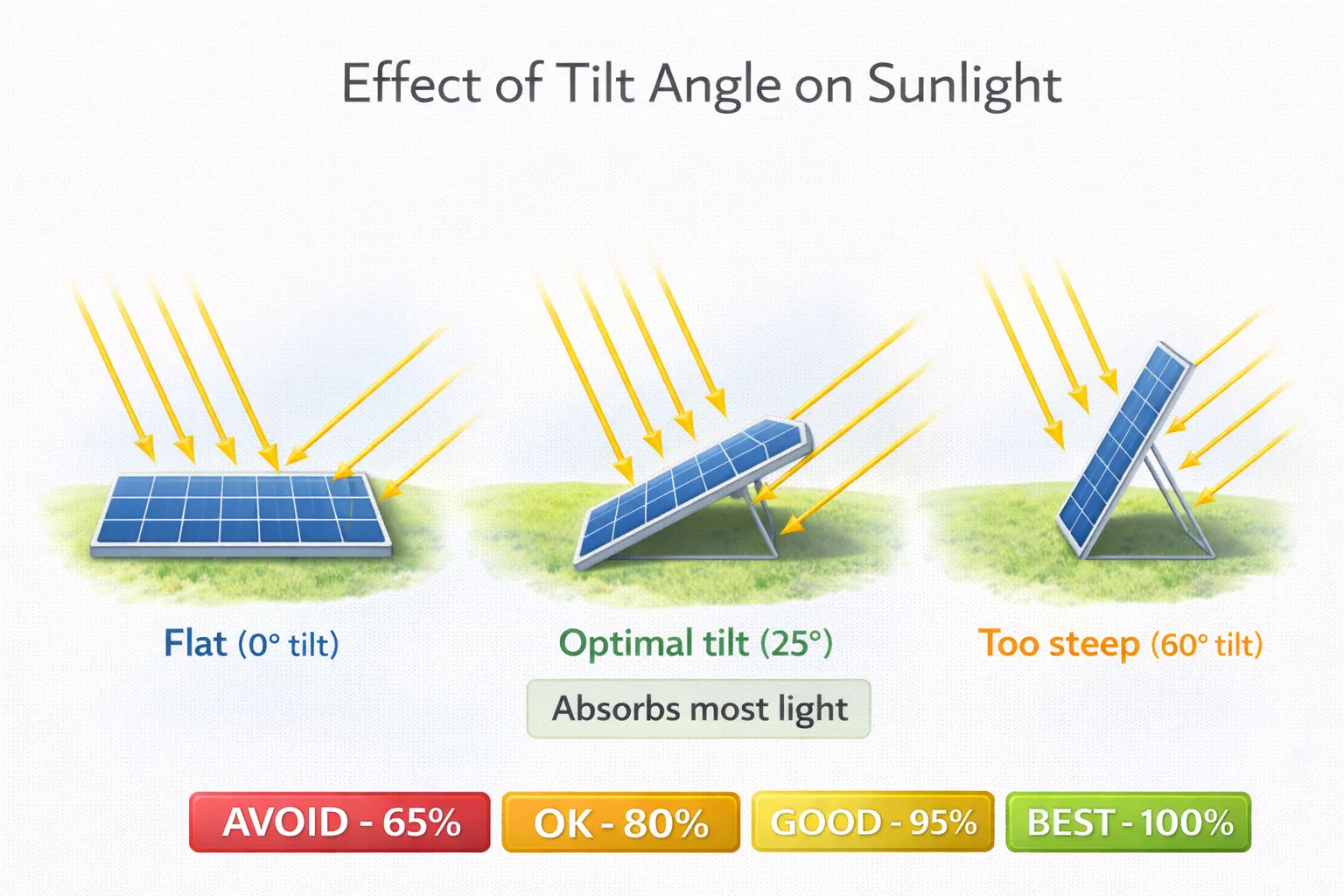
Tilt angle is the angle between the solar panel surface and the horizontal ground.
It directly affects:
- Solar energy absorption
- Solar electricity generation
- Overall solar panel system cost recovery
Ideal Tilt Angle Rule (India Context)
For most locations:
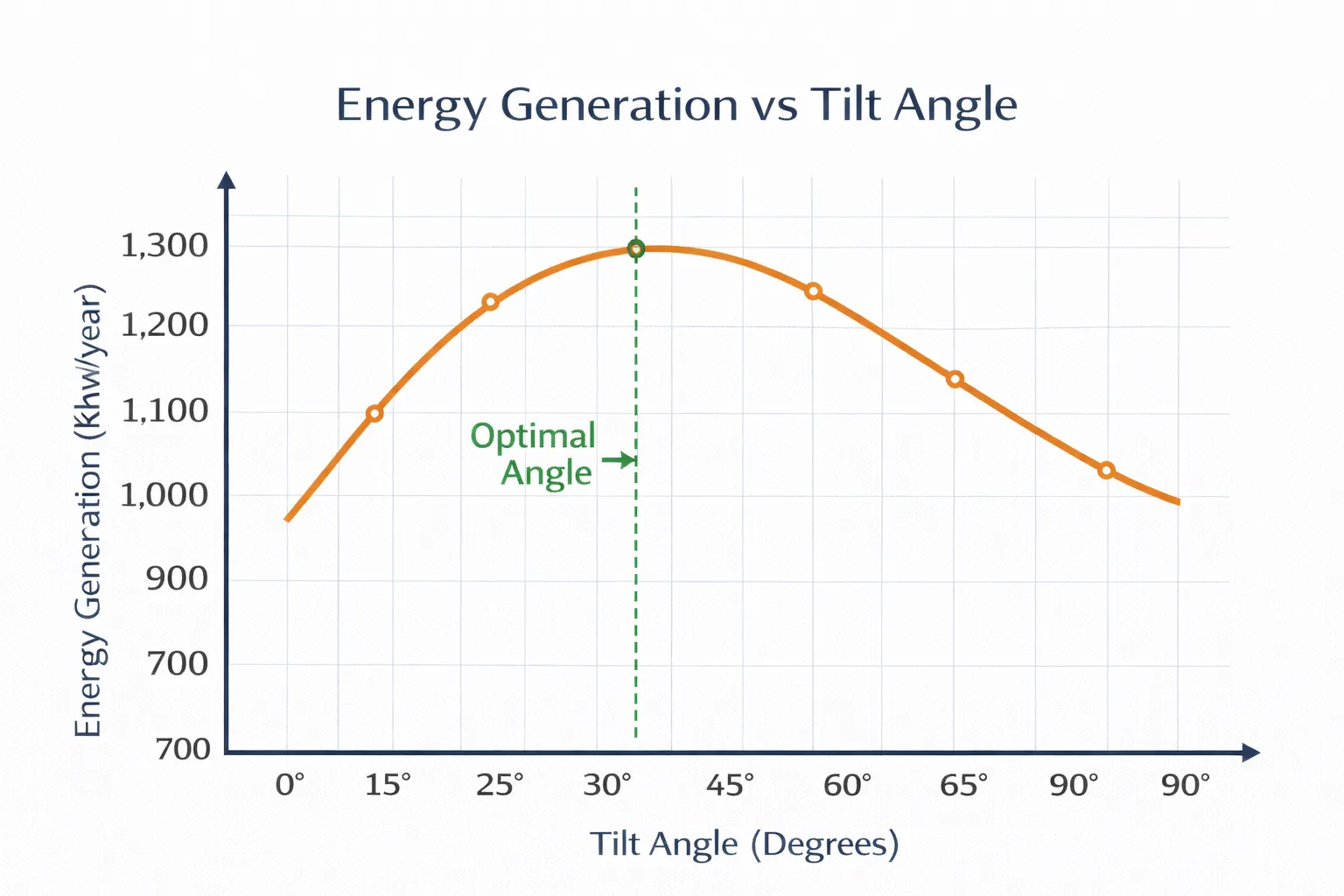
> Optimal Tilt Angle ≈ Local Latitude
Example:
- Delhi (~28° latitude) → 25–30° tilt recommended
- Kolkata (~22° latitude) → 20–25° tilt recommended
Why Tilt Angle Matters
Improper tilt angle can:
- Reduce annual energy generation by 5–20%
- Increase cost of solar per kWh installed
- Affect performance of home roof solar panels cost recovery
Correct tilt ensures:
- Better energy yield
- Faster payback period
- Improved solar plant efficiency
2. Azimuth Angle (Orientation Angle)
What is Azimuth Angle?
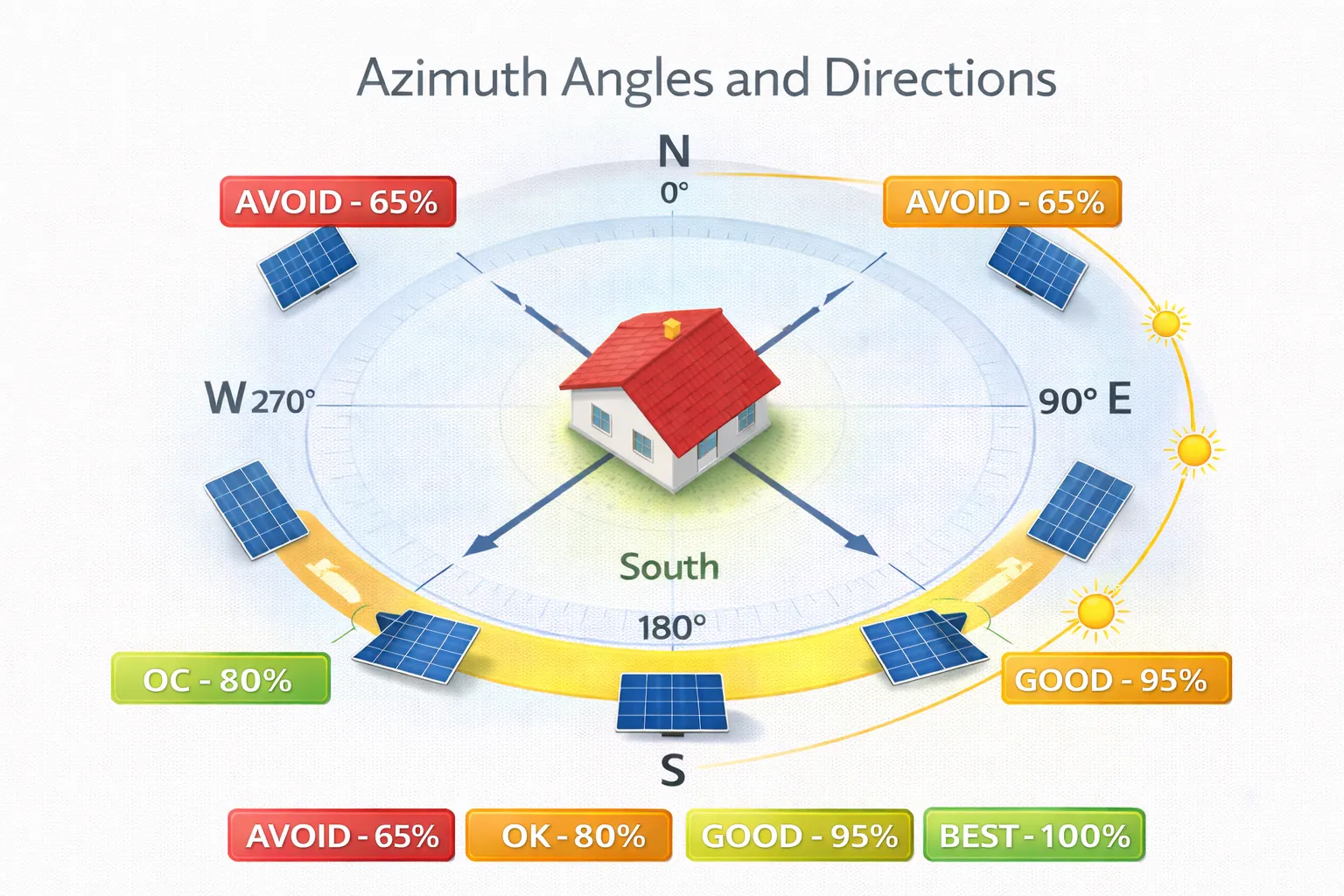
Azimuth angle refers to the direction the solar panel faces relative to true south (in the Northern Hemisphere).
In India:
- Best orientation → Facing True South
- Acceptable deviation → ±15° without major losses
Why It Is Important
If panels face:
- East → More morning production
- West → More evening production
- South → Maximum annual solar electricity output
Wrong azimuth increases:
- Solar installation cost per kWh
- Total cost of solar installation in the long term
3. Solar Elevation Angle
Solar elevation angle is the angle between the sun and the horizon at a specific time.
It varies:
- Throughout the day
- Across seasons
Higher solar elevation:
- Greater solar energy intensity
- Improved renewable solar generation
Installers must:
- Avoid obstructions blocking the high solar elevation path
- Ensure no shadow during peak hours (10 AM – 3 PM)
4. Declination Angle
Declination angle is the angle between the sun’s rays and the equatorial plane. It changes daily due to Earth’s tilt.
This affects:
- Seasonal solar electricity output
- Adjustment strategies for large solar plant projects
For rooftop systems:
- Installers typically choose fixed annual optimized tilt.
For a commercial solar plant:
- Seasonal tilt adjustments may be considered.
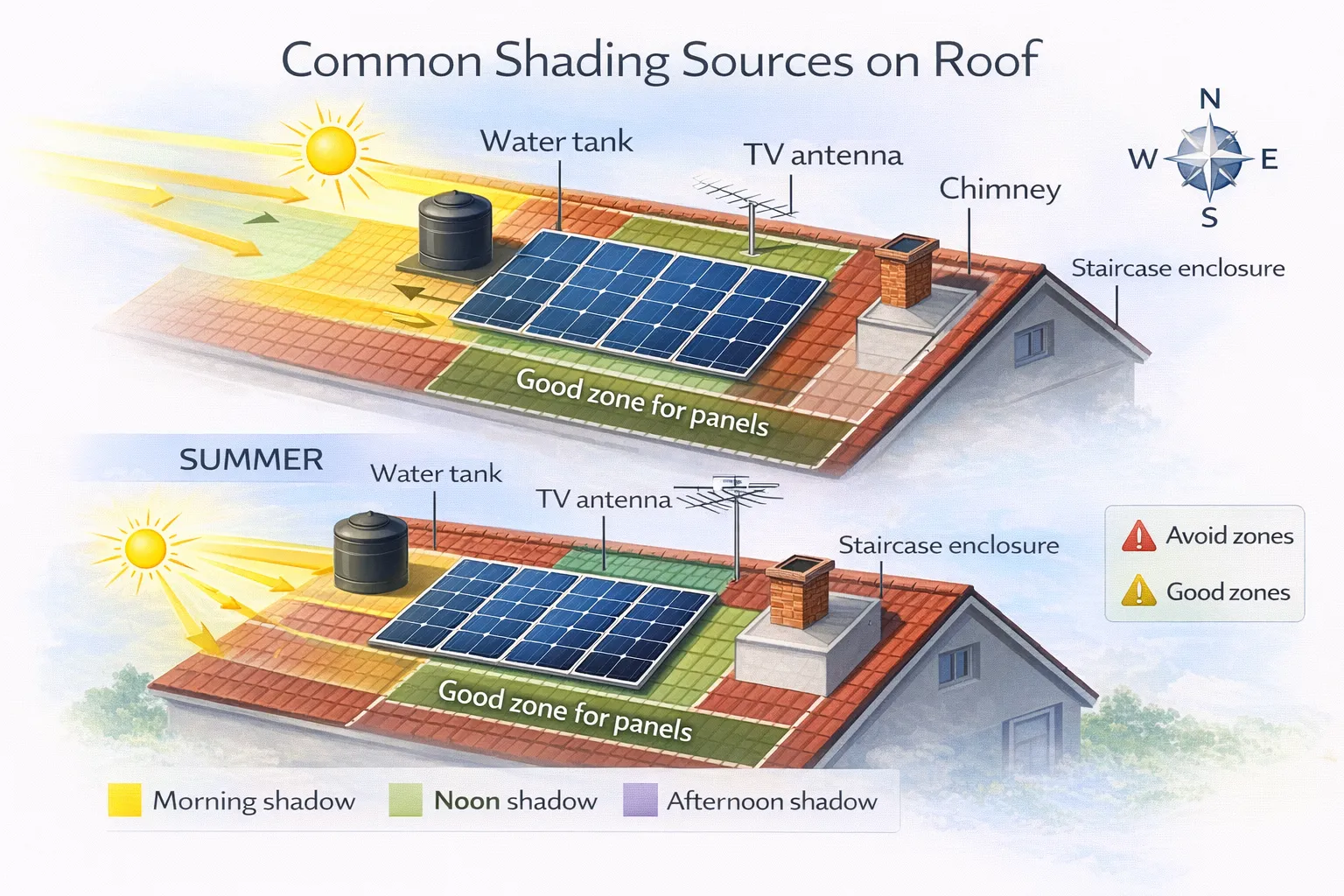
5. Shadow Angle (Shading Angle)
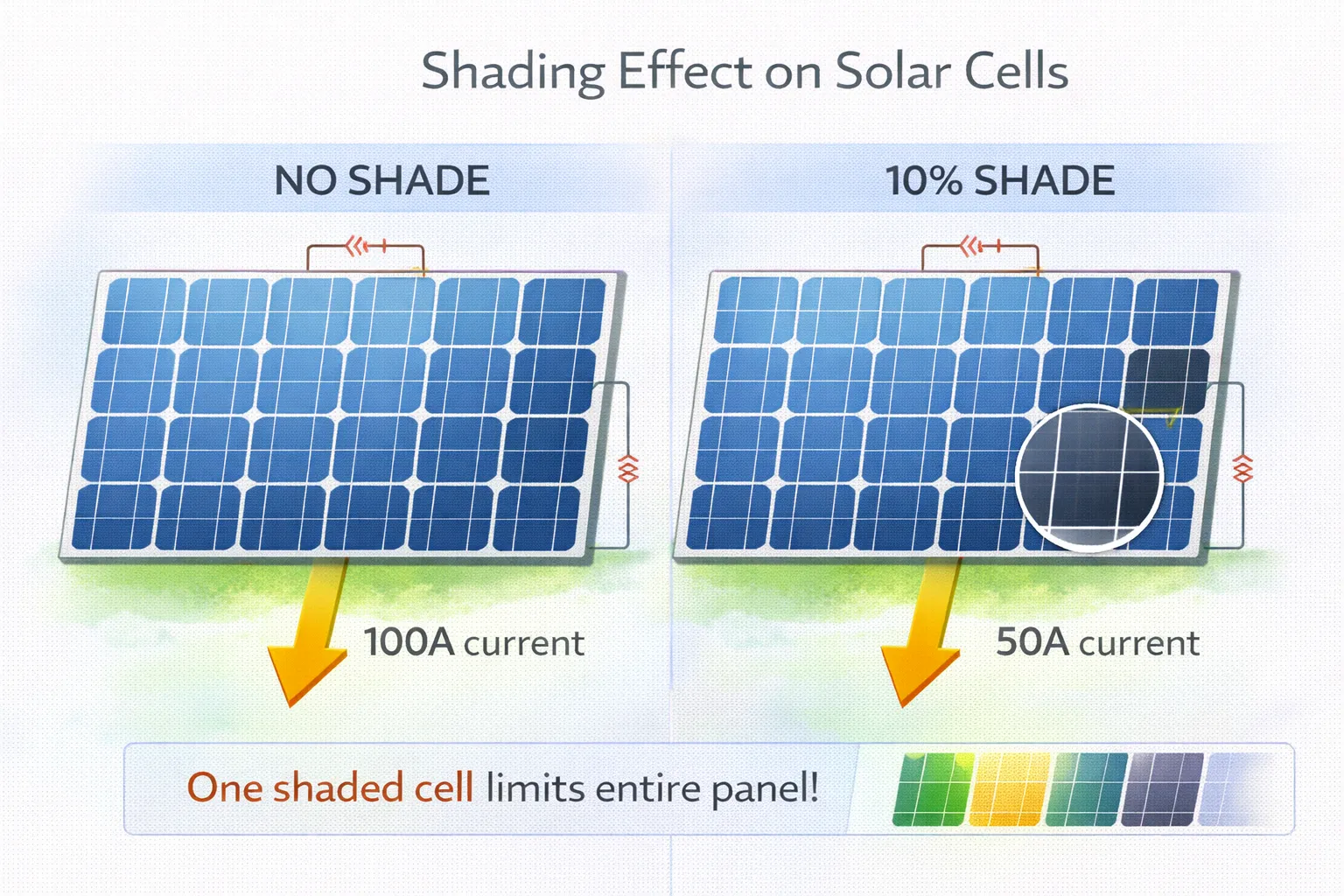
Shadow is one of the biggest performance killers in solar energy for home use.
Even small shading can:
- Reduce solar electricity drastically
- Increase the average cost of solar panels on a house (per unit output)
Installers must check:
- Nearby buildings
- Trees
- Water tanks
- Parapet walls
Shadow Analysis Rule (Simplified)
Minimum Row Spacing Formula:
> Distance between rows ≥ Height/tan (minimum solar elevation angle)
6. Angle of Incidence
Angle of incidence is the angle between sunlight and the perpendicular to the panel surface.
When sunlight strikes perpendicularly:
- Maximum solar energy absorption
Higher incidence angle:
- More reflection losses
- Reduced renewable energy technology efficiency
Practical Application for Solar Installers
Understanding angles helps in:
- Reducing solar installation charges due to rework
- Improving system yield
- Lowering the cost of solar per kWh installed
- Enhancing performance under subsidised solar panels for home projects
- Designing systems under the government solar subsidy scheme guidelines
Proper angle calculation ensures:
- Better ROI
- Improved smart solar panel price positioning
- Stronger renewable energy and solar energy performance claims
Safety Considerations During Angle Installation
- Ensure mounting structure stability at the required tilt
- Use proper torque settings
- Check wind load impact on high tilt angles
- Maintain safe rooftop working conditions
Conclusion
Understanding different angles associated with solar photovoltaic systems is not optional; it is a fundamental technical requirement for every solar installer. The correct angle selection directly influences solar electricity generation, renewable energy efficiency, and long-term system economics.
By mastering tilt angle, azimuth angle, solar elevation, declination, shadow analysis, and angle of incidence, installers can significantly reduce solar energy installation cost inefficiencies and optimize solar panel system cost performance.
Ultimately, correct angle optimization makes solar energy more economical, improves smart solar panel price competitiveness, and strengthens the growth of renewable solar and renewable energy technology adoption across residential and commercial sectors.
FAQs
Q1. What is the best angle for a solar panel in rooftop installations in India?
Ans: The best tilt angle is usually equal to the local latitude. This maximizes annual solar electricity output.
Q2. Does a wrong angle increase solar panel system cost?
Ans: Indirectly, yes. It increases the cost of solar per kWh installed because energy output decreases.
Q3. Can installers adjust tilt seasonally?
Ans: For residential systems, fixed tilt is common. For large solar plant installations, seasonal adjustment may be used.
Q4. How does the angle impact solar energy for home use?
Ans: Correct angles ensure better generation, reducing home roof solar panels cost per unit output.
Q5. Is the azimuth angle important under the government solar subsidy scheme?
Ans: Yes. Poor orientation reduces performance and affects the long-term benefits of subsidised solar panels for home systems.

PV System Maintenance Tools & Equipment Guide
A complete guide to performing the solar PV anti-islanding test, ensuring safe grid-connected operation, regulatory compliance, and reliable inverter performance.

Latest MNRE List: Approved Solar Module Manufacturers
Check the latest MNRE-approved list of solar module manufacturers to ensure quality and compliance for your solar projects in India.
Solar Industry Faces Growing Losses from Underperforming Equipment
According to the Raptor Maps’ Global Solar Report, the amount of power loss due to equipment anomalies has nearly doubled from 1.61% in 2019 to 3.13% in 2022. This trend is expected to continue, with anomaly-driven power loss potentially growing to almost 6% by 2025.
500 kW Solar System Price in Indore: Complete Industrial Guide
Planning to install a 500 kW solar power plant in Indore? Discover the complete cost details, government subsidy options, and potential savings for industries in 2025.

Solar Site Assessment: Shadow Analysis for Maximum Energy Generation
Shadow analysis is a critical step in solar site assessment. It helps solar installers identify shading obstacles and optimize panel placement for maximum energy generation.

Rooftop Solar for Factories: Cost, Benefits, ROI & Installation Guide in India
Learn how rooftop solar for factories in India lowers power costs with high ROI, faster payback, and long-term energy savings for industrial facilities.

Solar Installation Cost in Haryana: Pricing, Savings & Subsidy Guide
Solar installation cost in Haryana varies by system size, components, and subsidy eligibility. This guide explains per-kW pricing, government incentives, and how much owners can save with rooftop solar in 2025, helping you choose the right system at the right budget.
EIB Green Hydrogen India: €1 Billion Investment to Boost Clean Energy Transition
The European Investment Bank (EIB), the bank of the European Union, has joined forces with the India Hydrogen Alliance (IH2A) to increase support for the development of green hydrogen projects across India.