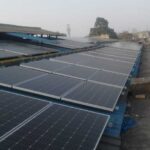
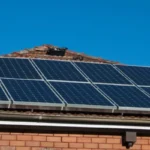
Solar power has come a long way in the past decade, moving from being an also-ran to one of the major players in the global energy race. According to the International Energy Agency, next year, solar photovoltaic capacity will surpass hydropower, followed by gas-fired generation in three years and coal in four years. Solar power is set to become the largest power source, with a record-breaking number of installations forecast in each of the next five years.
The growth of solar installations in different parts of the world, from Arizona in the US to Anhui in China, has been at the forefront of a renewable energy charge that has disrupted the old energy order. The development of solar power is set to pick up speed, driven by concerns about energy security following Russia’s invasion of Ukraine. Solar power is now expected to account for almost 60% of every power installation that will be built in the coming five years.
The primary driver in recent years has been the fast-falling cost of solar power. The average unsubsidised lifetime cost to build and operate utility-scale solar was just $36 per megawatt hour in 2021, down about 90% since 2009. This compares with $108/MWh for coal, $60/MWh for combined cycle gas, and $38/MWh for wind. While costs picked up last year due to the rising price of component parts, utility-scale solar remained the cheapest option for new electricity generation in most parts of the world. The rate of installations grew by more than half last year.
Aggressive climate targets and accompanying policies, with generous subsidies in jurisdictions across the world, have also helped to boost solar power. The European Union has set tough targets in a bid to wean itself off its reliance on Russian fossil fuels by 2027. Russia supplied the continent with 155bn cubic metres of gas in 2021, or 40% of its consumption, primarily in power and heating. Under its RePower EU plan, released last May, the EU aims to generate 45% of its power from renewables by 2030, with a focus on more than doubling solar installations to 320GW by 2025 and 600GW by 2030.
Solar power, with its low costs and ability to be built at any scale, will account for the bulk of the EU power additions in the coming years, according to S&P. China has also made energy security a central priority in its 14th five-year plan, released last April. Despite being able to import crude from Russia at a discount, China’s goal is to transition primarily to a renewables and coal-based energy economy, which it has local access to. Chinese domination of clean energy supply chains, particularly solar, has led to massive government support in other parts of the world for the development of local solar manufacturing industries.
President Joe Biden’s landmark climate law, the Inflation Reduction Act, will pump $369bn into clean energy subsidies over the coming decade. Solar developers will, for the first time, have 10 years of certainty over generous production and investment tax credits, allowing them to plan for long-term, large-scale construction.
The growth of solar installations in different parts of the world, from Arizona in the US to Anhui in China, has been at the forefront of a renewable energy charge that has disrupted the old energy order. The development of solar power is set to pick up speed, driven by concerns about energy security following Russia’s invasion of Ukraine. Solar power is now expected to account for almost 60% of every power installation that will be built in the coming five years.
The primary driver in recent years has been the fast-falling cost of solar power. The average unsubsidised lifetime cost to build and operate utility-scale solar was just $36 per megawatt hour in 2021, down about 90% since 2009. This compares with $108/MWh for coal, $60/MWh for combined cycle gas, and $38/MWh for wind. While costs picked up last year due to the rising price of component parts, utility-scale solar remained the cheapest option for new electricity generation in most parts of the world. The rate of installations grew by more than half last year.
Aggressive climate targets and accompanying policies, with generous subsidies in jurisdictions across the world, have also helped to boost solar power. The European Union has set tough targets in a bid to wean itself off its reliance on Russian fossil fuels by 2027. Russia supplied the continent with 155bn cubic metres of gas in 2021, or 40% of its consumption, primarily in power and heating. Under its RePower EU plan, released last May, the EU aims to generate 45% of its power from renewables by 2030, with a focus on more than doubling solar installations to 320GW by 2025 and 600GW by 2030.
Solar power, with its low costs and ability to be built at any scale, will account for the bulk of the EU power additions in the coming years, according to S&P. China has also made energy security a central priority in its 14th five-year plan, released last April. Despite being able to import crude from Russia at a discount, China’s goal is to transition primarily to a renewables and coal-based energy economy, which it has local access to. Chinese domination of clean energy supply chains, particularly solar, has led to massive government support in other parts of the world for the development of local solar manufacturing industries.
President Joe Biden’s landmark climate law, the Inflation Reduction Act, will pump $369bn into clean energy subsidies over the coming decade. Solar developers will, for the first time, have 10 years of certainty over generous production and investment tax credits, allowing them to plan for long-term, large-scale construction.
EIB Vice-President, Kris Peeters, said that the EIB recognizes the tremendous potential of developing green hydrogen in India. The EIB is exploring how it can support India’s National Hydrogen Mission to enable the use of green hydrogen to decarbonize energy, industry, and transport. Increased cooperation through the India Hydrogen Alliance will help to implement a national green hydrogen roadmap that delivers India’s energy transition and net-zero carbon plans while strengthening energy security in the years to come.
Jillian Evanko, President and CEO of Chart Industries and Founding Member of IH2A, expressed her delight in partnering with the EIB to bring much-needed funding to the development of the green hydrogen economy in India. She added that the EIB’s participation will solve a critical ecosystem problem and that the organization looks forward to working closely with the EIB, investors, industry, and the government to help commercialize hydrogen at scale over the next half decade.
IH2A is focused on attracting global climate finance for large-scale hydrogen hub development in India. The memorandum of understanding between the EIB and IH2A supports the Indian government’s allocation of $2 billion in public finance for the National Hydrogen Mission. This will allow IH2A to bring together global climate finance players and funding agencies to work with industry players and government agencies to plan and execute large-scale green hydrogen projects and develop the green hydrogen economy in India.
The EIB is exploring a credit facility with the Indian government to provide investments in key public sectors that support the development of the green hydrogen industry. This facility will support the Indian government’s efforts to commercialize upcoming green hydrogen technologies and reduce costs through long-term investment in innovation, R&D, green hydrogen hubs, and pilot projects.
In conclusion, the EIB’s partnership with IH2A will play a critical role in supporting climate action and the development of the green hydrogen industry in India. This project is part of the EU’s Global Gateway initiative, which supports projects that improve global and regional connectivity in various sectors, including climate, energy, and education.