
Solar photovoltaic (PV) systems are designed to deliver reliable and efficient electricity for more than 25 years. However, their performance depends not only on the quality of the solar panels and electrical components but also on regular preventive maintenance. Environmental factors such as dust, dirt, bird droppings, fallen leaves, shade, pollution, snow, and nearby vegetation can significantly reduce the amount of sunlight reaching the PV modules, leading to lower power generation and reduced system efficiency.
Even minor obstructions on the surface of a solar module can reduce energy production, especially when they affect multiple cells within a module or an entire string. In addition to surface contamination, new buildings, growing trees, antenna installations, or other obstacles may create shading that did not exist during the original system installation. These issues often develop gradually and may go unnoticed unless regular inspections are carried out.
Routine inspection for dust, shading, and environmental obstructions is one of the simplest yet most effective maintenance activities in a renewable solar system. Identifying and correcting these issues at an early stage helps maximize solar electricity generation, improve system efficiency, reduce maintenance costs, and extend the lifespan of PV modules and associated equipment.
Regular inspection of PV modules for dust, shade, dirt, and other environmental factors is an essential preventive maintenance practice for maintaining the performance and reliability of solar PV systems.
This comprehensive guide explains why routine environmental inspections are important, the common factors that interrupt solar power output, inspection procedures, testing methods, required tools, safety precautions, documentation practices, and industry best practices.
Why Are Regular Environmental Checks Important?
Solar PV modules require maximum sunlight exposure to generate electricity efficiently.
Routine inspections help:
- Detect dust accumulation
- Identify new sources of shading
- Improve the renewable solar system efficiency
- Reduce energy losses
- Prevent hotspot formation
- Improve module lifespan
- Lower maintenance costs
- Ensure consistent solar electricity generation
Preventive inspections reduce unexpected performance losses.
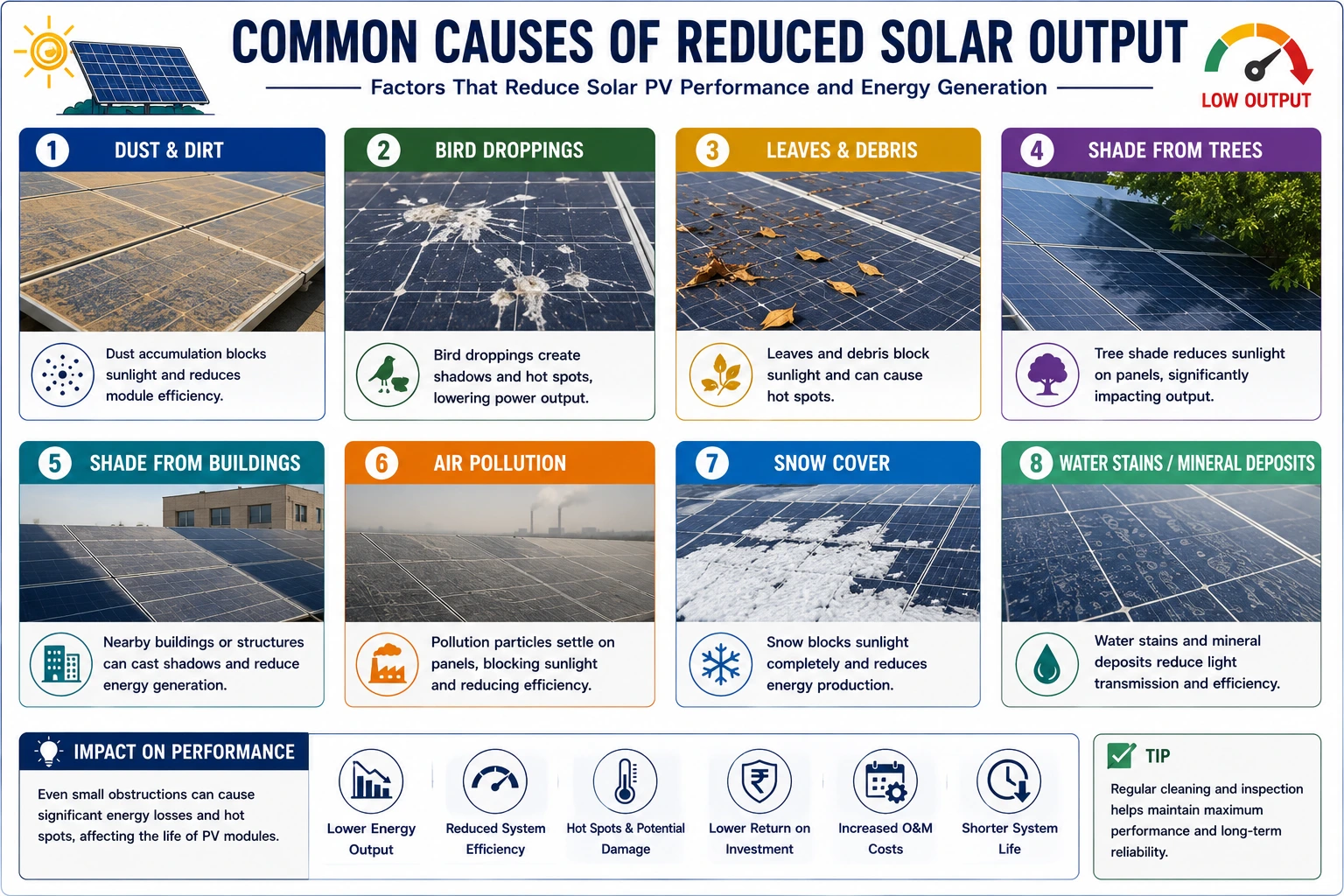
Common Factors That Interrupt Solar Power Output
1. Dust Accumulation
Dust is one of the most common causes of reduced solar panel performance. Heavy dust reduces light transmission, decreasing electricity generation.
Dust accumulation is more severe in:
- Dry regions
- Construction areas
- Industrial zones
- Agricultural fields
Regular cleaning restores module efficiency.
2. Dirt and Mud
Mud splashes caused by rain or nearby traffic may cover portions of PV modules. Even partial contamination can reduce the current generation.
3. Bird Droppings
Bird droppings create localized shading.
These shaded areas may cause:
- Hotspots
- Reduced power generation
- Cell damage, if left untreated
Prompt cleaning is recommended.
4. Fallen Leaves
Leaves may accumulate:
- Under module edges
- Around mounting structures
- On flat rooftop installations
Large accumulations create partial shading.
5. Tree Growth
Trees continue growing after system installation. Branches may gradually shade PV modules. Regular vegetation trimming maintains maximum sunlight exposure.
6. New Buildings and Structures
Nearby construction may introduce unexpected shading.
Examples include:
- Buildings
- Water tanks
- Towers
- Antennas
- Billboards
Routine site inspections identify new obstructions.
7. Pollution
Industrial pollution can create stubborn deposits on PV module surfaces. Cleaning schedules should be adjusted based on local environmental conditions.
8. Snow and Ice (Cold Regions)
Snow accumulation blocks sunlight completely. Safe snow removal restores power generation.
9. Water Stains
Mineral deposits left after water evaporation reduce light transmission. Using clean or demineralized water helps prevent staining.
10. Animal Activity
Rodents, birds, and insects may:
- Damage cables
- Build nests
- Create shading
- Obstruct ventilation
Routine inspections help identify these issues.
Impact of Shading on Solar PV Systems
Partial shading affects entire strings in many conventional solar PV systems.
- Consequences include:
- Reduced current
- Lower string output
- Hotspot formation
- Increased mismatch losses
- Reduced inverter efficiency
Even small shaded areas can significantly affect power generation.
Step-by-Step Inspection Procedure
Step 1 – Review Previous Inspection Records
Before visiting the site:
Review:
- Previous maintenance reports
- Cleaning schedules
- Performance data
- Historical energy generation
Past records help identify recurring issues.
Step 2 – Check Weather Conditions
Inspect during:
- Safe weather
- Adequate daylight
- Dry roof conditions
Avoid rooftop work during rain or strong winds.
Step 3 – Perform Visual Inspection of PV Modules
Inspect every module for:
- Dust
- Dirt
- Bird droppings
- Leaves
- Water stains
- Physical damage
Record all observations.
Step 4 – Inspect for Shading
Check for shading caused by:
- Trees
- Buildings
- Utility poles
- Antennas
- Rooftop equipment
- Seasonal sun angle changes
Observe the site at different times of the day if necessary.
Step 5 – Inspect Surrounding Area
Verify that:
- Vegetation has not overgrown.
- Construction has not introduced new obstructions.
- Drainage remains adequate.
- Animals have not damaged equipment.
Environmental inspections improve long-term system performance.
Step 6 – Measure Solar Irradiance
Using a pyranometer:
- Measure available sunlight.
Compare measured irradiance with expected power generation.
Step 7 – Perform Thermal Inspection
Use an infrared thermal camera to identify:
- Hotspots
- Shaded cells
- Overheated connectors
- Abnormal module temperatures
Thermal imaging supports early fault detection.
Step 8 – Clean Modules (If Required)
Remove:
- Dust
- Dirt
- Bird droppings
- Leaves
Use:
- Soft brushes
- Clean water
- Approved cleaning methods
Avoid abrasive materials or harsh chemicals.
Step 9 – Verify Performance Improvement
After cleaning:
Review:
- Inverter output
- Monitoring data
- String performance
Improved output confirms successful maintenance.
Step 10 – Record Inspection Results
Document:
- Site condition
- Weather
- Cleaning activities
- Shading observations
- Performance measurements
- Corrective actions
- Technician details
Maintain complete maintenance records.
Recommended Inspection Frequency
General recommendations include:
Maintenance Activity | Typical Frequency |
Visual inspection | Monthly |
Dust inspection | Monthly (or more frequently in dusty areas) |
Shading assessment | Quarterly |
Cleaning | As required based on site conditions |
Comprehensive environmental inspection | Annually |
Follow manufacturer recommendations and local maintenance schedules.
Conclusion
Regular inspections for dust, shading, and other environmental factors are essential for maintaining the efficiency, reliability, and long-term performance of solar PV systems. Even small amounts of dust or partial shading can significantly reduce energy production and, if left unattended, may contribute to hotspot formation, increased equipment stress, and reduced system lifespan. By implementing routine visual inspections, timely cleaning, vegetation management, thermal inspections, and accurate documentation, technicians can maximize sunlight absorption, improve renewable solar system efficiency, and ensure uninterrupted solar electricity generation.
Routine environmental inspections are a fundamental responsibility of solar installers, EPC contractors, commissioning engineers, and operations and maintenance professionals. Furthermore, following technical recommendations and safety practices promoted by the Ministry of New and Renewable Energy, together with manufacturer guidelines, helps ensure safe, standards-compliant, and efficient maintenance of solar PV systems.
By establishing preventive inspection schedules, monitoring environmental conditions, using appropriate cleaning methods, maintaining detailed maintenance records, and addressing performance-reducing factors promptly, solar professionals can optimize solar panel system cost, maximize renewable solar system reliability, improve solar electricity generation, reduce the cost of solar per kWh installed, and ensure the long-term success of residential, commercial, industrial, and utility-scale solar energy projects.
FAQs
Q1. Why do dust and dirt reduce solar panel performance?
Ans: Dust and dirt block sunlight from reaching the solar cells, reducing the amount of energy produced. Heavy dust accumulation can significantly decrease the efficiency and overall power output of a solar PV system.
Q2. How often should solar panels be inspected for dust and shading?
Ans: Visual inspections are generally recommended at least once a month, while cleaning and shading assessments should be carried out based on local environmental conditions, seasonal changes, and manufacturer recommendations.
Q3. Can partial shading affect the entire solar PV system?
Ans: Yes. In string-based solar PV systems, partial shading on one module can reduce the current of the entire string, lowering overall power generation and potentially causing hotspots if not addressed.
Q4. What is the safest way to clean solar PV modules?
Ans: Solar panels should be cleaned using soft brushes or microfiber cloths with clean water or manufacturer-approved cleaning solutions. Abrasive materials, harsh chemicals, and high-pressure washing should be avoided unless specifically recommended by the manufacturer.
Q5. What environmental factors should be checked during routine inspections?
Ans: Technicians should inspect for dust, dirt, bird droppings, leaves, tree growth, nearby buildings, pollution deposits, water stains, animal activity, seasonal shading, and any other obstructions that may reduce solar power output.
Understanding Solar Battery Specifications: Capacity, Voltage & Efficiency Explained
Solar batteries are essential for energy storage and backup in PV systems. This guide explains key specifications like capacity, voltage, efficiency, and depth of discharge to help you choose the right battery.
How Are Solar PV Modules Made? Complete Guide to the Manufacturing Process
Choosing the right solar panels can be confusing with so many options in the market. This guide simplifies solar panel selection by comparing types, efficiency ratings, and cost factors. Whether for your home, business, or industry, learn how to make an informed decision and maximize the return on your solar investment.
How to Prepare Battery Terminals and Install Interconnection Cables
Proper battery terminal preparation and cable installation are essential for safe and efficient battery bank operation. This guide explains the complete installation process for solar projects.
How to Check Equipment Location for Solar PV Systems
A complete guide to battery bank enclosure and rack installation, including site verification, setup procedures, and safety practices for solar PV systems.

Steps for Conducting a Load Assessment Before Solar Installation and Its Requirements
Load assessment is an essential step before installing a solar PV system. It helps determine electricity consumption and ensures accurate system sizing for optimal solar performance.
Should You Switch to Solar in India? Complete Guide
India has become a hot-selling solar market and people are interested in installing solar systems in their homes as well as in industries and factories.

Difference Between an On-Grid Inverter and a Hybrid Solar Inverter
Confused between an on-grid inverter and a hybrid solar inverter? This blog explains their differences, advantages, and which solar inverter is right for you.
Solar for Pharma & Chemical Industries: Cost, Benefits, Installation & ROI in India
A complete guide on solar systems for the FMCG industry in India covering installation cost, benefits, ROI, system sizing, and the installation process.