
The installation of a solar photovoltaic (PV) system requires not only technical knowledge but also the right set of tools and tackles to ensure safe, efficient, and high-quality work. From mounting solar panels to electrical wiring and system testing, each stage of installation demands specific tools.
For solar installers and EPC professionals, using the correct tools improves productivity, ensures safety, and reduces installation errors, ultimately optimizing solar panel system cost. Proper identification and usage of tools is a fundamental requirement for successful solar PV installations.
This blog provides a complete checklist of tools and tackles required for solar PV panel installation, along with their uses and importance.
Importance of Using Proper Tools in Solar Installation
Using the right tools ensures:
- Accurate installation
- Reduced risk of damage
- Improved safety
- Faster project completion
- Better solar electricity system performance
Improper tools can lead to poor installation quality and increased solar installation charges.
Categories of Tools and Tackles
Solar installation tools can be categorized into:
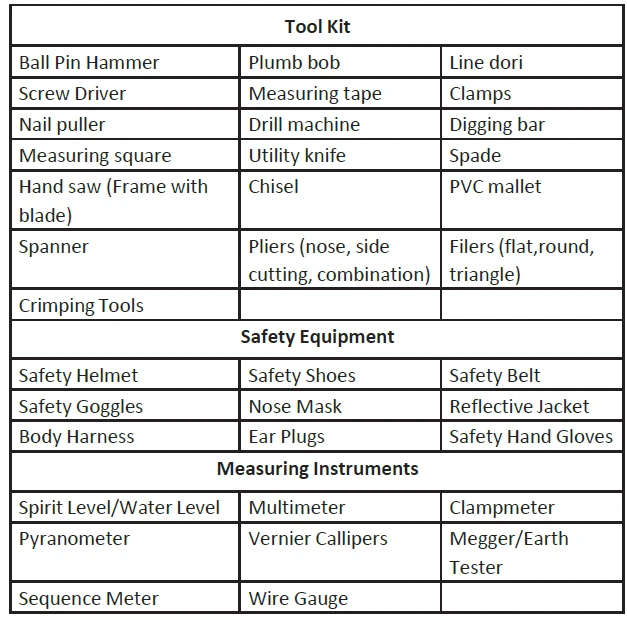
- Mechanical tools
- Electrical tools
- Measuring and testing instruments
- Safety equipment
Mechanical Tools
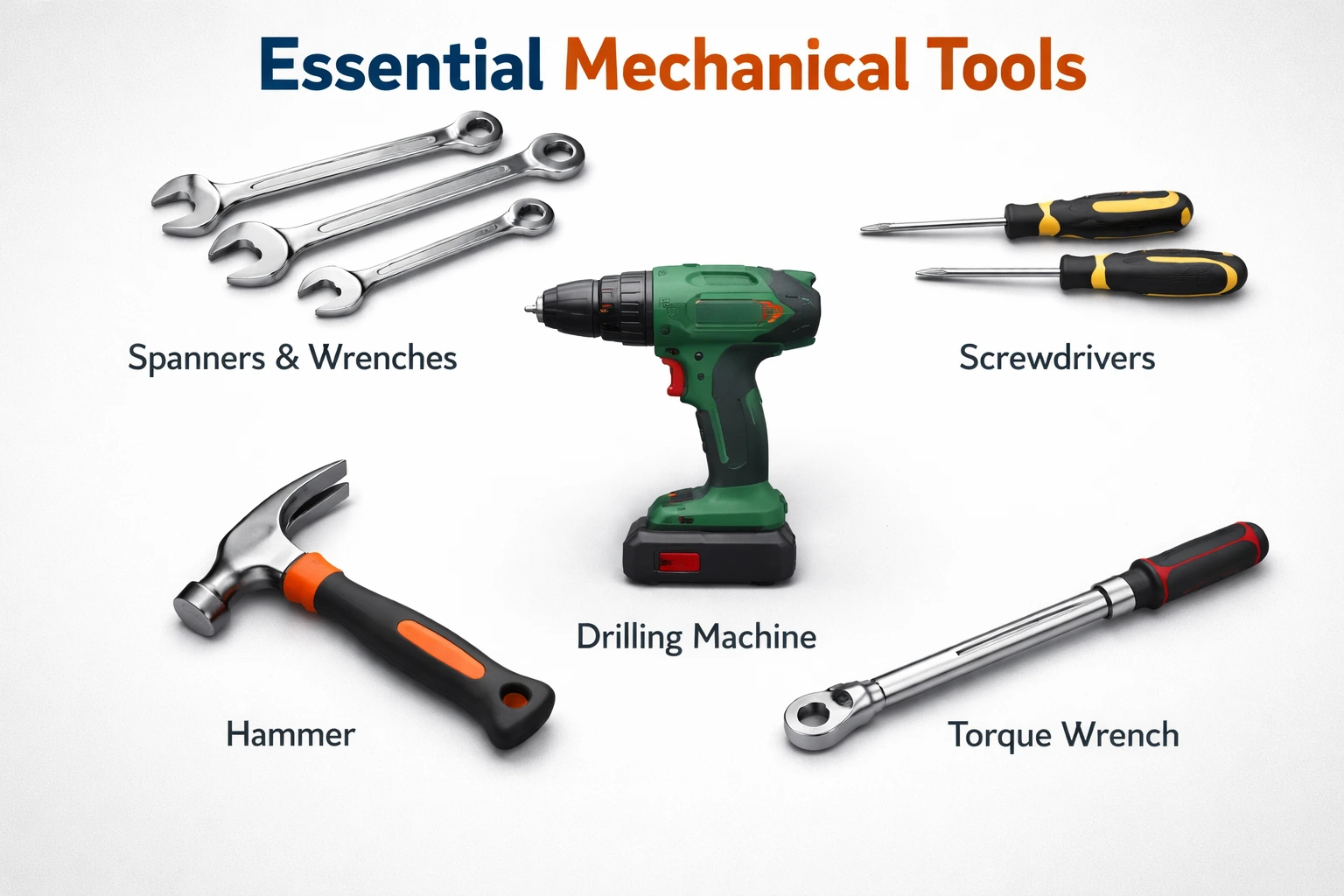
- Spanners and Wrenches
Used for tightening nuts and bolts in mounting structures.
Types:
- Open-end spanner
- Ring spanner
- Adjustable wrench
- Screwdrivers
Used for fastening screws in electrical and structural components.
Types:
- Flat-head
- Phillips-head
- Drilling Machine
Used for making holes in rooftops or structures for mounting.
Features:
- Electric or cordless
- Variable speed
- Hammer
Used for minor fitting and adjustments.
- Torque Wrench
- Ensures bolts are tightened with the correct torque.
- Important for maintaining structural integrity.
Electrical Tools
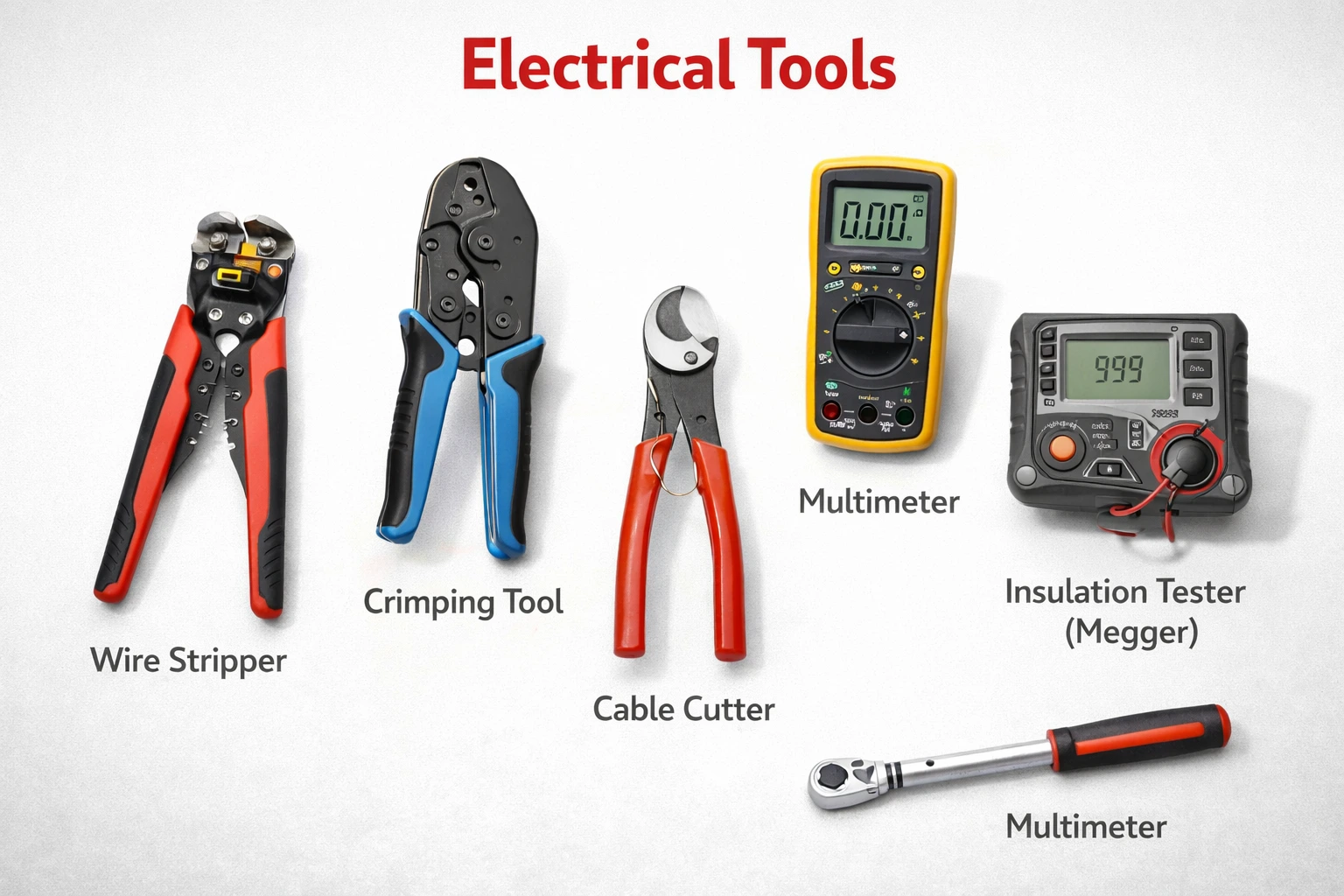
- Wire Stripper
- Used to remove insulation from cables.
- Crimping Tool
- Used for attaching connectors to cables.
- Ensures secure electrical connections.
- Cable Cutter
- Used for cutting cables cleanly.
- Multimeter
Used to measure:
- Voltage
- Current
- Resistance
Essential for testing solar electricity systems.
- Insulation Tester (Megger)
- Used to check the insulation resistance of cables.
- Ensures safety and system reliability.
Measuring and Testing Instruments
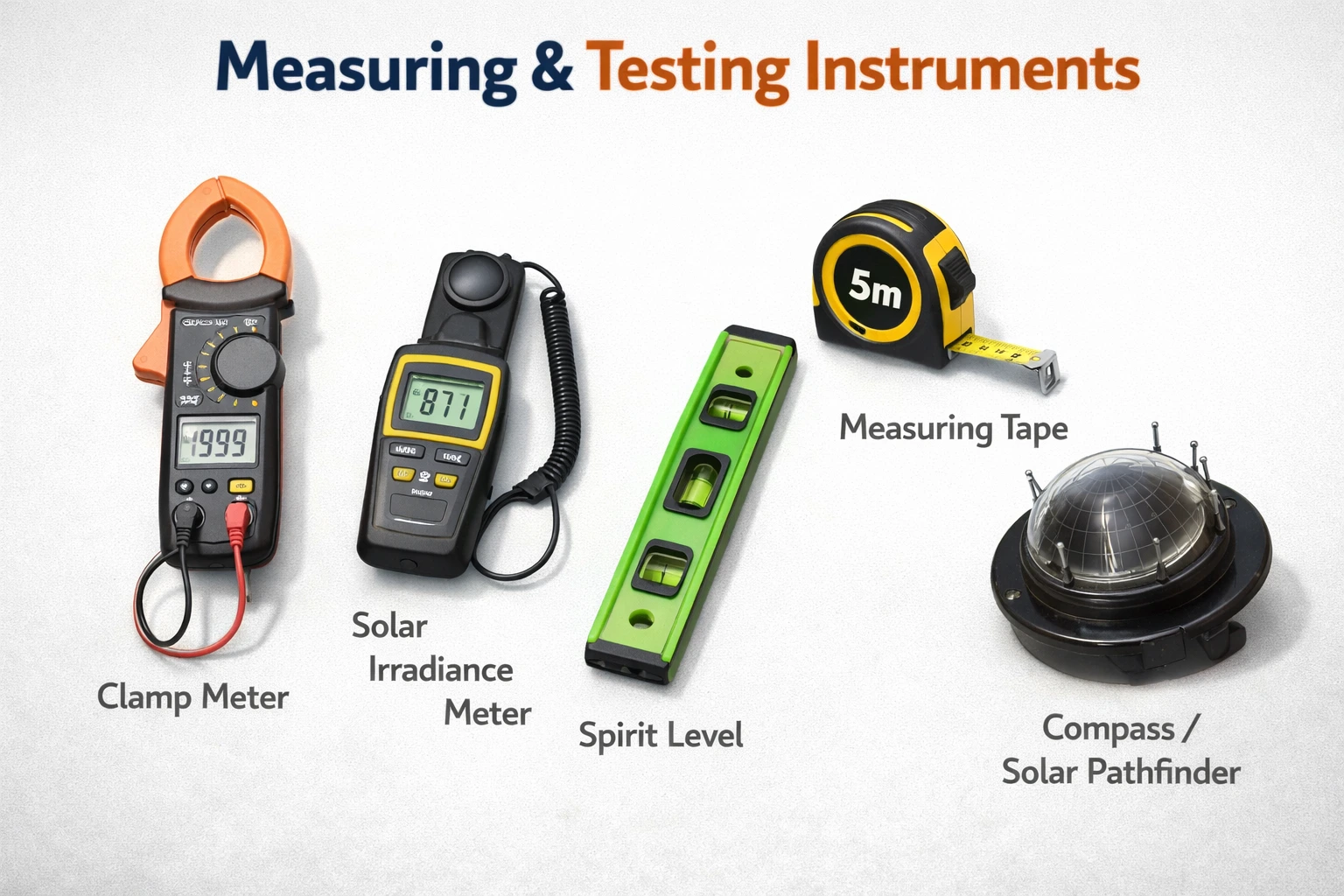
- Clamp Meter
- Measures current without disconnecting the circuit.
- Solar Irradiance Meter
- Measures sunlight intensity.
- Helps in the performance analysis of the solar plant.
- Spirit Level
- Ensures proper alignment of solar panels.
- Measuring Tape
- Used for accurate measurements during installation.
- Compass or Solar Pathfinder
- Used to determine panel orientation and perform shadow analysis.
Safety Equipment
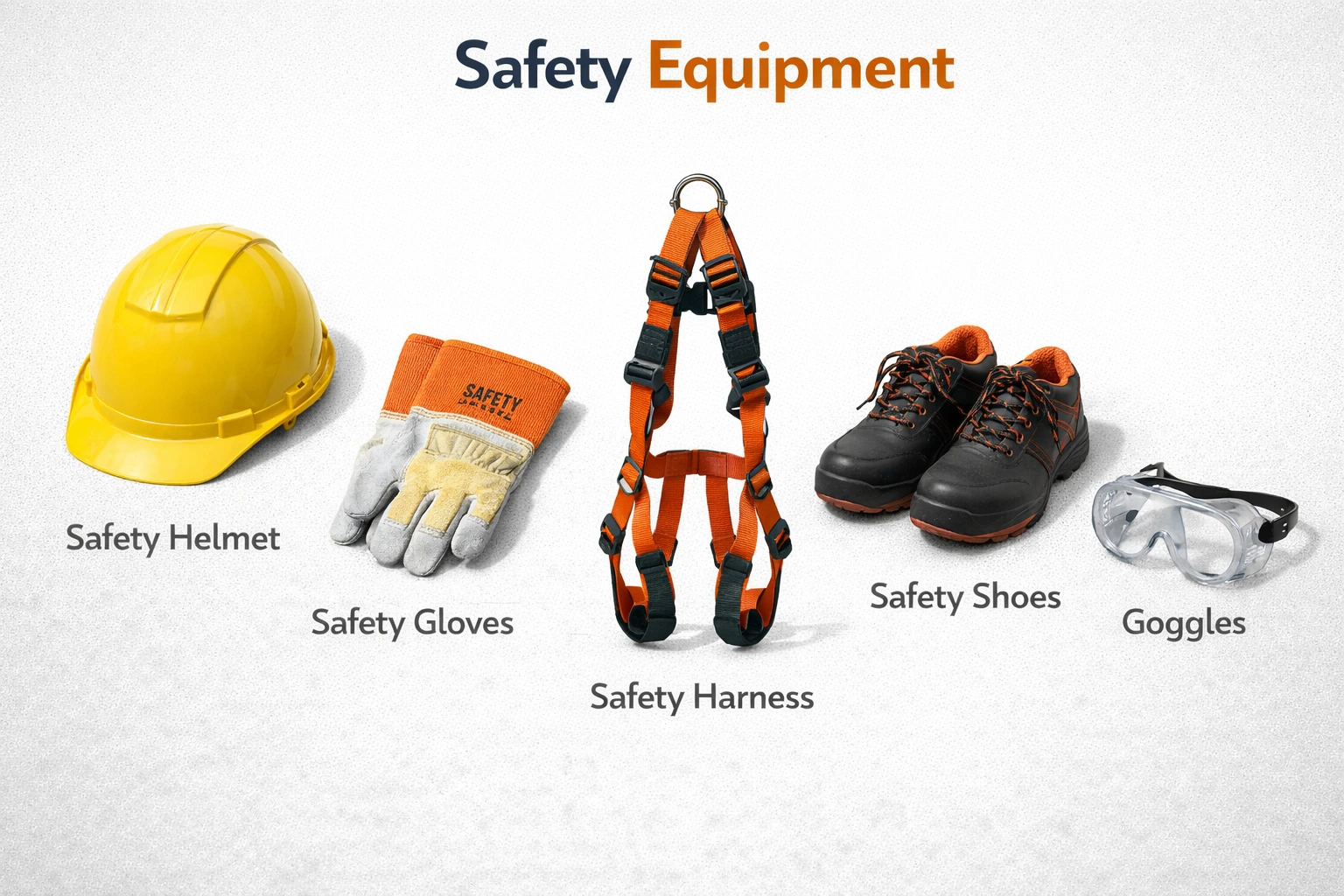
- Safety Helmet
- Protects against head injuries.
- Safety Gloves
- Prevents electrical and mechanical injuries.
- Safety Harness
- Essential for rooftop installations.
- Safety Shoes
- Protect feet from heavy objects and electrical hazards.
- Goggles
- Protect eyes during drilling and cutting.
Specialized Tools for Solar Installation
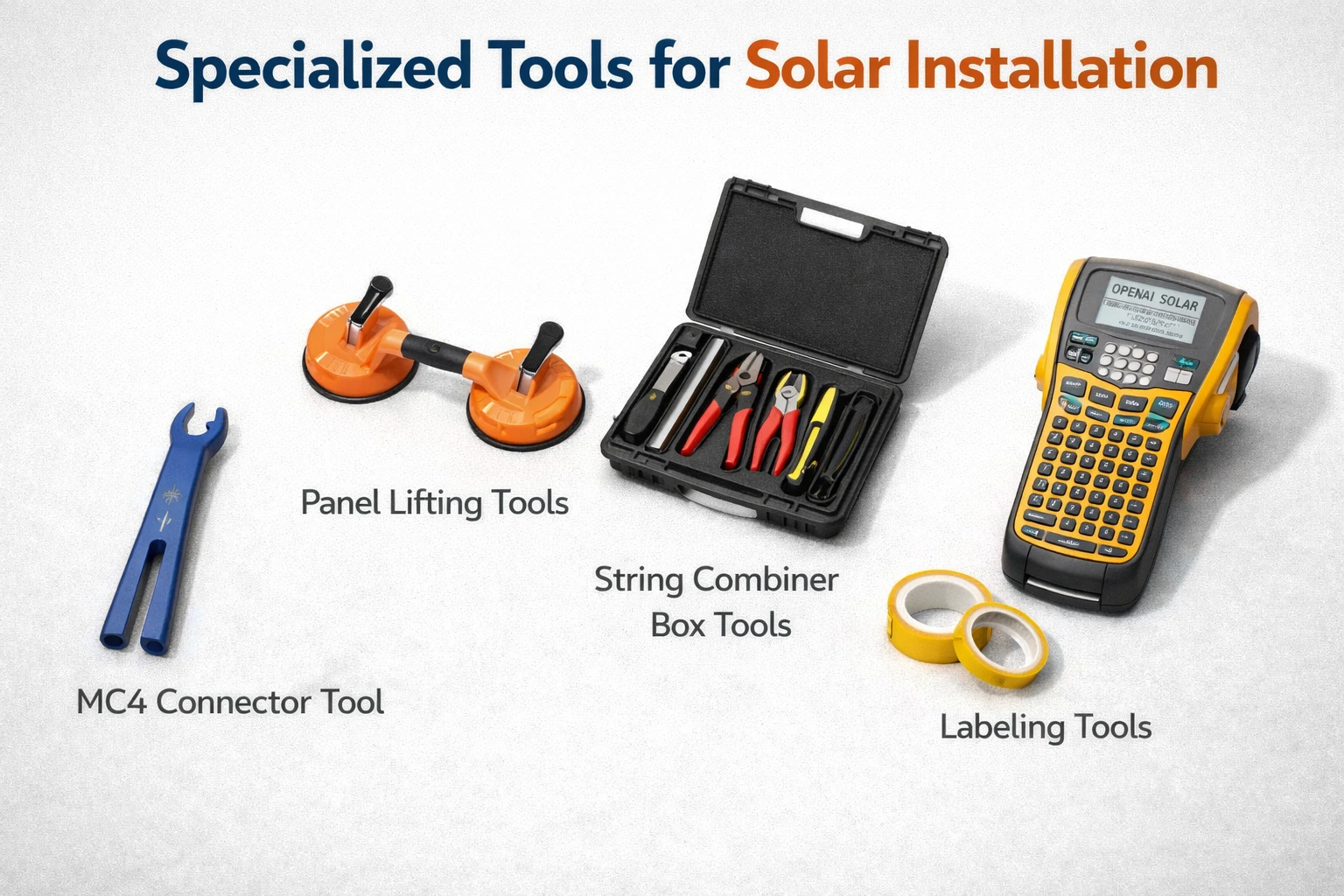
- MC4 Connector Tool
- Used for connecting solar cables securely.
- Panel Lifting Tools
- Used to safely lift and position solar panels.
- String Combiner Box Tools
- Used for assembling and wiring combiner boxes.
- Labeling Tools
- Used for marking cables and components.
Step-by-Step Use of Tools During Installation
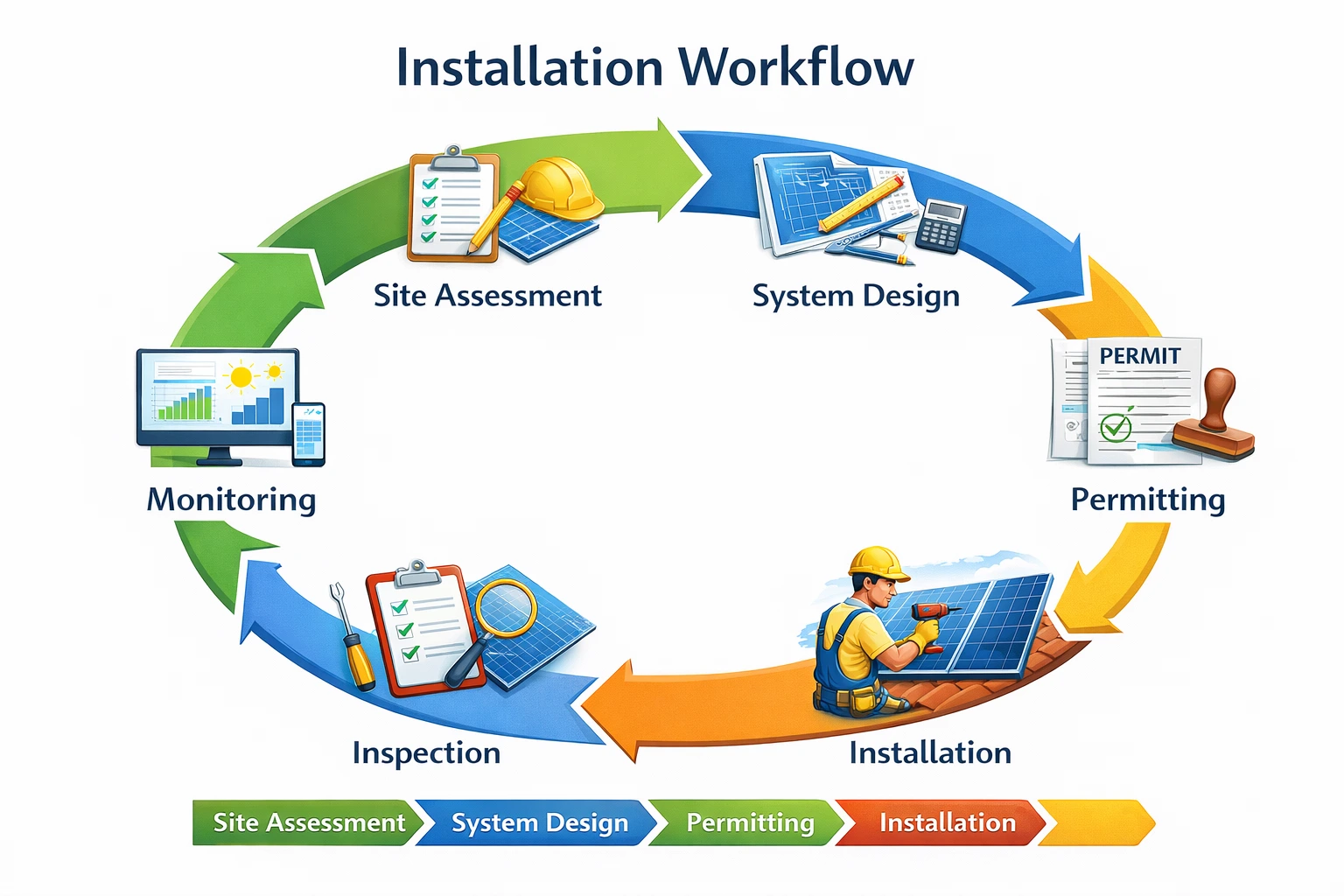
Step 1 – Site Preparation
- Use measuring tools and drilling machines to prepare the installation area.
Step 2 – Mounting Structure Installation
- Use spanners, torque wrenches, and drilling tools.
Step 3 – Panel Installation
- Use lifting tools and alignment instruments.
Step 4 – Electrical Wiring
- Use wire strippers, crimping tools, and cable cutters.
Step 5 – Testing and Commissioning
- Use a multimeter, clamp meter, and insulation tester.
Impact on Solar Panel System Cost
Using proper tools helps:
- Reduce installation time
- Prevent damage to components
- Improve system efficiency
- Lower maintenance costs
- Optimize the cost of solar per kWh installed
Common Mistakes to Avoid
- Using improper or low-quality tools
- Ignoring safety equipment
- Incorrect torque application
- Poor cable connections
- Skipping testing procedures
Best Practices for Installers
- Always use certified tools
- Maintain tools regularly
- Follow safety protocols
- Use proper torque settings
- Test the system thoroughly after installation
Conclusion
The installation of solar PV panels requires a wide range of tools and tackles to ensure safe, efficient, and high-quality work. By using the right tools at each stage, from mounting and wiring to testing and commissioning, installers can improve system performance and reduce errors. Proper tool usage also helps in optimizing solar energy installation cost and ensuring long-term reliability.
Understanding and using the correct tools is essential for professional solar installers. Additionally, adherence to safety and quality standards set by the Ministry of New and Renewable Energy ensures reliable and safe renewable solar system implementation.
With the right tools and best practices, solar professionals can optimize solar panel system cost, enhance solar electricity generation, and contribute to the growth of sustainable solar energy for home use and large-scale renewable solar projects.
FAQs
Q1. What are the essential tools for solar panel installation?
Ans: Spanners, screwdrivers, drilling machines, multimeters, and safety equipment are essential tools.
Q2. Why is a torque wrench important in solar installation?
Ans: It ensures bolts are tightened correctly, preventing structural issues.
Q3. What tools are used for electrical connections?
Ans: Wire strippers, crimping tools, cable cutters, and multimeters.
Q4. Why is safety equipment necessary?
Ans: It protects installers from injuries and ensures safe working conditions.
Q5. Are specialized tools required for solar installation?
Ans: Yes, tools like MC4 connector tools and irradiance meters are specifically used in solar systems.
Maintenance of Cables, Connectors & Switches Guide
A complete guide to maintaining cables, connectors, and switches in solar PV systems, including inspection, cleaning, testing, and preventive maintenance for long-term system reliability.
Solar Farm Development: Overcoming the Rising Challenge of Wiring Costs
Wiring costs are soaring in solar farms, affecting project budgets and timelines. Learn why infrastructure is becoming a key challenge.
Safe Handling of Solar PV Components: Complete Guide for EPC & Installers
Proper material handling is crucial in solar PV projects to avoid damage, reduce losses, and ensure safety. This guide covers best practices for transporting, storing, and installing solar components efficiently.
How Solar Energy Generation Is Calculated: A Simple Step-by-Step Guide
Understanding how solar energy generation is calculated helps estimate system output, savings, and ROI. This step-by-step guide explains the formula, key factors, and real-world examples to make solar energy calculation simple and practical.
Solar Inverters India: How to Choose the Best for Your Solar System
India’s solar market offers a wide range of inverters, making selection challenging. This guide explains key factors to consider, helping users choose the right inverter for residential, commercial, and industrial solar projects effectively.
AC Combiner Box Installation in Solar PV Systems Guide
A step-by-step guide to AC combiner box installation in solar PV systems, covering setup, wiring, and safety best practices.

Breakthrough in Solar Technology: 33.2% Efficient Perovskite-Silicon Cell
Scientists achieve a breakthrough in solar technology with a perovskite-silicon tandem cell reaching a record 33.2% efficiency for higher energy output.

Solar PPA for Commercial Buildings: Cost, Benefits & Savings
Looking to cut electricity bills without investing in solar assets? Commercial Solar PPA providers offer zero-investment solar solutions where businesses pay only for the power generated—simple, risk-free, and cost-effective.