
Safety is one of the most critical aspects of any solar power system. Solar installations are exposed to outdoor conditions, high voltages, and large metal structures, making them vulnerable to electrical faults and lightning strikes. Proper earthing (grounding) and lightning protection are essential to protect solar panels, inverters, equipment, buildings, and human life.
For every solar PV installer, understanding earthing systems and lightning protection methods is mandatory to ensure safe, compliant, and long-lasting solar installations. This guide explains the concept, types, requirements, and importance of earthing and lightning protection in solar PV systems.
What Is Earthing (Grounding)?
Definition
Earthing is the process of connecting electrical equipment to the earth using a low-resistance conductor. This allows fault current to safely flow into the ground instead of passing through equipment or people.
Earthing prevents electric shock, equipment damage, and fire hazards.
Why Earthing Is Required in Solar Systems
Solar PV systems generate DC power and convert it into AC power through inverters. Faults such as insulation failure, short circuits, or leakage current can occur.
Proper earthing helps to:
- Protect people from electric shock
- Protect the inverter and solar panels
- Prevent equipment damage
- Provide a safe fault current path
- Ensure system stability
- Reduce electrical noise
Earthing is mandatory under electrical safety standards.
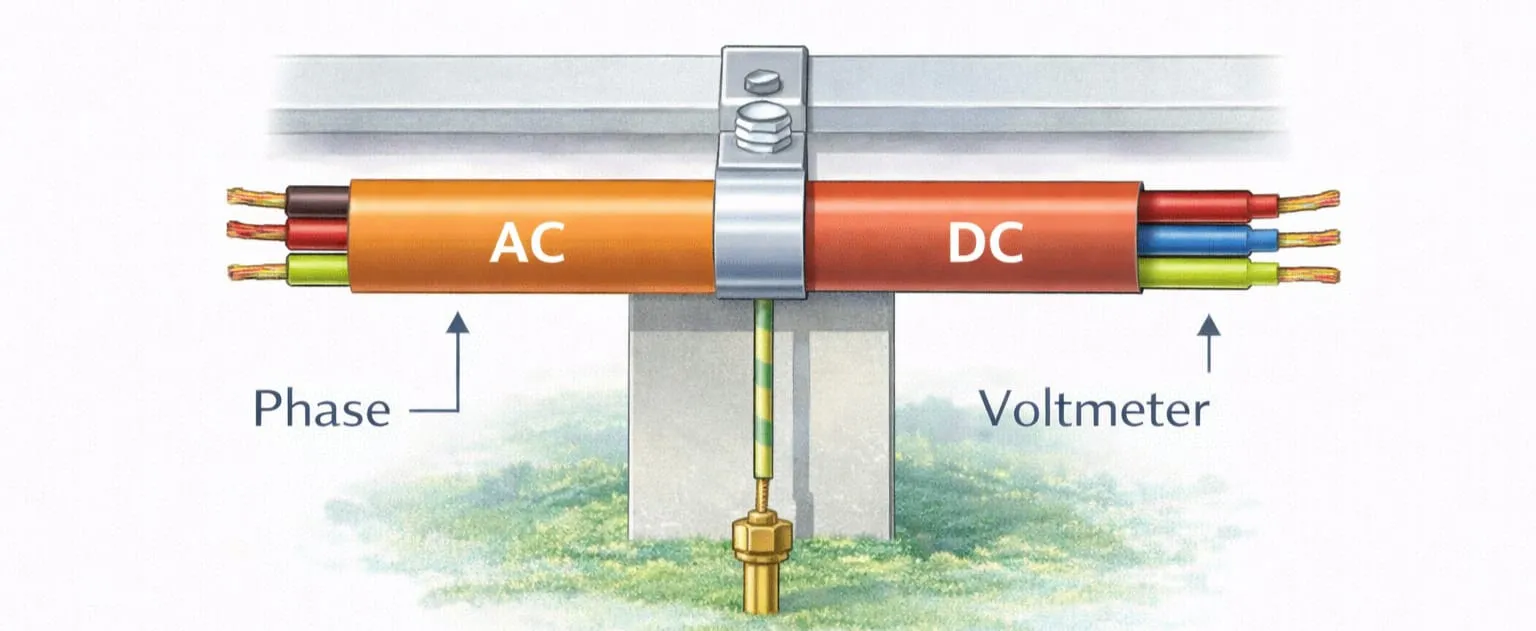
Types of Earthing in Solar Installations
Solar systems typically require multiple earthing points.
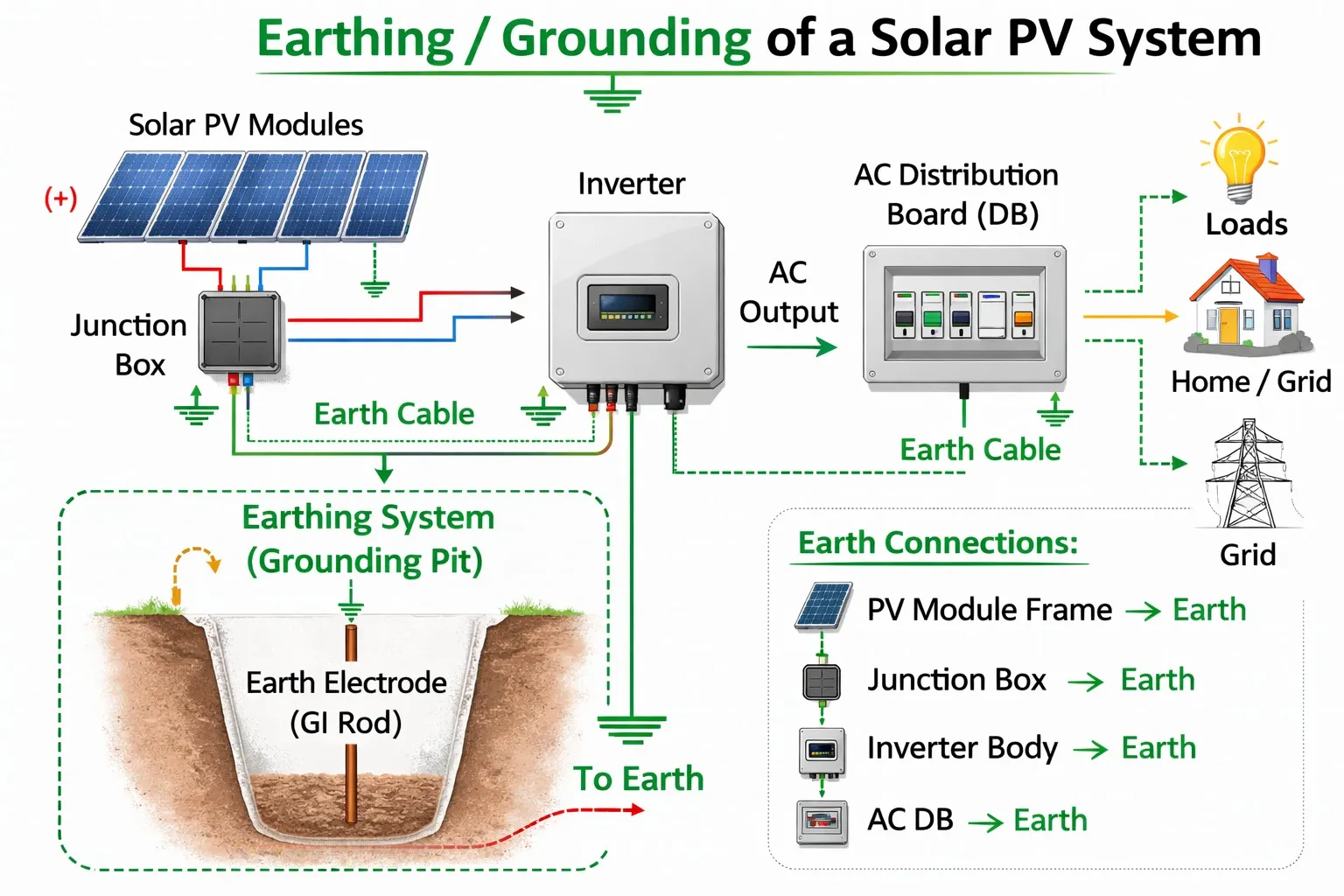
1. Equipment Earthing
This connects the metal parts of solar equipment to the earth.
Includes:
- Solar panel frames
- Module mounting structure
- Inverter body
- Junction boxes
Purpose: Prevents electric shock if metal parts become energised.
2. DC Earthing
This protects the DC side of the solar system.
Includes:
- Solar panel strings
- DC combiner boxes
Purpose: Protects panels and wiring from fault currents.
3. AC Earthing
This protects the AC side of the system.
Includes:
- Inverter AC output
- Distribution panel
Purpose: Ensures safe operation of connected loads.
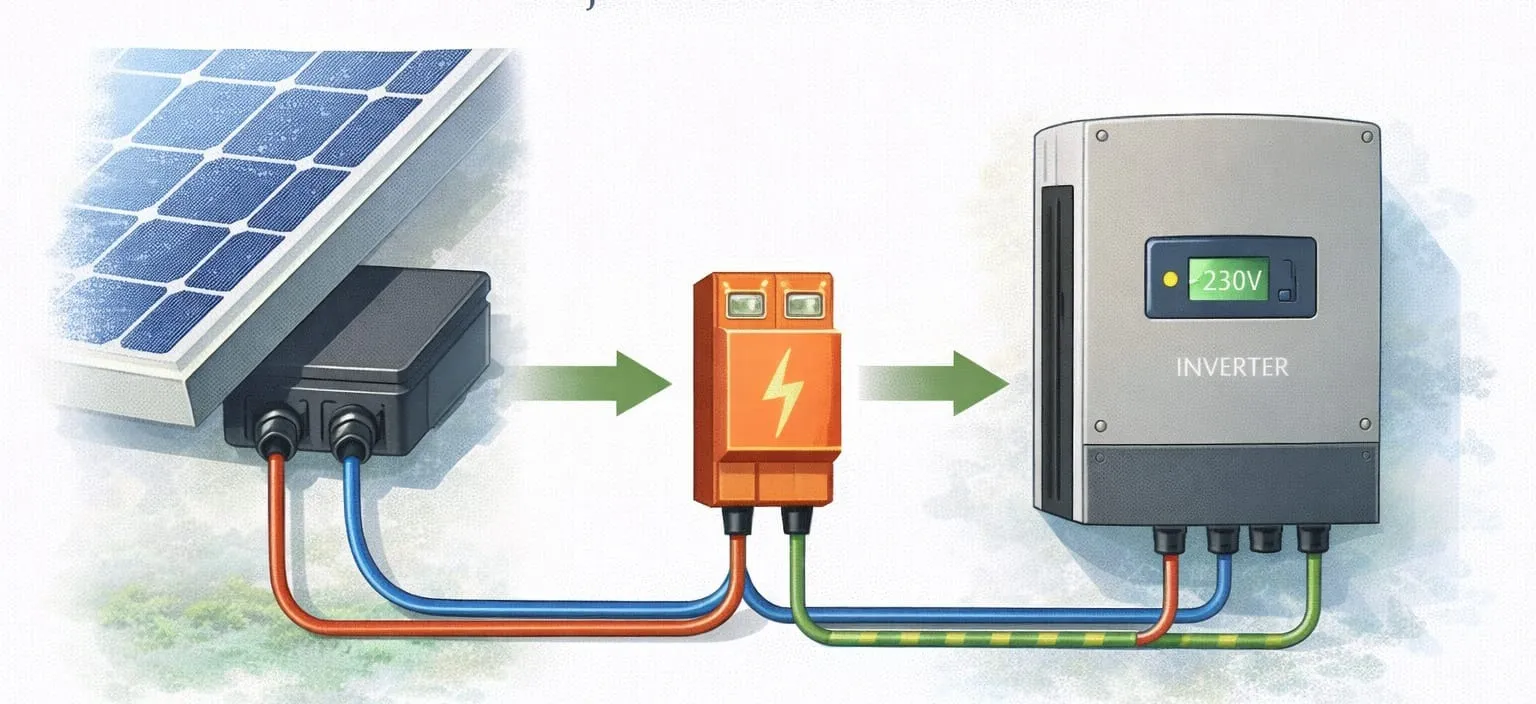
4. Lightning Earthing
This provides a safe path for lightning current.
Includes:
- Lightning arrestor
- Dedicated earth pit
Purpose: Protects the system during lightning strikes.
What Is Lightning Protection?
Solar panels are usually installed on rooftops or open land, making them highly exposed to lightning.
Lightning protection systems (LPS) safely divert lightning current into the ground, preventing damage.
Components of Lightning Protection System
1. Lightning Arrestor
A lightning arrestor is installed at the highest point of the solar installation. It captures lightning strikes and directs current safely to earth.
2. Down Conductor
This conductor connects the lightning arrestor to the earth pit. It safely carries lightning current to ground.
3. Earth Pit
Earth pits dissipate lightning current into the soil. Low resistance ensures effective protection.
Why Lightning Protection Is Critical in Solar Systems
Without lightning protection, lightning can:
- Destroy solar panels
- Damage inverter electronics
- Cause fire hazards
- Damage the electrical wiring
- Interrupt power generation
Proper lightning protection significantly reduces risk.
Earthing Resistance Requirement
Low earth resistance ensures effective fault current flow.
Typical recommended values:
- Equipment earthing: Less than 5 ohms
- Lightning earthing: Less than 2 ohms
- Industrial systems: 1 ohm preferred
Lower resistance provides better protection.
Types of Earthing Methods Used in Solar Systems
Pipe Earthing
- The most common and cost-effective method.
- Uses a GI pipe inserted into the ground.
Plate Earthing
- Uses copper or GI plate buried underground.
- Provides excellent conductivity.
Chemical Earthing
- Uses conductive chemical compounds to reduce resistance.
- Ideal for solar plants and industrial installations.
Importance of Earthing for Solar Installers
Every solar installer must ensure proper earthing because it helps in:
1. Safety of Personnel
Prevents electric shock during maintenance.
2. Protection of Expensive Equipment
Inverters and solar panels are sensitive to electrical faults.
3. Compliance with Electrical Standards
Mandatory under national and international safety codes.
4. Lightning Protection
Protects systems during thunderstorms.
5. Stable System Performance
Reduces voltage fluctuations and electrical interference.
Typical Earthing Requirement for Solar System
- Small residential solar system: 2 to 3 earth pits
- Industrial solar plant: 4 to 8 earth pits or more
Includes:
- Structure earthing
- DC earthing
- AC earthing
- Lightning earthing
Lightning Protection for Rooftop vs Ground-Mounted Solar
Rooftop solar:
- Lightning arrestor installed above panel level
- Connected to a dedicated earth pit
Ground-mounted solar:
- Multiple lightning arrestors
- Grid-based lightning protection
Large solar farms require advanced protection systems.
Common Mistakes Solar Installers Must Avoid
- Using a shared earth pit for all equipment
- High earth resistance
- Poor conductor connections
- Improper lightning arrestor placement
- Ignoring earthing maintenance
Proper design ensures safety and compliance.
Maintenance of Earthing System
Regular inspection ensures reliability.
Maintenance includes:
- Checking earth resistance
- Inspecting connections
- Preventing corrosion
- Watering earth pits if required
Proper maintenance ensures long-term protection.
Conclusion
Proper earthing and lightning protection are essential components of every solar installation. They ensure safety, protect equipment, and maintain reliable system performance. Earthing provides a safe path for fault current, while lightning protection prevents damage from lightning strikes.
For solar installers, correct earthing design is not just a technical requirement but a critical safety responsibility. It protects solar panels, inverters, buildings, and human life from electrical hazards.
As solar installations continue to expand across residential, commercial, and industrial sectors, implementing proper grounding and lightning protection ensures long-term system reliability, regulatory compliance, and safe renewable energy generation.
FAQs
Q1. Why is earthing required in solar systems?
Ans: It protects people and equipment from electrical faults.
Q2. What is the ideal earthing resistance for solar systems?
Ans: Generally less than 5 ohms.
Q3. Is lightning protection mandatory for solar installations?
Ans: Yes, especially for rooftop and ground-mounted systems.
Q4. How many earth pits are required for solar installation?
Ans: Typically, 2 to 6 ,depending on system size.
Q5. What is a lightning arrestor?
Ans: It safely diverts lightning current to earth.
UP Discoms Propose 9.21% Electricity Tariff Hike for 2015-16
Uttar Pradesh Discoms propose a 9.21% increase in electricity tariffs for 2015-16, impacting residential, commercial, and industrial consumers across the state.
Solar PV Conduit & Cable Routing Plan Guide
A complete guide to preparing solar PV conduit and cable routing plans, including layout design, routing methods, and installation best practices.
Measure and Record ESS Voltage in Solar PV Systems
A complete guide to measuring and recording energy storage system voltage for battery performance monitoring, troubleshooting, and maintenance.

Everything You Should Know About Solar Batteries
Discover how solar batteries store excess energy, maximize your solar system’s efficiency, and provide reliable power during outages. Learn about the types, benefits, lifespan, and maintenance tips to make the most of your solar investment.
How to Inspect and Maintain Solar Arrays
A complete guide to solar array inspection and maintenance, helping improve system reliability, energy output, and long-term performance through routine inspections and preventive care.
BOOT vs PPA Explained: Find the Best Way to Finance Your Solar Plant
Choosing between the PPA and BOOT models can significantly impact your solar savings. This guide compares both financing options to help businesses make the right decision.
Should You Switch to Solar in India? Complete Guide
India has become a hot-selling solar market and people are interested in installing solar systems in their homes as well as in industries and factories.

Solar Site Assessment: Shadow Analysis for Maximum Energy Generation
Shadow analysis is a critical step in solar site assessment. It helps solar installers identify shading obstacles and optimize panel placement for maximum energy generation.