
In solar photovoltaic (PV) installations, long-term performance is not only dependent on design and installation quality but also on how well the system is protected against corrosion and weather-related damage. Exposure to moisture, dust, temperature variations, and pollutants can gradually degrade system components, leading to reduced solar electricity generation and increased solar installation charges.
To ensure durability and safety, installers must apply proper corrosion protection and weatherproofing techniques. Environmental protection measures are essential for maintaining the reliability of renewable solar systems.
This blog provides a complete guide to corrosion protection and weatherproofing in solar PV installations, helping prevent seepage, structural damage, and performance loss.
Why Corrosion Protection is Important in Solar Installations
Solar PV systems are exposed to harsh environmental conditions such as:
- Rain and humidity
- Dust and pollution
- Temperature fluctuations
- UV radiation
Without proper protection, these factors can cause:
- Rusting of mounting structures
- Degradation of electrical components
- Reduced system efficiency
- Increased maintenance and solar energy installation cost
Common Causes of Corrosion in Solar Systems
1. Moisture Exposure
Water accumulation leads to rusting and material degradation.
2. Chemical Exposure
Pollution and chemicals can accelerate corrosion.
3. Galvanic Corrosion
Occurs when different metals come in contact.
4. Poor Coating or Finishing
Low-quality coatings lead to faster deterioration.
Components Vulnerable to Corrosion
- Mounting structures
- Fasteners (nuts, bolts)
- Cable trays and conduits
- Junction boxes
- Electrical connections
Proper protection of these components ensures efficient solar electricity generation.
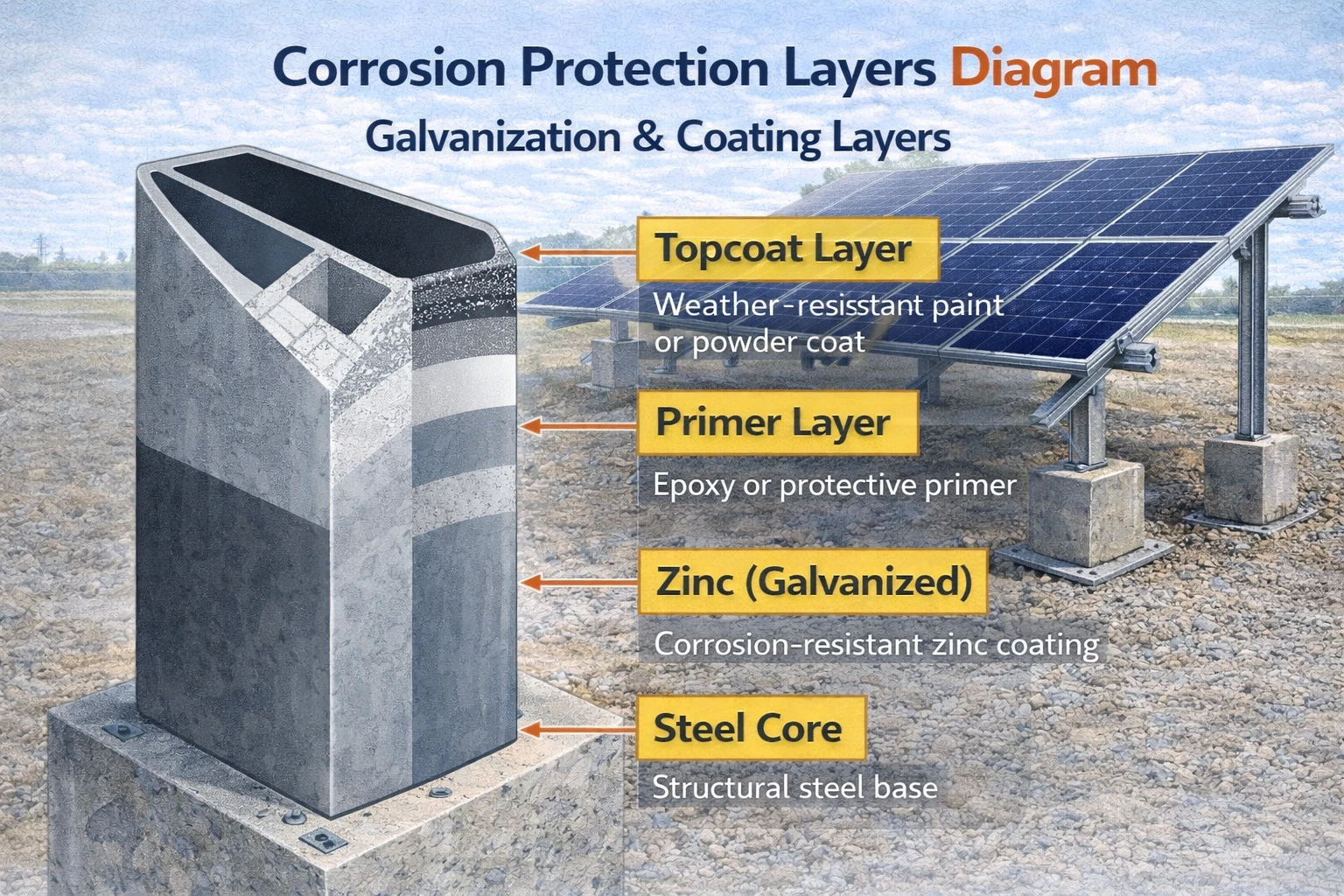
Corrosion Protection Methods
1. Galvanization
Description
Applying a zinc coating to steel components.
Benefits
- High resistance to rust
- Long-lasting protection
2. Powder Coating
Description
Applying a protective powder layer on metal surfaces.
Benefits
- Smooth finish
- Resistant to environmental damage
3. Anti-Corrosion Paint
Description
Special coatings to protect surfaces.
Benefits
- Easy application
- Cost-effective
4. Use of Stainless Steel
Description
Using corrosion-resistant materials.
Benefits
- Long lifespan
- Reduced maintenance
5. Proper Material Selection
Choosing compatible materials prevents galvanic corrosion.
Weatherproofing in Solar Installations
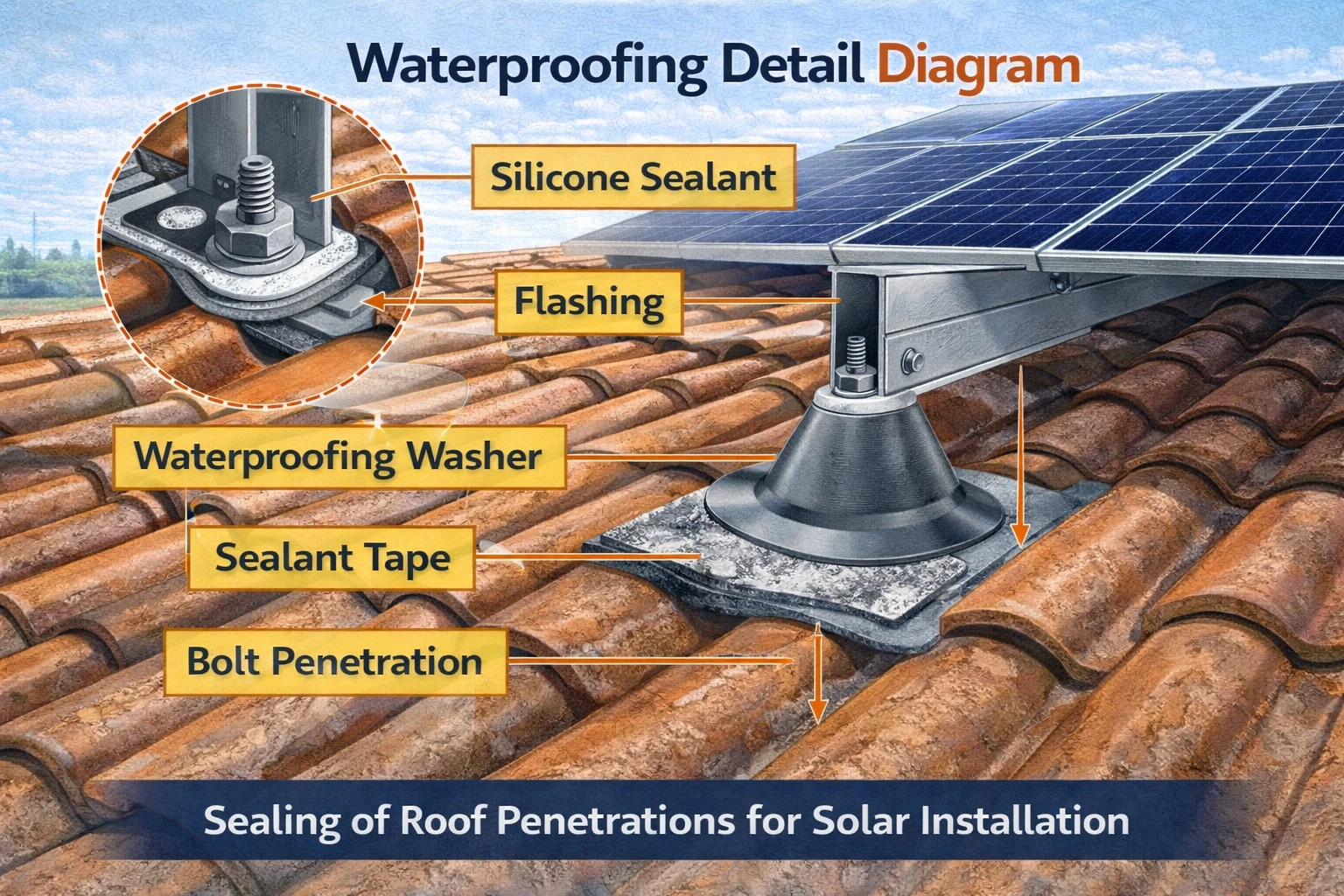
1. Waterproofing of Roof Penetrations
Seal all mounting points to prevent water leakage.
2. Cable Sealing
Use proper glands and sealants to prevent water ingress.
3. Junction Box Protection
Ensure IP-rated enclosures for electrical safety.
4. Drainage Management
Ensure proper water flow to avoid accumulation.
5. Protection of Electrical Components
Use weatherproof enclosures and covers.
Steps to Apply Corrosion Protection & Weatherproofing
Step 1 – Site Assessment
Evaluate environmental conditions such as humidity and pollution.
Step 2 – Select Appropriate Materials
Choose corrosion-resistant materials and coatings.
Step 3 – Apply Protective Coatings
Use galvanization, paint, or powder coating.
Step 4 – Seal All Openings
Seal:
- Roof penetrations
- Cable entry points
Step 5 – Install Weatherproof Components
Use IP-rated junction boxes and connectors.
Step 6 – Inspect and Test
Check for gaps, leaks, and coating defects.
Step 7 – Regular Maintenance
Inspect periodically to ensure protection remains effective.
Impact on Solar Panel System Cost
Proper protection helps:
- Reduce maintenance costs
- Extend system lifespan
- Improve efficiency
- Optimize cost of solar per kWh installed
Neglecting protection increases solar energy installation cost over time.
Conclusion
Applying corrosion protection and weatherproofing is a critical step in solar PV installations to ensure durability, safety, and efficiency. By using appropriate materials, applying protective coatings, and sealing all vulnerable points, installers can prevent seepage and structural damage.
Environmental protection measures are essential for reliable solar installations. Additionally, adherence to standards set by the Ministry of New and Renewable Energy ensures safety and performance.
With proper protection practices, solar professionals can optimize solar panel system cost, enhance solar electricity generation, and support sustainable solar energy for home use and large-scale renewable solar solutions.
FAQs
Q1. Why is corrosion protection important in solar installations?
Ans: It prevents rusting and ensures long-term durability of components.
Q2. What are common methods of corrosion protection?
Ans: Galvanization, powder coating, anti-corrosion paint, and stainless steel usage.
Q3. How is weatherproofing achieved in solar systems?
Ans: By sealing roof penetrations, cable entries, and using weatherproof enclosures.
Q4. What happens if weatherproofing is ignored?
Ans: It can lead to water leakage, damage, and reduced system performance.
Q5. Does corrosion protection affect solar panel system cost?
Ans: Yes, it reduces maintenance and long-term costs.
How DISCOMs Implement Net Metering for Solar Power Plants
Discover the process of net metering implementation by DISCOMs for solar power plants. Understand the benefits, billing mechanism, and how it maximizes solar energy utilization.
Solar Projects Challenges in India: Module Supply Shortages and Policy Delays Slow Growth
India’s utility-scale solar projects face delays due to module supply shortages and policy challenges, impacting the growth of renewable energy.
What Is Renewable Energy? What Is the Best Source of Renewable Energy and Why? – Complete Guide
Renewable energy comes from natural sources like sunlight, wind, water, and biomass that are constantly replenished. As India accelerates its transition toward clean energy, understanding different renewable energy sources and identifying the most efficient and cost-effective option is crucial. This complete guide explains renewable energy types, their advantages, and compares them to determine the best source based on sustainability, scalability, and long-term benefits.

Steps for Conducting a Load Assessment Before Solar Installation and Its Requirements
Load assessment is an essential step before installing a solar PV system. It helps determine electricity consumption and ensures accurate system sizing for optimal solar performance.
Delhi Government Pledges to Boost Renewable Energy Generation
Delhi, the capital city of India, is moving towards a greener future with an ambitious plan to generate an additional 6,000 MW of electricity using renewable energy sources.
Solar Loans, Subsidies & EMI Plans: Financing Made Easy
Explore solar loans, government subsidies, and flexible EMI plans to make installing solar panels affordable and hassle-free.
Faulty Solar PV Module Detection Using Shading Test
A complete guide to detecting faulty solar PV modules using the shading test and ammeter readings, helping installers quickly identify underperforming modules and restore system performance.
Developers fear unfair state-specific levies will make solar more expensive
Developers in India are concerned that state-specific levies on solar projects could increase costs, slow adoption, and impact the growth of renewable energy across residential, commercial, and industrial sectors.