
Sloped roof solar installations are one of the most common methods for deploying solar energy for home use, especially in residential and small commercial buildings. A critical aspect of these installations is the secure fixing of roof attachments and anchors, which ensures that the mounting structure remains stable, leak-proof, and durable over time.
Improper anchoring can lead to structural instability, water seepage, reduced solar electricity generation, and increased solar installation charges. Correct installation of roof attachments is essential for safe and efficient solar PV systems.
This blog provides a complete step-by-step guide to installing roof attachments and anchors for sloped roof solar structures, ensuring safety, performance, and optimized solar panel system cost.
What are Sloped Roof Solar Attachments and Anchors?
Roof attachments and anchors are components used to secure solar mounting structures to the roof surface.
They include:
- Roof hooks
- Anchor bolts
- L-feet brackets
- Clamps
These components transfer loads from the solar panels to the building structure.
Importance of Proper Installation
Correct installation ensures:
- Structural stability
- Resistance to wind uplift
- Leak-proof roofing
- Long-term durability
- Efficient solar electricity generation
Improper installation can increase solar energy installation cost due to repairs and maintenance.
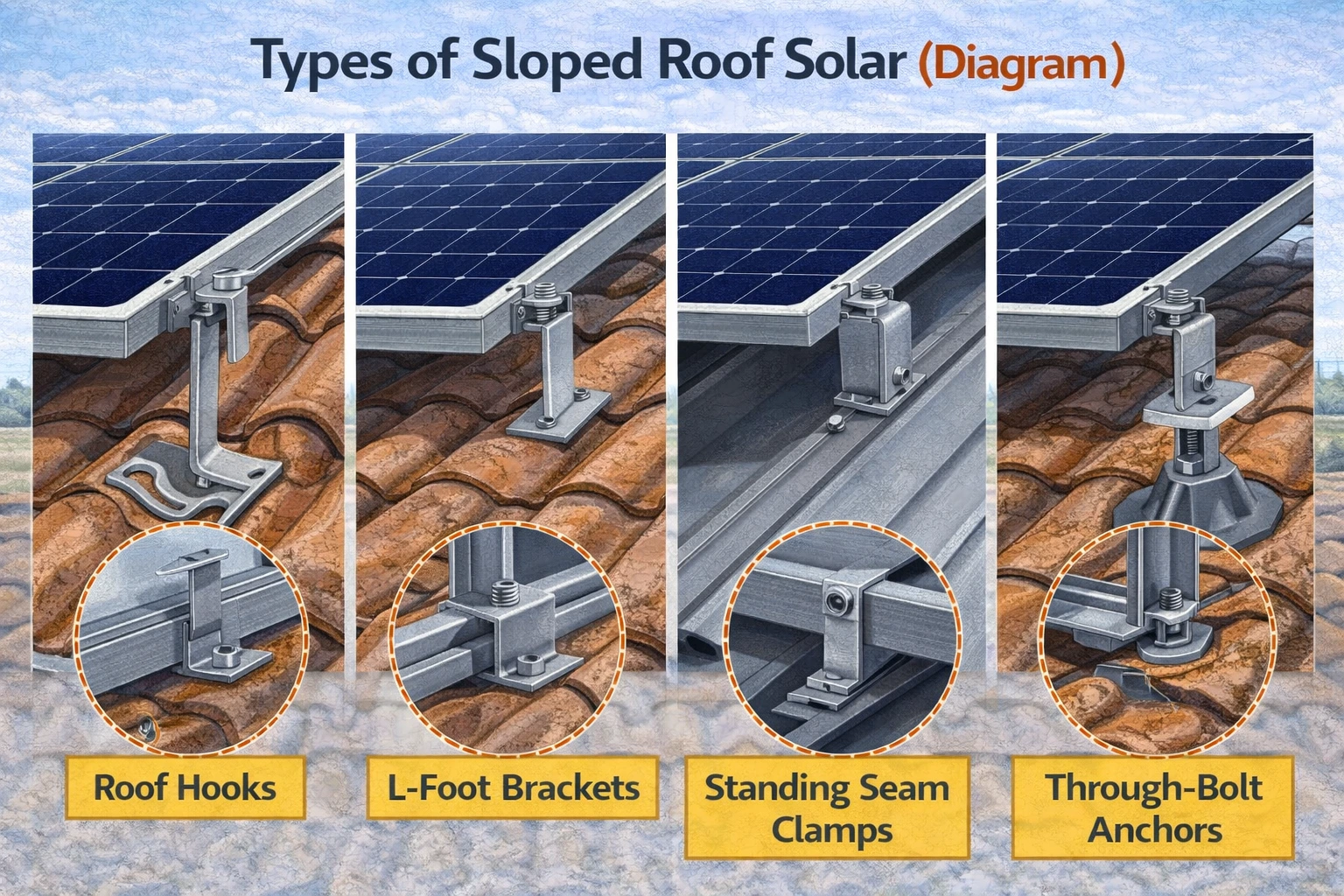
Types of Sloped Roof Solar
1. Roof Hooks
- Used for tile roofs
- Attached to rafters
2. L-Foot Brackets
- Used for metal and RCC roofs
- Fixed using bolts
3. Standing Seam Clamps
- Used for metal roofs
- No drilling required
4. Through-Bolt Anchors
- Fixed directly through roof structure
- Provides strong support
Tools and Materials Required
Tools
- Drilling machine
- Torque wrench
- Spanners
- Measuring tape
- Spirit level
Materials
- Roof attachments (hooks, brackets)
- Anchor bolts
- Fasteners
- Sealants
- Flashing materials
Step-by-Step Installation Process
Step 1 – Site Assessment
Evaluate:
- Roof type (tile, metal, RCC)
- Roof condition
- Structural strength
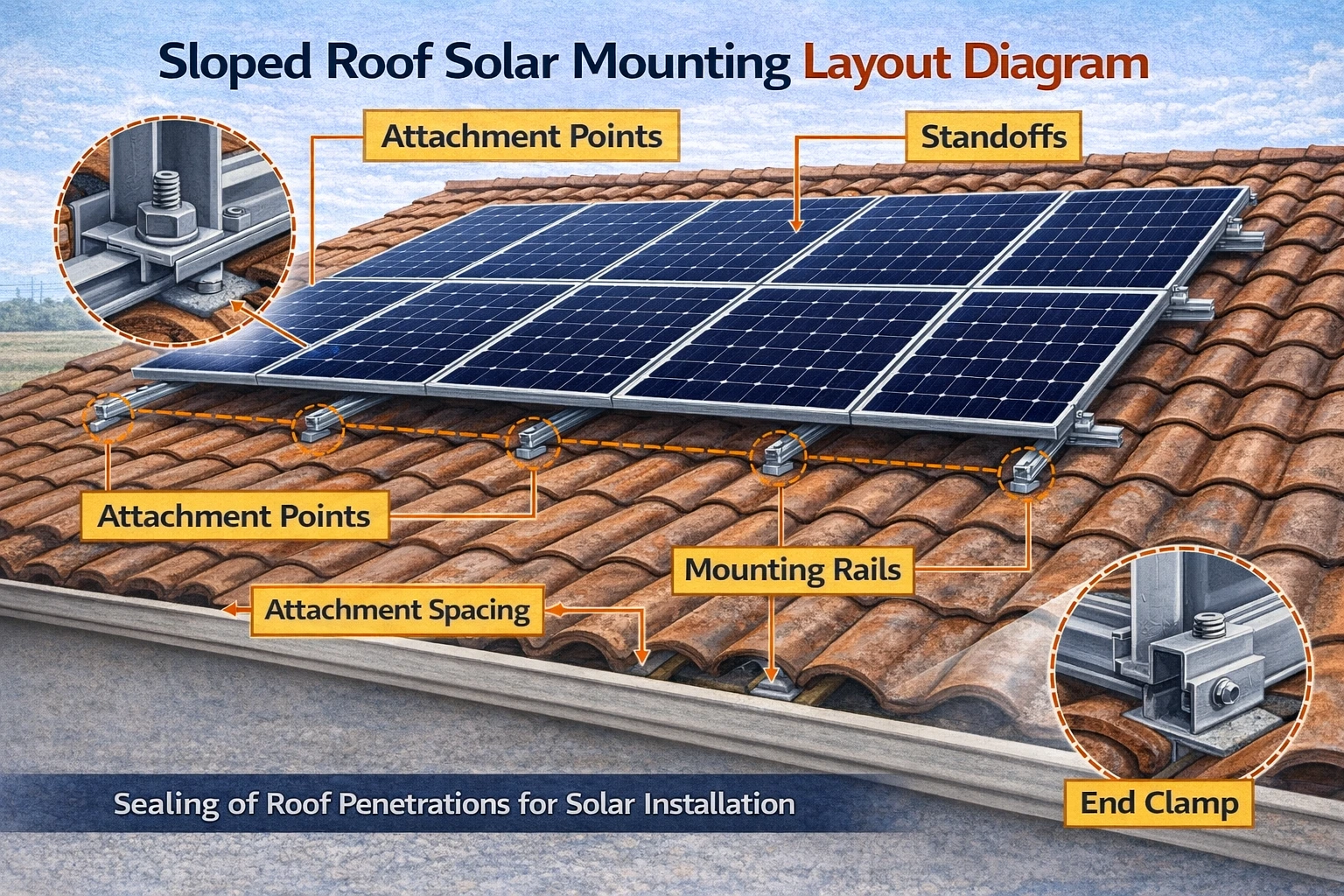
Step 2 – Mark Attachment Points
- Identify rafters or structural supports
- Mark positions as per design
Step 3 – Drill Holes
- Drill at marked locations
- Ensure correct depth and alignment
Step 4 – Install Anchors
- Insert anchor bolts or fasteners
- Fix securely to roof structure
Step 5 – Attach Sloped Roof Solar Mounting Components
- Fix hooks or brackets
- Ensure proper alignment
Step 6 – Apply Waterproofing
- Use sealants and flashing
- Prevent water leakage
Step 7 – Install Mounting Rails
- Attach rails to roof attachments
- Ensure correct spacing and alignment
Step 8 – Tighten and Secure
- Use torque wrench
- Ensure proper fastening
Step 9 – Final Inspection
- Check alignment
- Verify waterproofing
- Ensure stability
Waterproofing Techniques
1. Use of Flashing
Prevents water entry around attachments.
2. Sealants
Seal drilled holes and joints.
3. Proper Installation Technique
Avoid damaging roof materials.
Quality Checks
1. Alignment Check
Ensure all attachments are aligned.
2. Tightness of Fasteners
Verify proper torque application.
3. Leak Testing
Check for water seepage.
4. Structural Stability
Ensure attachments are secure.
Conclusion
The installation of roof attachments and anchors is a crucial step in sloped roof solar PV systems that directly impacts system safety, durability, and performance. By following proper installation procedures, ensuring effective waterproofing, and conducting quality checks, installers can achieve reliable and efficient solar installations.
Correct mounting and anchoring practices are essential for successful solar projects. Additionally, compliance with standards set by the Ministry of New and Renewable Energy ensures safety and quality.
With the right approach, solar professionals can optimize solar panel system cost, enhance solar electricity generation, and contribute to sustainable solar energy for home use and large-scale renewable solar solutions.
FAQs
Q1. What are roof attachments in solar PV systems?
Ans: They are components used to secure mounting structures to the roof.
Q2. Why is waterproofing important in roof attachment installation?
Ans: It prevents water leakage and structural damage.
Q3. Which attachment is used for tile roofs?
Ans: Roof hooks are commonly used for tile roofs.
Q4. How does anchoring affect solar panel system cost?
Ans: Proper anchoring reduces maintenance and long-term costs.
Q5. Are safety measures necessary during installation?
Ans: Yes, they ensure safe working conditions and prevent accidents.

How to Check Materials Received on Site for Solar PV Projects: Complete Inspection Checklist
Ensuring the quality of materials received at site is critical for successful solar PV installation. This guide provides a detailed inspection checklist to verify solar components before installation.

Complete Guide to Net Metering and Electricity Bill Savings
Learn how net metering lets you sell excess solar energy back to the grid, reducing your electricity bills and maximizing your solar investment.
Solar Cable Termination: Tools, Steps & Best Practices
A complete guide to cable continuity testing in solar installations, including testing procedures, tools, and safety best practices.
Renewable Energy Hits New Heights: 440 GW Capacity in 2023
Learn how global renewable energy capacity is set to surpass 440 GW in 2023, marking record growth and a major shift toward clean, sustainable power.
Cut Factory Electricity Bills with Solar Energy: Smart Power Saving Guide for Industries in India
Discover how solar energy helps factories in India reduce electricity bills, improve ROI, and achieve long-term industrial power savings.

Rooftop Solar for Factories: Cost, Benefits, ROI & Installation Guide in India
Learn how rooftop solar for factories in India lowers power costs with high ROI, faster payback, and long-term energy savings for industrial facilities.

US Lawmakers Approve Tariffs on Solar Imports from Southeast Asia
US lawmakers vote to restore tariffs on solar imports from Southeast Asia, affecting pricing, supply, and the solar industry landscape.
COP27: Harnessing Solar Energy for a Sustainable Future
COP27 is the latest in a long line of global climate conferences, which have been held regularly since 1994. The United Nations Framework Convention on Climate Change (UNFCCC) was created at the 1992 Rio Earth Summit.