
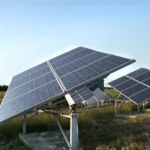
Sir! Solar Mein Itna Chalta Hai!” When to Reject a Site: The Truth About Shadow Analysis
Site Assessment & Shadow Analysis – An important step before Rooftop Solar PV Installation.
According to MNRE, approximate 10 sq. meters “Shadow Free” area is required for 1 kWp Rooftop Solar PV Installation. The term “Shadow Free” is very important and in this blog we will be discussing about “Site Assessment and Shadow Analysis for Rooftop Solar PV Installation”.
Shadow is one of the factors that will affect the performance of Solar PV system.
Your Solar PV System Array should be designed such that Shadow will not fall on the Solar PV Panels. Shadow can be from parapet walls, tanks, structures, trees, inter row shadow and other objects.
There are many objects , like parapet walls, water tanks , O/D units of AC’s, Dish of antennas, Mummty etc. which can cause shadow. As, shown in the picture above, the objects that are situated at the South Direction of the building will cause shadow on the Solar PV System. So, the system should be designed such that it avoids the shadow of these objects.
Ideally, Solar PV Rooftop System should be designed such that no shadow falls on array, on the day with longest shadow (i.e. usually from 9am to 3pm, on December 21 in Northern Hemisphere). For Shadow analysis from nearby objects and inter rows of solar array, “Solar Path Finder” should be used at the time of Site Assessment.
The thumb rule says, that we should leave at least 1.5 to 2 times the Height of object (placed in South of the building), to avoid the Shadow effect on the PV modules. The same goes with Inter Row Spacing of the Solar PV Array, at least 1.5 to 2 times the Height of the Structure should be left in between the two rows, to avoid the Shadow effect.
Now all you need is to cross check the layout design of the Rooftop Solar PV System, as provided by the installer or need to clarify this with the installer, that what distance they had left to reduce the losses due to shadow.
If it is less than 1.5 to 2 times the Object Height, and if he says “Sir! Solar Mein Itna Chalta Hai!!”, then you surely needs to change your installer.
We’ll be talking on more such issues in our future blogs.
Suggested Articles

Latest Solar Mounting Structures: Smarter, Stronger, and More Efficient
Learn how the latest solar mounting structures in 2025 improve efficiency, reduce costs, and power the future of solar installations.
100 kW Solar Plant Cost in Rajasthan: Latest Cost, Maintenance & Payback Time
Installing a 100 kW solar plant in Rajasthan costs around ₹40–60 lakh in, with annual savings up to ₹10–12 lakh. Discover maintenance needs, ROI, and payback period of 4–6 years.
Monitoring Services for Solar Plants by Smart Roof Solar to Maximize Performance and Efficiency
Smart Roof Solar provides advanced monitoring services for solar plants to ensure maximum performance and efficiency. With real-time data tracking and intelligent analytics, our monitoring solutions help detect issues early, reduce downtime, and enhance the overall energy yield of your solar system.
Top Solar Companies & Suppliers in Delhi/NCR – A Complete Guide
Looking for trusted solar panel suppliers in Delhi/NCR? Explore leading solar companies serving Gurgaon, Noida, Faridabad, Manesar, and Ghaziabad. Compare product quality, technology, and services to choose the right solar partner for your home, business, or factory.
Solar PV AC or DC: How Solar Electricity Is Generated
Total solar PV power represents the combined power output of a solar photovoltaic system. This guide explains its meaning, calculation, and how it directly impacts solar performance, efficiency, and long-term energy generation.
Improve Your Power Factor After Solar Installation: Complete Guide
Power factor after solar installation often fluctuates due to system design and load patterns. Learn the key causes, challenges, and solutions for better efficiency.

Researchers Develop Technique to Improve Durability of Perovskite Solar Cells
Researchers have introduced a new technique to enhance the durability of perovskite solar cells, paving the way for more reliable and long-lasting renewable energy solutions.
Renewable Energy Hits New Heights: 440 GW Capacity in 2023
Learn how global renewable energy capacity is set to surpass 440 GW in 2023, marking record growth and a major shift toward clean, sustainable power.