SECI Sets Record in Renewable Energy Trading, Surpasses ₹100 Billion
Solar Energy Corporation of India (SECI), a central government-owned company, has reported its highest-ever renewable power trading revenue of more than ₹100 billion (~$1.22 billion) in the financial year (FY) 2022-23.
The company is involved in various government programs that traded over 35 billion units of renewable energy in the fiscal year ending March 31. This was a significant increase of 59% from the previous year’s power trading volume.
SECI’s main source of income is the ₹0.07 (~0.00085)/kWh trading fees it charges on electricity sold to mostly state-owned distribution companies (DISCOMs). As an intermediary procurer, the company signs back-to-back power purchase agreements with developers and DISCOMs.
The agency is likely to be the intermediary procurer for the government’s proposed price pooling mechanism for solar power.
Under this proposal, SECI would also be able to sell any surplus power to open access consumers at a price that is at least equal to the uniform renewable energy tariff.
This could indicate SECI’s entry into the commercial and industrial (C&I) segment, as the agency could act as both intermediary and implementing agency for central pooling.
The Ministry of Power amended the Electricity Rules to implement a uniform renewable energy tariff for the central pool of projects connected to interstate transmission systems.
The uniform renewable energy tariff and SECI’s involvement are expected to boost the wind sector, improve transmission infrastructure, and facilitate the development of more renewable energy ISTS projects.
SECI’s Entry into C&I Segment Could Benefit Consumers, But Private Developers Worry About Market Share
SECI has vast resources that could offer lower tariffs and easier access to round-the-clock RTC power to consumers in the C&I domain, but private developers fear that their market opportunities will reduce.
Ajay Kumar Sinha, Additional General Manager of SECI, said that SECI had discussions with large businesses to understand the C&I market during a panel discussion at Mercom India’s C&I Clean Energy Meet in Ahmedabad.
Suggested Articles

Electrical Hazards in Solar PV Systems: Identification, Prevention & Safety
A complete guide to identifying electrical hazards in solar PV systems and implementing effective prevention and safety measures for installation, testing, operation, and maintenance.
Solar PV Battery Types: Complete Installer Guide
A complete guide to the types of batteries used in solar PV systems, helping installers and solar professionals choose the right energy storage solution.
1 MW Solar Power Plant Cost in Madhya Pradesh | A Complete Industrial Solar Guide
A detailed guide on the cost of setting up a 1 MW solar power plant in Madhya Pradesh. Learn about pricing, EPC components, land requirements, subsidies, and expected payback for commercial and industrial users.
What is MPPT in a Solar System? Meaning, Working & Benefits
Solar radiation on a tilted surface directly affects how much energy a solar panel produces. Learn why tilt angle matters and how it impacts solar output.
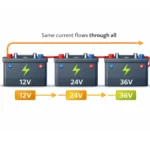
Series Connection of PV Modules – Effect on Voltage and Current
Connecting PV modules in series is a common practice in solar installations. This guide explains how series connections affect voltage and current and why they are used in solar PV systems.
500 kW Rooftop Solar for Industries in India: Complete Guide 2026
A complete guide to 500 kW solar for industries covering installation cost, energy generation, ROI, savings, and why it is a smart business investment.
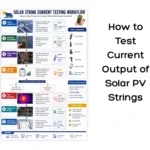
Faulty Solar PV Module Detection Using Shading Test
A complete guide to detecting faulty solar PV modules using the shading test and ammeter readings, helping installers quickly identify underperforming modules and restore system performance.
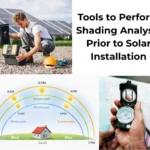
Tools to Perform Shading Analysis Prior to Solar Installation
A solar site assessment helps installers evaluate location, shading, structure, and energy requirements before installation. This guide explains the essential steps for accurate solar system planning.