

Researchers Propose New Way to Make Nuclear Power Plants Safer
Researchers from the Indian Institute of Technology have proposed a new way to make nuclear power plants safer. They suggest using offshore wind farms to provide backup power in case of a seismic event.
The study on nuclear power plants was published in the journal Nuclear Engineering and Design. The study found that offshore wind farms could provide enough power to keep nuclear reactors running even if the main power grid goes down. This would help to prevent meltdowns, which can occur if nuclear reactors lose their cooling systems.
The researchers tested their idea by conducting a case study at the Madras Atomic Power Station in Chennai. They found that a 15-MW offshore wind farm could provide enough power to keep the plant running for up to 72 hours. This would give the plant enough time to restore power from the main grid or to switch to a backup diesel generator.
The researchers say that their proposal could help to make nuclear power plants safer and more reliable. They believe that it could also help to reduce the cost of nuclear power, as it would no longer be necessary to build expensive backup generators.
The study was funded by the UK India Education Research Initiative and the Commonwealth Scholarship Commission. It is the latest in a series of studies that have explored the potential of using offshore wind farms to provide backup power for nuclear power plants.
In November 2022, a Danish-Indian collaborative study identified fifteen zones for the first offshore wind development project in India. The study was funded by the Danish Ministry of Foreign Affairs and the Indian Ministry of New and Renewable Energy.
The Central Electricity Authority of India (CEA) has estimated that India’s installed wind capacity will reach 100 GW and nuclear capacity 15.5 GW by the financial year 2029-30. The CEA is the apex regulatory body for electricity in India.
The use of offshore wind farms to provide backup power for nuclear power plants is a promising new development. It has the potential to make nuclear power plants safer, more reliable, and more affordable.
Suggested Articles

How Quickly Can Solar Panels Pay for Themselves? Payback Period Explained
Learn how the solar panel payback period works, factors that affect ROI, and how soon you can recover your solar investment.
Selecting Solar Panels: Best Guide for Homes and Factories
Solar panels are a hot topic these days, as the cost of solar is finally approaching what the average family can afford.
Developers fear unfair state-specific levies will make solar more expensive
Developers in India are concerned that state-specific levies on solar projects could increase costs, slow adoption, and impact the growth of renewable energy across residential, commercial, and industrial sectors.
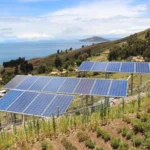
Ground Mounted Solar Systems: Complete Guide for Commercial & Industrial Projects in India
Ground mounted solar systems are ideal for commercial and industrial projects with available land. This guide explains cost, land requirement, installation process, and ROI in India.

Verify Grounding and Insulation Resistance in Solar PV Systems
A complete guide to solar PV grounding and insulation resistance testing, ensuring electrical safety, compliance, and reliable system performance.

How to Prepare Battery Terminals and Install Interconnection Cables
Proper battery terminal preparation and cable installation are essential for safe and efficient battery bank operation. This guide explains the complete installation process for solar projects.

Solar System Grounding Conductor Size Guide
A complete guide to determining grounding conductor size for solar PV systems, ensuring safe, compliant, and reliable installations.

Environmental Hazards in Solar PV Installations Guide
A complete guide to identifying and mitigating safety hazards in solar PV systems, including risk assessment, hazard control, preventive measures, and workplace safety practices.