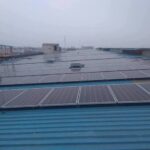
Rajasthan, India’s sunniest state, continues to lead in renewable solar energy adoption. With the 2025 revision of the government solar subsidy scheme, homeowners can now save big on their solar energy installation cost, making solar electricity more affordable than ever.
The new updates simplify approvals, boost state subsidies, and promote solar energy for home use. Whether you’re planning your first solar panel in a rooftop setup or exploring ways to reduce your home roof solar panels cost, this guide explains everything you need to know.
What Was the Previous Subsidy Framework?
Earlier, under the PM Surya Ghar: Muft Bijli Yojana, homeowners in Rajasthan could claim up to ₹78,000 in central subsidies for rooftop solar systems up to 10 kW. However, solar installation charges, lengthy paperwork, and limited state incentives often discouraged smaller households.
The average cost of solar panels on a house ranged from ₹45,000-₹55,000 per kW, depending on the solar module price per watt and overall solar roof installation cost. With these updated state benefits, Rajasthan has bridged that affordability gap, making renewable energy and solar energy more accessible to everyone.
What Are the New Changes (2025) in Rajasthan?
The Rajasthan Renewable Energy Department introduced several changes this year to boost solar adoption under the renewable energy technology framework:
- The central subsidy of up to 40% for the first 3 kW remains, while the state subsidy adds another ₹17,000 for eligible residential systems.
- Additional concept – Virtual Net Metering and amendments in the Group Net Metering Clause.
- The Rajasthan Electricity Regulatory Commission (RERC) waived off processing fees, security deposits, and testing charges for domestic solar panel system cost applicants.
- Systems above 3 kW up to 10 kW now receive a 20% subsidy on additional capacity, keeping solar viable even for larger rooftops.
- Extra benefits include electricity duty exemptions, tax relief, and faster net-metering approvals, making solar energy installation costs much lower in 2025.
These steps reaffirm Rajasthan’s position as India’s leader in renewable energy and solar energy.
Virtual Net Metering & Group Net Metering
RERC has newly added a the VNM concept which allows multiple consumers to share and receive credits from a single, centralized solar system located elsewhere, under the same DISCOM. In VNM, the generated solar power will be exported to the grid, and the credits will be distributed among all participating accounts based on their usage or agreed shares. This allows people without suitable rooftops or space to benefit from solar energy by “virtually” sharing one system.
Below is the difference between Virtual Net Metering & Group Net Metering
Feature | Virtual Net Metering | Group Net Metering |
Participants | Multiple different consumers (eg. residents) | Single consumer with multiple service connections |
System Location | One solar plant | One solar plant |
Credit Distribution | Shared among different consumers | Shared among different sites of the same consumer |
Ideal For | People without roof space | People having multiple connections within the same DISCOM |
Ownership Structure | Shared ownership, based on usage or agreed shares | Single owner |
How Much Subsidy Can You Get? (Residential)
Here’s an overview of how the subsidy structure works for homeowners:
System Capacity | Central Govt Subsidy | State Top-up | Total Benefit |
1 kW | ₹30,000 | ₹17,000 | ₹ 47,000 |
2 kW | ₹60,000 | ₹17,000 | ₹ 77,000 |
3 kW and above | ₹78,000 (capped) | ₹17,000 | ₹95,000 |
With both state and central incentives, Rajasthan homeowners can offset a significant part of their total cost of solar installation. This not only reduces the cost of solar panels but also ensures faster recovery of investment through solar electricity generation.
Why the New Subsidy Makes Solar Affordable
The updated scheme directly impacts solar installation cost per kWh, lowering the cost of solar per kWh installed and ensuring higher long-term savings. Here’s how:
Lower upfront costs
The subsidy directly reduces solar roof installation costs for new buyers.
Better ROI
With high sunshine levels, annual generation is 1,400–1,600 units per kW, cutting down power bills drastically.
Wider reach
Even smaller homes can now opt for subsidized solar panels for the home and benefit from clean energy.
Durability
Use of A-grade solar modules ensures better performance and lower maintenance, making solar energy systems more durable.
Rajasthan’s supportive approach aims at making solar energy economical for every household and business.
Benefits Beyond Subsidy
Apart from financial savings, installing solar panels in rooftop systems brings multiple long-term benefits:
- Generates clean, renewable solar electricity for daily use.
- Reduces dependency on grid power, lowering home roof solar panels cost in the long run.
- Increases property value and energy independence.
- Reduces carbon footprint, one 5 kW system can offset 6 tons of CO₂ annually.
For residents, this means turning every ray of sunlight into savings, and doing it sustainably.
Key Considerations Before Installing
Before setting up your system, ensure:
- You choose quality components (check smart solar panel price, inverter efficiency, and earthing).
- Your vendor provides a transparent solar installation cost per kWh breakdown.
- The mounting structure and wiring meet BIS and IEC standards.
- You get clear warranty details and O&M support.
Always opt for professional installers like Smart Roof Solar, who ensure long-lasting performance, correct sizing, and compliance with all safety norms.
Why Choose Smart Roof Solar
At Smart Roof Solar, we bring precision, safety, and quality to every rooftop project. From estimating your solar energy installation cost to helping you claim the government solar subsidy scheme, our team handles it end-to-end.
We specialize in:
- Custom rooftop design and installation
- Real-time monitoring & O&M services
- Hassle-free subsidy assistance
- Use of certified A-grade modules at a competitive solar module price per watt
Our mission is simple: to make solar energy economical, efficient, and accessible across Rajasthan.
Conclusion
Rajasthan’s revised 2025 subsidy program is a golden opportunity for households to go solar with reduced solar installation charges and faster ROI. With abundant sunshine and simplified policies, now is the perfect time to make the switch to renewable solar power.
Contact Smart Roof Solar today to get your customized quote, learn about your eligible subsidies, and take the first step toward clean, affordable solar energy for your home or business.
FAQs
Q1. Do I need prior approval before installing a rooftop solar system?
Ans: Yes, homeowners must apply through the Rajasthan Renewable Energy Department’s online portal before installation.
Q2. Can apartment societies apply for Virtual Net Metering (VNM)?
Ans: Yes, housing societies and apartments can jointly invest in one solar plant and share credits through VNM.
Q3. Does the subsidy cover installation and maintenance costs?
Ans: The subsidy covers part of the system cost; O&M services are typically charged separately.
Q4. Are there financing options available for solar systems?
Ans: Yes, many banks and NBFCs offer solar loans at reduced interest rates under government schemes. Refer to our blog to know more – Solar Loans, Subsidies and EMI plans : Financing made easy.
Q5. Can tenants apply for the subsidy?
Ans: Tenants cannot apply directly unless they have the property owner’s written consent and DISCOM approval.