

Q1. Sir, we keep hearing about net metering in the solar energy sector. Could you please tell us what is this net metering all about?
A1. Let’s start by understanding the basics of Net metering. Currently all electrical connections are metered by a uni-directional meter because we are only consuming power and not generating any power. But, after installation of a solar power plant, we are also generating electricity. So, now there is a possibility that when we generate power but are not able to consume that power, the surplus power goes to the DISCOM, and to keep a record of the power consumed, power generated, and the power exported to the grid; the uni-directional meter is changed to a bi-directional meter by DISCOM. This bidirectional meter is also called export import meter. And this whole process is called net metering.
For better understanding let’s consider 3 scenarios.
Scenario 1
When the power is being generated and it is also getting consumed and there is no export, in this case, we pay to the DISCOM only for the imported power.
Scenario 2
When the power is being generated and it is not getting fully consumed, the surplus power is exported back to the DISCOM via the grid. In this case, you are billed net of import and export of units.
Scenario 3
When the power is being generated and it is totally not being consumed, for example, on a holiday, all the generated power is exported to the DISCOM via the grid. In this case you are billed net of import and export of units. The adjustment of bills is done monthly. In certain states, this is also done on yearly basis.
Q2. Please tell us the main advantages of net metering?
A2. The key advantage is that the factory can not only generate enough power for its day consumption but can also generate more power during sunny hours to neutralize its consumption during night hours.
Also, any power generated during holidays, gets utilized leading to zero wastage. Net metering facility gives a big boost to the bottom line of the industry.
Q3. Sir, what about the DISCOMs? Are they keen to give this net metering facility?
A3. DISCOMs are keen to give net metering facility to smaller consumers, not to industrial or large consumers. In fact, UP, West Bengal, and Assam have already stopped giving net metering facility to industrial consumers. Uttrakhand is also moving in the same direction.
Almost all the states have capped the net metering facilities to 500kW. In fact, this 500kW is also on the insistence of Honorable Minister for Road and Transport, Sh. Nitin Gadkari.
Q4. Sir in that case, what will happen to consumers who’ve already installed net metering at their solar plants?
A4. The benefits of net metering will continue to be available to these plants, even if DISCOMs later decide to withdraw net metering facilities. Net metering facility agreement with DISCOMs is of 25 years.
Q5. Sir, you mentioned that net metering is capped at 500kW. Does this mean, that factory owners cannot install solar plants more than 500kW?
A5. No, it is not like that. If the factories are having higher consumption continuous, then they can plan to install solar plants of more than 500kW also, but under captive route. Captive route means, if a consumer is installing solar plant only for self use. Factories need to ensure that they do not export power of more than 500kW at any given point of time. This is possible by installing a digital device, wherever more than 500kW solar plant is installed. Plant beyond 500kW needs to be connected to a different LT panel within the company.
Q6. Ok sir, what would be your final advice for industrialists who are, let’s say, considering getting a solar plant for their factories?
A6. The consumers should install solar plants with net metering to the maximum possible limit. Once you get net metering, it is for 25 years. If you got it and your competitors do not have it, you have got very strong competitive advantage.
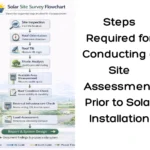
Steps Required for Conducting a Site Assessment Prior to Solar Installation
A solar site assessment helps installers evaluate location, shading, structure, and energy requirements before installation. This guide explains the essential steps for accurate solar system planning.
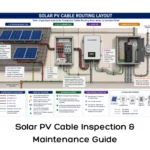
Solar PV Cable Inspection & Maintenance Guide
A complete guide to inspecting service panel connections in solar PV systems, including connection verification, electrical safety checks, preventive maintenance, and troubleshooting techniques.
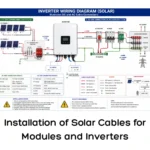
Installation of Solar Cables for Modules and Inverters
A step-by-step guide to solar cable installation for modules, inverters, and other system components to ensure safe and reliable operation.
Stop Losing Power: The Ultimate Guide to Solar DC & AC Cable Sizing for Max Efficiency
DC and AC cabling are the lifelines of any Solar PV Rooftop System. Learn how proper cable selection, connection design, and installation can help achieve optimum power output and long-term safety.
Rajasthan Rooftop Solar Subsidy: What Homeowners Need to Know
Rajasthan homeowners can save big with the 2025 rooftop solar subsidy. Learn about the updated rates, eligibility criteria, and benefits to make your switch to solar more affordable.
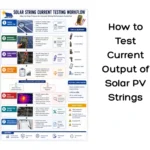
How to Test Current Output of Solar PV Strings
A complete guide to solar PV string current testing, including current measurement, comparison of string outputs, fault identification, and troubleshooting techniques for optimal system performance.
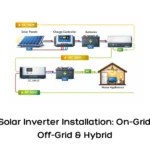
Solar Inverter Installation: On-Grid, Off-Grid & Hybrid
A complete guide to on-grid, off-grid, and hybrid solar inverter installation, including setup, wiring, and best practices for safe operation.
Earthing and Lightning Protection Required for Solar Installation – Complete Guide for Solar Installers
Earthing and lightning protection are critical safety components in solar PV installations. This guide explains their importance, types, components, and best practices for solar installers.