The solar industry is evolving every day, in terms of both panel efficiency and panel mounting. It may sound absurd, but the mounting of solar panels is what ensures durability, security, and energy output.
Over the last few years, the mounting technologies have transformed from basic stands to highly engineered solutions. These advanced structures were made to enhance performance, safety, and longevity.
In this blog, we’ll learn about mounting structures, their types, and understand how innovations make solar adoption smarter and more efficient.
Why Solar Mounting Structures Matter
Often underestimated, mounting structures impact the efficiency and performance of solar systems. Below are some of the properties listed, to understand them better:
- Structural support to panels against wind, rain, and seismic loads.
- Correct orientation and tilt for maximum sunlight capture.
- Flexibility for different rooftops and terrains.
- Longevity of the solar system by minimizing mechanical stress.
Types of Solar Mounting Structures
Solar panels can be installed in different ways depending on the space available and the needs of the user. Each type of solar mounting structure comes with its own features, benefits, and ideal use cases. Let’s look at the most common ones:
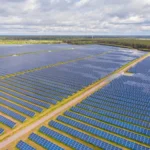
Ground-mounted solar systems are installed directly on the ground, making them suitable for large-scale installations. They are flexible in design and orientation.
Key properties:
- Perfect for open fields or large unused land areas.
- It can be tilted at the best angle for maximum sunlight.
- Easier to clean and maintain compared to rooftop systems.
- Higher installation cost due to additional civil work.
- Provides higher efficiency if ample land is available.
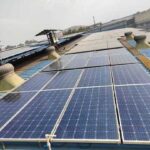
This is the most common type of solar mount, where panels are installed directly on the roof of a home or building. It is a cost-effective method to make use of the empty roof and generate electricity.
Key properties:
- Ideal for homes, offices, and small businesses.
- Easy to install with minimal civil work.
- Helps reduce electricity bills significantly.
- Works well for both sloped and flat roofs.
- Best suited where roof strength and direction allow proper sunlight exposure.
Pole-Mounted Solar Systems
In this setup, solar panels are mounted on a single pole or multiple poles. They are elevated and can sometimes rotate to follow the sun.
Key properties:
- Useful where land space is limited or uneven.
- Elevation prevents damage from animals, waterlogging, or dust.
- Single-pole systems support fewer panels, while multi-pole systems can handle more.
- It can be designed with tracking systems for better efficiency.
- Requires strong foundations to withstand wind pressure.
Solar carports are mounting systems installed over parking spaces. They simultaneously generate power but also provide shade and protection for vehicles.
Key properties:
- Dual purpose: produces energy while acting as a car shed.
- Best for commercial complexes, malls, and institutions with large parking areas.
- Saves ground space as it utilizes existing parking space.
- Can support both two-wheelers and four-wheelers.
- Slightly higher in cost, but is a long-term investment.
Floating solar involves mounting panels on water bodies like lakes, ponds, or reservoirs. It is an innovative way to save land while generating clean energy.
Key properties:
- Utilizes unused water surfaces, saving land space.
- Reduces the evaporation of water and helps in conservation.
- Panels stay cooler, improving efficiency.
- Installation and maintenance can be more complex and costly.
- Best for areas with large water bodies near power demand centers.
Key Innovations in Solar Mounting Structures
Several advancements in 2025 have improved the mounting structures to become more resilient and adaptable. A few of these technologies are listed below, and how they have impacted the structures:
Lightweight Aluminum Frames
Strong and corrosion-resistant Aluminium frames are perfect for coastal regions, further increasing the efficiency of the solar setup.
Pre-assembly of the kits helps in faster installations and with minimal on-site labor.
The latest aerodynamic designs help in reducing wind load pressure. This way, it ensures safety in high-rise buildings.
The hybrid systems of combination have improved land usage. For instance, combining roof, ground, and floating tech allows maximum land optimization.
Smart Sensors Integration
Some advanced trackers are now using AI to optimize tilt angles in real-time.
Advantages of Latest Mounting Structures
Different mounting systems were introduced, not just to hold the panels, but due for various reasons. Modern mounting structures have more advantages than it was initially defined for. Below we have listed the benefits of the mounting structures:
Durability
These mounting structures are durably engineered to last 25-30 years with minimal maintenance.
Flexibility
They can be customized for flat roofs, sloped roofs, and uneven terrains. People looking for aesthetic installations can easily customize them according to their needs.
Energy Boost
The trackers and tilt adjustments in the mounting structures help increase the overall yield and efficiency.
Aesthetic Appeal
The modern flats often have interior design done, and setting up solar may affect the aesthetics. The customization helps to blend sleek designs with modern architecture and maintain the ambience.
Sustainability
These structures are now using recyclable materials like aluminum, which reduces the environmental footprint and helps in going green.
Factors to Consider While Choosing a Mounting Structure
There are several factors to consider before deciding on the type of solar mounting structure. Some of them are:
- Roof Type – Flat or sloped surfaces need different mounts, according to their surface area.
- Climate Conditions – Areas with heavy winds or snow require reinforced designs, which would stay put even in extreme conditions.
- Budget – Trackers cost more upfront but have a higher ROI(Return on Investment).
- Land/Roof Space – Floating or ballasted mounts are useful where drilling is not possible.
- Energy Goals – Utility-scale projects and household installations have different requirements and system needs.
Conclusion
Solar mounting structures have now evolved into high-tech solutions, helping establish trust after supporting the panels. The versatility and durability that it provides make the solar systems more efficient.
The latest 2025 trends, which include AI integration, have also widened their reach into the solar systems. From fixed-tilt rooftops to floating water platforms and AI-enabled trackers, these innovations ensure that the solar power systems are adaptable and future-ready.
At Smart Roof Solar, an EPC will guide you through the entire process. From financing to post-installation care, we will help you achieve your energy goals. With our end-to-end expertise, let’s make solar adoption smooth, cost-effective, and sustainable.
Looking to upgrade to the latest solar mounting structures? Contact Smart Roof Solar today and take your first step toward a smarter, greener future.
FAQs
Q1. Do solar mounting structures require maintenance?
Ans: Solar mounts do need regular checks for rust, loose bolts, or debris. But it is better to get it checked every 2-3 months, to ensure no major issues have arised.
Q2. Are mounting structures covered under solar panel warranties?
Ans: No, the mounting structures have different warranties, which may differ based on the type of material used.
Q3. Can I switch to a different mounting structure?
Ans: Switching to a different mounting structure is possible, but it may vary based on the type of initial setup. Some structures may be stiff and will have to be removed entirely.
Q4. Can mounting systems be painted or colored to match my roof?
Ans: Yes, customizing the color to match the roof is possible, but not all manufacturers offer color customization.
Q5. Are solar carports suitable for residential homes?
Ans: Yes, if there is enough space, then solar carports can be installed at residential sites.